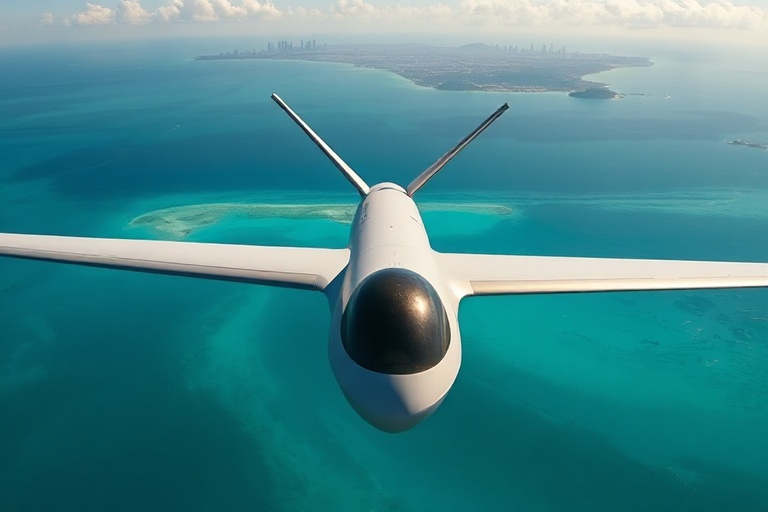
The MQ-4C Triton, a high-altitude, long-endurance unmanned aerial vehicle (UAV) operated by the United States Navy, has recently been spotted near Cuban airspace. This development comes amid heightened geopolitical tensions in the Caribbean and broader discussions about surveillance capabilities in the region.
The Triton’s presence near Cuba is not an isolated incident but part of a broader pattern of U.S. military activity in the Western Hemisphere. The aircraft, designed for maritime surveillance, can remain airborne for over 24 hours and cover vast distances, making it a critical asset for monitoring maritime traffic and detecting potential threats.
Understanding the MQ-4C Triton’s Capabilities
The MQ-4C Triton is built by Northrop Grumman and represents one of the most advanced unmanned surveillance platforms in the world. Its primary mission is to provide persistent maritime surveillance, including anti-submarine warfare, anti-surface warfare, and electronic warfare support. The aircraft is equipped with advanced radar systems, including the AN/ZPY-3 Multi-Function Active Electronically Scanned Array (MFAS) radar, which can detect and track moving targets at sea.
With a wingspan of 130 feet and a maximum altitude of 56,500 feet, the Triton operates far above commercial air traffic, making it difficult to detect and intercept. Its endurance allows it to survey large areas of the ocean, providing real-time data to naval forces and intelligence agencies.
In addition to its surveillance capabilities, the Triton can relay communications between ships and aircraft, enhancing coordination in complex operational environments. This makes it an invaluable tool for monitoring regions like the Caribbean, where drug trafficking, illegal migration, and geopolitical rivalries intersect.
Geopolitical Context: Why the Triton is Near Cuba
The deployment of the MQ-4C Triton near Cuba must be understood within the context of U.S.-Cuba relations and broader regional security dynamics. Cuba has long been a focal point for U.S. military and intelligence operations, particularly due to its proximity to the U.S. mainland and its historical ties to other global powers.
In recent years, tensions between the U.S. and Cuba have fluctuated, with periods of diplomatic engagement followed by renewed hostilities. The presence of the Triton suggests a renewed emphasis on monitoring Cuban military activity, particularly given reports of increased Russian and Chinese engagement in the region.
Cuba’s government has frequently criticized U.S. surveillance activities, arguing that they violate Cuban sovereignty. In 2023, Cuban officials condemned what they described as “provocative” flights by U.S. military aircraft near the island, including drones and reconnaissance planes.
From a strategic perspective, the Triton’s deployment near Cuba serves multiple purposes:
- Monitoring Cuban military activity: The Triton can detect and track Cuban naval vessels, aircraft, and potential missile launches, providing early warning of any aggressive moves.
- Countering illicit trafficking: The Caribbean is a major route for drug smuggling and human trafficking. The Triton’s surveillance capabilities help U.S. and allied forces intercept these activities.
- Deterring foreign influence: The presence of Russian and Chinese ships and aircraft in the region has raised concerns in Washington. The Triton’s operations can help the U.S. maintain situational awareness and counterbalance growing foreign presence.
Global Reactions and Implications
The MQ-4C Triton’s deployment near Cuba has drawn reactions from governments, analysts, and international organizations. While the U.S. frames its surveillance activities as necessary for regional security, critics argue that they contribute to an already tense geopolitical environment.
In Latin America, the Triton’s presence has reignited debates about U.S. military dominance in the region. Some governments, such as those in Venezuela and Nicaragua, have accused the U.S. of violating sovereignty and escalating tensions. Meanwhile, U.S. allies in the Caribbean, including Jamaica and the Dominican Republic, have largely remained silent, focusing instead on domestic priorities.
International organizations, such as the United Nations, have called for greater transparency in military surveillance activities. The U.N. Charter emphasizes the principle of state sovereignty, and unmanned aerial operations near foreign borders often spark diplomatic disputes.
From a military perspective, the Triton’s deployment reflects broader trends in modern warfare. Unmanned systems are increasingly used to gather intelligence, conduct strikes, and monitor adversaries without risking pilot lives. However, their use also raises ethical questions about accountability, transparency, and the potential for miscalculation.
What’s Next for the MQ-4C Triton and U.S.-Cuba Relations?
The future of the MQ-4C Triton’s operations near Cuba remains uncertain. While the U.S. has not officially commented on the recent flights, the deployment is likely to continue as part of broader efforts to maintain dominance in the Caribbean.
For Cuba, the Triton’s presence is a reminder of the ongoing power struggle in the region. The Cuban government has historically relied on diplomatic pressure and international alliances to counter U.S. influence. However, with limited economic resources and a shrinking network of allies, Havana’s options for responding to U.S. surveillance are constrained.
Analysts suggest that the Triton’s deployment could lead to further escalation, including increased Cuban military exercises or protests through international channels. However, a full-blown conflict remains unlikely, given the economic and political costs involved.
For the U.S., the Triton represents a critical tool for maintaining regional security and countering foreign influence. However, its use also risks alienating allies and provoking unnecessary tensions. Balancing surveillance with diplomacy will be key to avoiding a deeper crisis in the Caribbean.
As the MQ-4C Triton continues its patrols near Cuba, the world watches closely. The aircraft’s advanced capabilities underscore the growing importance of unmanned systems in modern warfare, while its presence highlights the persistent challenges of navigating geopolitical rivalries in the 21st century.
For more insights into global military developments, explore our Technology and Politics sections.