Raul Castro: Cuba’s Revolutionary Legacy and Political Evolution
“`html
Raul Castro: Cuba’s Revolutionary Legacy and Political Evolution
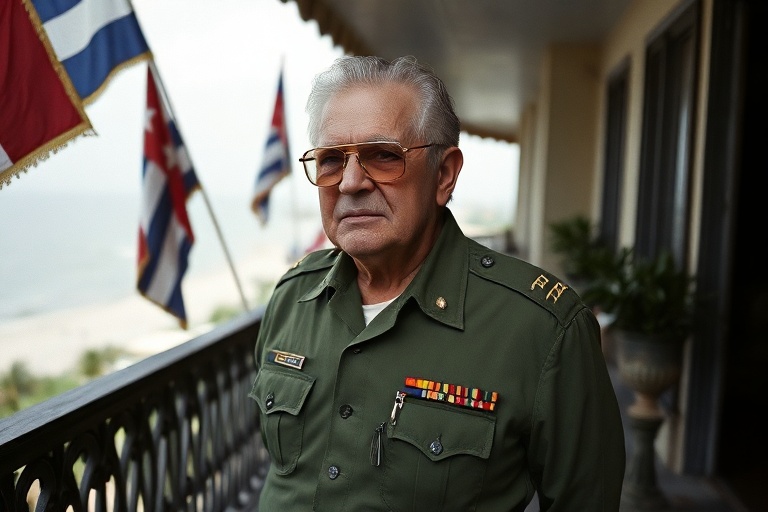
Raúl Castro Ruz, the younger brother of Fidel Castro, played a pivotal role in Cuba’s revolutionary history before becoming the island nation’s leader for nearly a decade. His journey from guerrilla fighter to head of state reflects both continuity and change in Cuba’s political landscape. While often overshadowed by his brother’s charismatic persona, Raúl’s pragmatic leadership style and gradual reforms left an indelible mark on Cuba’s society and economy.
Early Life and Revolutionary Roots
Born on June 3, 1931, in Birán, Cuba, Raúl Castro was the fifth of seven children in a prosperous sugarcane farming family. His upbringing in rural eastern Cuba exposed him to the stark inequalities of pre-revolutionary society, where wealth disparities fueled widespread discontent. Unlike Fidel, who studied law at the University of Havana, Raúl initially pursued a military education, attending the Infantry School in Mexico and later joining Fidel’s 26th of July Movement.
The Castro brothers’ partnership began in earnest during the 1953 Moncada Barracks attack, a failed uprising against the U.S.-backed dictatorship of Fulgencio Batista. While Fidel escaped, Raúl was captured and imprisoned until 1955. After release, he traveled to Mexico, where he helped organize the Granma expedition that landed in Cuba in 1956. During the subsequent guerrilla war, Raúl earned a reputation for discipline and military acumen, commanding rebel forces in eastern Cuba’s Sierra Maestra mountains.
By the time Batista fled in January 1959, Raúl had proven himself as a steadfast revolutionary. His loyalty to Fidel and the movement’s ideals solidified his position in Cuba’s new leadership. Over the next two decades, Raúl held key roles, including Minister of the Armed Forces and Vice President of the Council of State, while quietly building a reputation as a more pragmatic administrator than his brother.
Ascension to Power and Leadership Style
Raúl officially assumed leadership of Cuba in February 2008 after Fidel’s prolonged illness forced him to step down. Unlike Fidel’s fiery oratory, Raúl’s approach was marked by quiet competence and a willingness to acknowledge systemic flaws. His first major act as president was to introduce modest economic reforms, signaling a break from the rigid policies of the past.
One of Raúl’s most significant early moves was the elimination of the dual currency system, which had created economic distortions for decades. The reform, implemented gradually between 2011 and 2021, aimed to unify Cuba’s two currencies—the Cuban peso (CUP) and the convertible peso (CUC)—into a single national currency. While the process was fraught with challenges, it represented Raúl’s commitment to modernizing Cuba’s economy without abandoning socialism.
Raúl also prioritized institutional renewal, term-limiting himself to two five-year terms and introducing age caps for political offices. This move was seen as an attempt to prevent the kind of entrenched leadership that had defined Cuban politics for decades. His administration oversaw the retirement of many of the original revolutionaries, paving the way for a younger generation of leaders, including Miguel Díaz-Canel, who succeeded him in 2018.
Internationally, Raúl sought to normalize Cuba’s relations with the world. His government engaged in secret negotiations with the United States, leading to the historic December 2014 announcement of a thaw in relations after more than five decades of hostility. While the Trump administration later rolled back many of these changes, Raúl’s diplomacy helped secure Cuba’s position on the global stage.
Economic Reforms and Challenges
Raúl’s economic policies were characterized by cautious experimentation. In 2011, the Sixth Communist Party Congress approved the “Lineamientos,” a set of guidelines aimed at decentralizing the economy and allowing limited private enterprise. These reforms legalized small businesses, expanded cooperatives, and encouraged foreign investment in sectors like tourism and biotechnology.
One of the most visible changes was the growth of Cuba’s private sector. By 2019, over 600,000 Cubans were registered as self-employed, working in fields like food services, transportation, and art. While this shift created new opportunities, it also highlighted the challenges of balancing market liberalization with socialist principles. Income inequality began to rise, and access to goods and services remained uneven, particularly outside Havana.
The reforms also faced structural hurdles. Cuba’s centrally planned economy struggled to adapt to global market pressures, and bureaucratic resistance often stifled innovation. Despite these obstacles, Raúl’s government managed to achieve modest GDP growth, particularly in sectors like nickel mining and pharmaceuticals. However, the U.S. embargo and Venezuela’s economic collapse under Nicolás Maduro further strained Cuba’s economy, leaving Raúl’s successor with significant challenges.
Raúl’s approach to foreign investment was another key aspect of his economic strategy. His administration streamlined regulations to attract capital, particularly in the Mariel Special Development Zone, a deep-water port project near Havana. While the zone attracted some international companies, its success was limited by infrastructure bottlenecks and lingering skepticism about Cuba’s business environment.
Legacy and the Future of Cuba
Raúl Castro’s leadership was defined by a blend of continuity and reform. While he maintained the core principles of the Cuban Revolution—socialist governance, state control of key industries, and opposition to U.S. influence—he also demonstrated a willingness to adapt. His emphasis on institutional renewal and economic pragmatism set the stage for Cuba’s gradual transition to a new generation of leaders.
Critics argue that Raúl’s reforms did not go far enough. Despite the expansion of private enterprise, the state remains the dominant force in Cuba’s economy. Political freedoms remain restricted, and dissent is still met with repression. However, Raúl’s tenure also saw a reduction in political purges and a more open dialogue about Cuba’s future. His decision to step down in 2018 marked the first time in nearly six decades that Cuba was not led by a Castro.
Raúl’s personal life also played a role in his legacy. His marriage to Vilma Espín, a prominent revolutionary and founder of the Federation of Cuban Women, produced four children. While his family remained largely out of the public eye, their influence within Cuba’s political elite was undeniable. Raúl’s retirement in 2021 marked the end of an era, but his impact on Cuba’s political and economic landscape will endure.
As Cuba navigates the challenges of the 21st century, Raúl’s legacy serves as a reminder of the complexities of revolutionary governance. His leadership style—pragmatic, methodical, and willing to experiment—offered a counterpoint to the more dogmatic approach of his brother. While the future of Cuba remains uncertain, Raúl’s reforms have laid the groundwork for the country’s next chapter.
Key Takeaways from Raúl Castro’s Leadership
- Institutional Renewal: Raúl introduced term limits and age caps for political offices, paving the way for younger leaders.
- Economic Reforms: The “Lineamientos” legalized private enterprise and attracted foreign investment, though progress was uneven.
- Diplomatic Engagement: His efforts to normalize relations with the U.S. and other nations helped Cuba re-enter the global community.
- Pragmatic Socialism: Unlike Fidel, Raúl acknowledged systemic flaws and sought incremental improvements without abandoning socialism.
For those interested in Cuba’s evolving political landscape, Dave’s Locker Politics section offers deeper analysis on the island’s transition. Alternatively, explore Dave’s Locker Analysis archives for broader context on global revolutionary movements.
Raúl Castro’s story is one of revolution, resilience, and reform. While his leadership may not have transformed Cuba into the modern, prosperous nation many envisioned, it undeniably shaped the country’s trajectory in the 21st century. As Cuba continues to evolve, the lessons of his tenure will remain a critical point of reference for its leaders and citizens alike.