The Royal Norwegian Navy: Guardians of the North Atlantic
The Royal Norwegian Navy stands as a critical pillar of national defense and regional stability in the North Atlantic. With a history stretching back over 200 years, this maritime force has evolved from wooden sailing ships to one of the most advanced naval units in Northern Europe. Its strategic position along Norway’s extensive coastline and Arctic waters makes it indispensable not only to the country’s sovereignty but also to NATO’s northern flank.
Norway’s geographic reality—over 25,000 kilometers of jagged coastline, thousands of islands, and deep fjords—demands a navy capable of rapid response and sustained presence. The Royal Norwegian Navy fulfills this role with a blend of modern technology, operational adaptability, and a long-standing tradition of Arctic expertise. From patrolling icy waters to participating in international anti-piracy missions, its reach extends far beyond national borders.
A Legacy Forged in Ice and Conflict
The origins of the Royal Norwegian Navy trace back to 1814, when Norway gained independence from Denmark and adopted its first constitution. Though initially small and underfunded, the navy played a crucial role in maintaining neutrality during World War I. The true crucible came during World War II, when Nazi Germany invaded Norway in April 1940.
Despite being swiftly overrun, Norwegian naval units—many of which escaped to Britain—continued the fight as part of the Allied forces. The Sleipner-class destroyers and later the Oslo-class frigates became symbols of resilience. Post-war reconstruction allowed the navy to rebuild, integrating Cold War-era submarines and missile boats designed to counter Soviet naval power in the Barents Sea.
Modern Fleet: Precision, Stealth, and Arctic Mastery
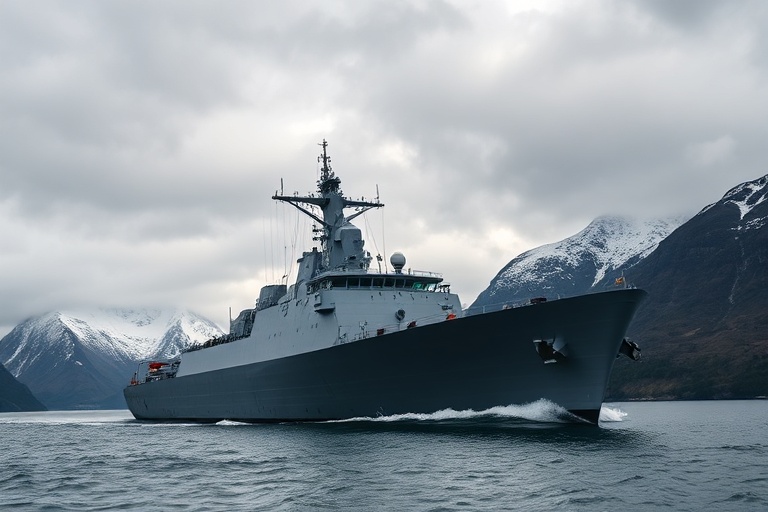
The current fleet reflects Norway’s strategic priorities: surveillance, deterrence, and rapid deployment in harsh environments. At its core are six advanced Fridtjof Nansen-class frigates, built in collaboration with Spain and equipped with the Aegis combat system. These ships are optimized for anti-submarine warfare and air defense, essential in monitoring Russian submarine activity in the North Atlantic.
The submarine arm remains a cornerstone of Norwegian naval power. The Ula-class submarines—operational since the 1980s and upgraded to near-peer standards—are among the quietest diesel-electric submarines in the world. Their ability to operate under Arctic ice makes them uniquely suited to Norway’s northern waters.
Norway is also leading Europe in the adoption of unmanned systems. The Hugin autonomous underwater vehicles and surface drones are being integrated into fleet operations, enhancing intelligence gathering and mine countermeasures. This technological leap ensures the Royal Norwegian Navy remains at the forefront of modern naval warfare.
Global Role: From NATO Exercises to Anti-Piracy Missions
While its primary mission is territorial defense, the Royal Norwegian Navy actively contributes to international security. Norway participates in NATO’s Standing Maritime Groups, deploying frigates and support vessels to the North Atlantic and Mediterranean. These deployments reinforce collective defense and demonstrate Norway’s commitment to collective security under Article 5.
Beyond Europe, Norwegian naval units have supported counter-piracy operations in the Gulf of Aden. The frigate Thor Heyerdahl conducted patrols as part of the EU’s Atalanta mission, protecting merchant shipping from Somali pirates. Such missions highlight Norway’s role as a responsible maritime actor on the global stage.
Closer to home, the navy plays a pivotal role in Arctic security. As climate change melts sea ice, new shipping routes and resource claims are emerging. Norway’s naval presence in the High North ensures it can monitor and respond to emerging challenges, from illegal fishing to potential territorial disputes.
Cultural Identity and Public Engagement
The Royal Norwegian Navy is more than a military institution—it is woven into the nation’s cultural fabric. Maritime themes permeate Norwegian literature, music, and art. The annual Arctic Circle Maritime Exhibition in Bodø draws thousands, celebrating Norway’s seafaring heritage and naval innovation.
Public engagement extends to education. The Norwegian Naval Academy in Bergen trains officers not only in tactics and technology but also in leadership and ethics. The navy also runs outreach programs, inviting students to board ships and learn about maritime careers.
This connection to culture and education helps sustain public support for defense spending—an important factor in a country where NATO membership is a cornerstone of foreign policy.
Challenges and Future Vision
Despite its strengths, the Royal Norwegian Navy faces significant challenges. Aging platforms like the Ula-class submarines require replacement. The government has committed to acquiring new submarines and upgrading the Fridtjof Nansen fleet to extend their service lives. Budget constraints and competing defense priorities mean modernization must be strategic and cost-effective.
Another challenge is the evolving threat landscape. Russia’s modernization of its Northern Fleet, including new nuclear submarines and hypersonic missiles, demands a robust Norwegian response. The navy is responding with enhanced coastal defense, improved air surveillance, and deeper integration with allied forces.
Looking ahead, Norway is investing in next-generation capabilities. The F-310 class, a new frigate project, is under development in partnership with Germany and Spain. These ships will feature advanced radar, hypersonic missile defense, and greater automation. Norway is also exploring hydrogen-powered vessels to reduce emissions and improve sustainability at sea.
Conclusion: A Navy for the Arctic Century
The Royal Norwegian Navy remains one of Europe’s most capable and adaptive maritime forces. In an era of great power competition and climate-induced change, its role has never been more vital. From the icy fjords of the Arctic to the shipping lanes of the Indian Ocean, Norwegian sailors continue to uphold a legacy of duty, innovation, and resilience.
As Norway navigates the complexities of the 21st century, its navy stands ready—not just to defend its waters, but to shape the future of the North Atlantic. In doing so, it reinforces not only national security but the broader values of freedom, cooperation, and rule-based order on the high seas.
For those interested in exploring related topics, the Technology section offers insights into naval innovation, while the Politics section examines Norway’s role in NATO and Arctic geopolitics.