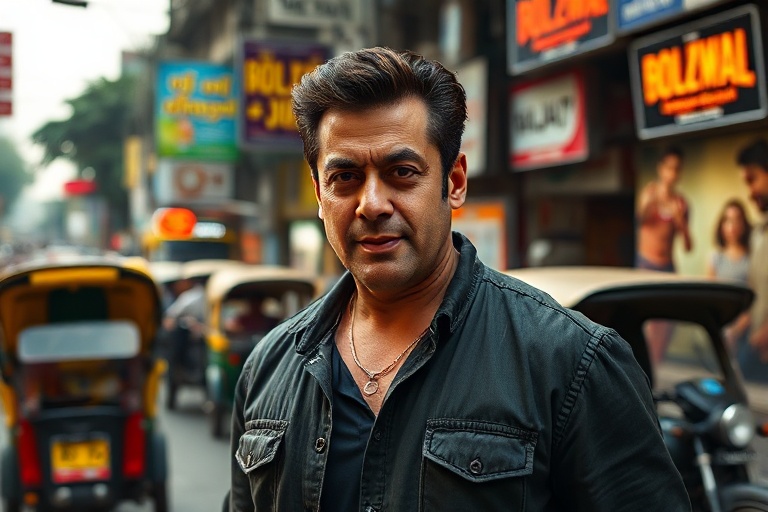
Salman Khan: How Bollywood’s Biggest Star Keeps Reinventing Himself
“`html
Salman Khan: The Enduring Reign of Bollywood’s Superstar
For over three decades, Salman Khan has dominated Indian cinema with a career that blends unparalleled box office success, controversial headlines, and a philanthropic legacy that extends far beyond the silver screen. The eldest son of screenwriter Salim Khan, he entered Bollywood in the 1980s during a period of transition for Indian cinema. Yet unlike many of his contemporaries who faded with time, Khan has not only endured but thrived, becoming a cultural institution whose influence permeates every facet of Indian entertainment.
The Rise of a Bollywood Icon
Salman Khan’s journey began with modest success. His debut film Biwi Ho To Aisi (1988) went largely unnoticed, but his breakthrough came with Maine Pyar Kiya (1989), a romantic drama that catapulted him to overnight stardom. Directed by Sooraj R. Barjatya, the film connected deeply with audiences through its emotional storytelling and relatable themes of love and family values. Khan’s portrayal of Prem, a carefree young man who falls in love despite societal barriers, struck a chord that would define much of his early career.
By the 1990s, Khan had cemented his status as a leading man with hits like Hum Aapke Hain Koun..! (1994) and Karan Arjun (1995). These films established a signature style—emotional intensity, action-packed sequences, and a charismatic screen presence—that became synonymous with Khan’s persona. Unlike actors who relied solely on dramatic performances, Khan mastered the balance between romance and action, creating a formula that consistently delivered at the box office.
Key Factors Behind His Longevity
- Adaptability: Khan evolved with each decade, transitioning from romantic hero to action star and later to supporting roles that showcased his versatility.
- Star Power: His fan base, known as “Salman Khan Fans,” is one of the most loyal and passionate in Indian cinema, spanning generations.
- Production Ventures: Through his production company, Salman Khan Films, he has backed both commercial hits and critically acclaimed projects, ensuring creative control.
- Strategic Collaborations: Partnerships with directors like Sanjay Leela Bhansali and Rohit Shetty have yielded some of his most memorable performances.
Controversy and Public Persona
Khan’s life off-screen has often eclipsed his cinematic achievements. His legal troubles, particularly the 2015 blackbuck poaching case in Rajasthan, drew international attention and sparked debates about celebrity accountability. Despite being convicted and sentenced to five years in prison, Khan avoided incarceration on bail and continued working. The case raised questions about the Indian judicial system’s treatment of celebrities versus common citizens, highlighting systemic biases that persist in public discourse.
Beyond legal issues, Khan has faced criticism for his statements on feminism, mental health, and social justice. His 2016 remarks about being “a sex symbol” and his dismissive attitude toward gender equality sparked outrage on social media. Yet these controversies have not diminished his popularity. Instead, they have fueled a paradoxical relationship between the star and his audience—a blend of adoration and scrutiny that few entertainers navigate with such consistency.
This duality speaks to a broader truth about modern celebrity culture. In an era where public figures are often canceled at the first sign of controversy, Khan’s ability to retain mass appeal reflects the complex expectations placed on Indian stars. Fans often compartmentalize his personal flaws, separating them from his on-screen persona. This psychological disconnect allows audiences to continue supporting him despite ethical contradictions, a phenomenon rooted in nostalgia, escapism, and the emotional investment in his films.
Beyond Acting: Philanthropy and Cultural Impact
While his filmography remains the cornerstone of his legacy, Salman Khan’s contributions to society extend into philanthropy. In 2010, he launched the Being Human Foundation, a charitable trust focused on healthcare and education for underprivileged children. The foundation has funded medical treatments, built schools, and supported disaster relief efforts, particularly during the COVID-19 pandemic. Khan’s involvement in charitable causes, though sometimes met with skepticism regarding transparency, has bolstered his image as a benevolent figure.
His influence also extends into the realm of sports. As the co-owner of the Indian Premier League team Mumbai Indians and a passionate cricket enthusiast, Khan has played a pivotal role in popularizing the sport beyond traditional boundaries. His presence in the commentary box during IPL matches and his interactions with players have made him a beloved figure in cricket circles.
Culturally, Khan represents the archetype of the “everyman hero”—a man of contradictions who embodies both the aspirational and the flawed. His films often explore themes of redemption, family bonds, and moral dilemmas, resonating with audiences across diverse backgrounds. Yet his real-life persona complicates this narrative. He is simultaneously a symbol of generosity and a target of criticism, a family man and a rebellious figure. This complexity makes him more than just a movie star; he is a mirror reflecting the contradictions of Indian society itself.
The Future of a Living Legend
As Salman Khan approaches his sixth decade in the public eye, the question of his legacy looms large. With over 80 films to his credit, he shows no signs of slowing down. Recent projects like Singham Again (2024) and Tiger 3 (2023) have demonstrated his enduring appeal, particularly among younger audiences who were not yet born when he first rose to fame.
However, the entertainment industry is evolving. Streaming platforms have disrupted traditional film distribution, and younger stars like Ranveer Singh and Vicky Kaushal are redefining Bollywood’s aesthetic. Khan’s ability to adapt to this new landscape will determine whether he remains a dominant force or transitions into a nostalgic figure. His upcoming ventures, including collaborations with international directors and potential forays into digital content, suggest he is keenly aware of the shifting tides.
One thing is certain: Salman Khan’s story is far from over. Whether as an actor, producer, philanthropist, or cultural icon, his presence will continue to shape Indian entertainment for years to come. His journey offers a rare glimpse into the soul of Bollywood—a world where talent, controversy, and legacy intertwine in ways that defy simple categorization.
For fans and critics alike, Salman Khan remains a study in paradoxes: a man who gives generously yet courts controversy, who embodies tradition yet challenges norms, and who commands loyalty while facing scrutiny. In a cinematic landscape increasingly defined by fleeting fame, his endurance is a testament to the power of storytelling, charisma, and the enduring allure of the silver screen.
As he continues to navigate the complexities of fame in the 21st century, one thing is clear—Salman Khan is not just a relic of the past. He is a living, breathing force in Indian culture, a reminder that stardom is as much about resilience as it is about talent.
For those looking to explore more about the intersection of Bollywood and global cinema, visit Dave’s Locker Entertainment for in-depth analysis and reviews. To understand how stars like Khan influence fan culture and digital media, check out Dave’s Locker Trending.