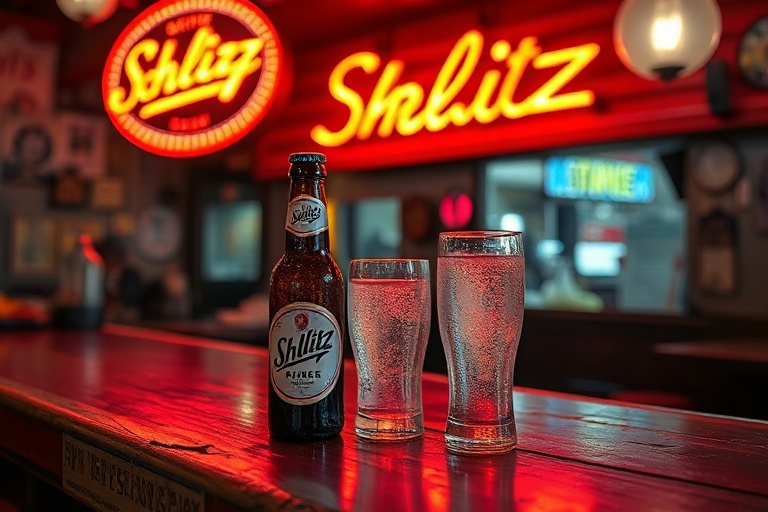
Few brands encapsulate the rise and fall of American brewing history quite like Schlitz Beer. Once the largest brewery in the United States, Schlitz dominated saloons, ballparks, and kitchen tables for nearly a century. Its story is one of innovation, ambition, and ultimately, the brutal realities of industrial competition.
The brand’s journey began in 1849 when August Krug opened a small brewery in Milwaukee. By 1858, Joseph Schlitz took over and rebranded it, transforming it into a national powerhouse. At its peak in the 1950s and 1960s, Schlitz produced over 10 million barrels annually, becoming synonymous with American lager culture. Yet by the 1980s, the company filed for bankruptcy, a victim of changing tastes, corporate mismanagement, and the rise of craft beer. Today, Schlitz remains a fascinating case study in branding, industrial decline, and the enduring allure of nostalgia.
The Rise of an American Icon
Schlitz’s success was built on two pillars: technological innovation and savvy marketing. In the late 19th century, the brewery pioneered pasteurization, allowing beer to be shipped nationwide without spoiling. This was a game-changer in an era when most beer was consumed locally. Schlitz also invested heavily in refrigerated rail cars, ensuring freshness across the country. By 1902, it was the first brewery to sell over a million barrels in a single year.
The company’s advertising campaigns were equally groundbreaking. In the 1930s, Schlitz launched a series of ads featuring the slogan “The Beer That Made Milwaukee Famous,” a phrase that became ingrained in American pop culture. During World War II, Schlitz positioned itself as the beer of choice for soldiers, reinforcing its patriotic image. By the 1950s, the brand had expanded into television sponsorships, including a long-running partnership with the Chicago Cubs, cementing its place in the fabric of American leisure.
Schlitz’s dominance was not just about volume—it was about perception. The brewery cultivated an image of purity and quality, even as competition from Anheuser-Busch and Miller grew fiercer. Its beers were marketed as crisp, clean, and refreshing, appealing to a broad audience. This strategy worked for decades, making Schlitz a household name from coast to coast.
The Cracks in the Foundation
By the 1970s, Schlitz’s fortunes began to unravel. The company, now under new ownership, prioritized cost-cutting over quality. It switched to cheaper ingredients, including corn syrup, to boost profits. The result was a beer that tasted watered down compared to competitors like Coors and Budweiser. Consumers noticed. Taste tests in the late 1970s often ranked Schlitz near the bottom, a stark contrast to its once-unassailable reputation.
Corporate decisions further eroded Schlitz’s standing. In 1981, the company merged with Stroh Brewery Company, a move that led to layoffs and a loss of institutional knowledge. Quality control slipped as production was consolidated in less efficient plants. Meanwhile, the craft beer revolution was gaining momentum, with smaller breweries offering bold, flavorful alternatives. Schlitz, once the king of American beer, found itself struggling to keep up.
The final blow came in 1987 when Schlitz filed for bankruptcy. The brand was sold off piece by piece, its legacy reduced to nostalgia. Yet even in its decline, Schlitz remained a cultural touchstone. Its jingle, “Schlitz… the beer that made Milwaukee famous,” echoed in bars and ballparks long after the company’s collapse.
Schlitz in the Global Context
Schlitz’s story is not unique in the world of beer. Many once-dominant breweries have faced similar fates due to globalization, consolidation, and shifting consumer preferences. In Europe, brands like Heineken and Stella Artois expanded aggressively, often overshadowing local favorites. In Asia, mass-produced lagers like Asahi and Kirin have dominated, while smaller craft breweries struggle for shelf space. Schlitz’s decline reflects a broader trend in the brewing industry: the tension between tradition and industrialization.
Yet there are signs of a Schlitz revival. In the 2010s, the brand was reintroduced in limited quantities, targeting nostalgic drinkers and craft beer enthusiasts. Some breweries have even begun experimenting with “vintage” Schlitz recipes, reviving the original flavor profile. The brand’s legacy persists in pop culture, from references in movies to its place in beer history books.
Schlitz’s story also highlights the importance of authenticity in branding. While the brewery once thrived on innovation, its later years were marked by shortcuts and cost-cutting. Today’s consumers, especially younger generations, prioritize transparency and quality. Brands that cut corners risk losing their audience permanently. Schlitz’s resurgence attempts to reclaim that authenticity, positioning itself as a relic of a bygone era of American brewing.
What Schlitz Teaches Us About Beer Culture
Schlitz’s rise and fall offer several lessons for the modern beer industry. First, consistency matters. Schlitz’s decline began when it compromised on quality, a move that alienated loyal drinkers. Second, innovation is key—but it must be balanced with tradition. Schlitz’s early success came from embracing new technology, but its later failure stemmed from abandoning the principles that made it great. Finally, nostalgia is a powerful force. Schlitz’s legacy endures because it tapped into a collective memory of simpler times, even as the world moved on.
For beer enthusiasts, Schlitz remains a fascinating subject. It’s a reminder that even the mightiest brands can fall if they lose sight of what made them special. It’s also a testament to the cyclical nature of trends. What was once dismissed as outdated can later be celebrated as vintage. In an era where craft beer dominates, Schlitz offers a glimpse into the past—and a cautionary tale for the future.
The story of Schlitz Beer is far from over. As long as there are drinkers who remember its heyday, the brand will continue to live on in memory. And for those discovering it for the first time, Schlitz serves as a reminder of a time when American beer was defined by ambition, innovation, and a commitment to quality. Whether it’s a relic of the past or a sign of things to come, Schlitz remains an indelible part of beer history.
This article was written for Dave’s Locker by a contributing journalist. For more on beer history and culture, explore our Food and Entertainment sections.