Trump’s New Bank Citizenship Order: What It Means for Finance
“`html
Trump Signs Executive Order on Bank Citizenship Requirements
Published on
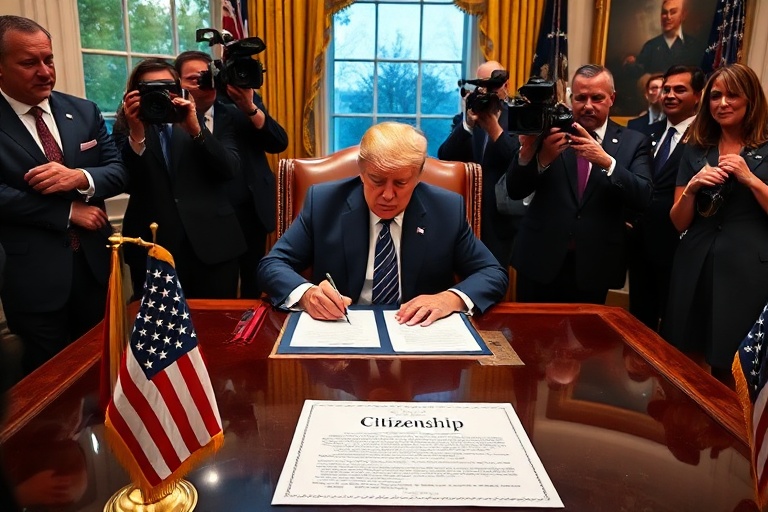
President Donald Trump signed an executive order on November 14 that directs federal financial regulators to scrutinize the citizenship status of bank owners and investors more closely. The order, titled “Ensuring Financial Stability Through Citizenship Transparency,” aims to address concerns about foreign influence in U.S. banking institutions. While the administration frames it as a national security measure, critics argue it could disrupt financial markets and discourage foreign investment.
The Executive Order’s Key Provisions
The order requires the Treasury Department, Federal Reserve, and other regulators to review existing regulations and propose new rules within 90 days. These rules would mandate stricter reporting requirements for non-U.S. citizens who own or invest in American banks. The order also establishes a working group to monitor compliance and assess potential risks to financial stability.
Key elements of the executive order include:
- Enhanced Due Diligence: Banks must verify the citizenship of significant shareholders and investors, reporting any foreign ownership above certain thresholds.
- Regulatory Review: The Treasury Department must audit existing policies and recommend legislative or executive actions to close perceived loopholes.
- National Security Justification: The order cites concerns about foreign adversaries gaining undue influence over U.S. financial institutions.
- Implementation Timeline: Agencies have 90 days to draft rules and submit them for review.
Broader Implications for the Financial Sector
The executive order arrives amid heightened tensions over economic sovereignty and geopolitical competition. While supporters praise the move as a necessary safeguard, opponents warn it could deter foreign capital and destabilize markets. The banking industry has already expressed concerns, with some executives privately calling the order an overreach that could complicate operations.
Foreign investors, particularly from China and Europe, may face additional scrutiny under the new requirements. Analysts suggest that banks with significant international ownership could restructure their shareholder bases to comply, potentially leading to divestment or reduced investment flows. The order’s long-term impact on market liquidity remains uncertain, but early reactions from economists indicate cautious pessimism.
Political and Legal Reactions
Congressional Republicans largely applauded the order, framing it as a commonsense step to protect American interests. Senator Tom Cotton, a vocal advocate for stricter financial regulations, called it “a long-overdue crackdown on foreign interference.” Meanwhile, Democrats criticized the move as politically motivated, arguing it could undermine trust in U.S. financial institutions.
Legal experts have raised questions about the order’s constitutionality, particularly regarding its potential conflict with existing laws like the International Banking Act of 1978. Critics contend that the administration may be overstepping its authority by imposing new obligations on private institutions without congressional approval. Legal challenges are expected, with civil liberties groups already signaling their intent to challenge the order in court.
What Comes Next?
The coming months will determine the order’s real-world impact. Regulators must draft rules that balance national security concerns with market stability, a task that will require delicate negotiation. For banks, the immediate priority will be interpreting the new requirements and adjusting compliance frameworks. Investors, meanwhile, will closely watch how the working group interprets “foreign influence,” a term left undefined in the order.
One thing is certain: the executive order marks a significant escalation in the debate over foreign ownership in U.S. finance. Whether it achieves its stated goals—or creates unintended consequences—will depend on how regulators, lawmakers, and industry leaders navigate the challenges ahead.