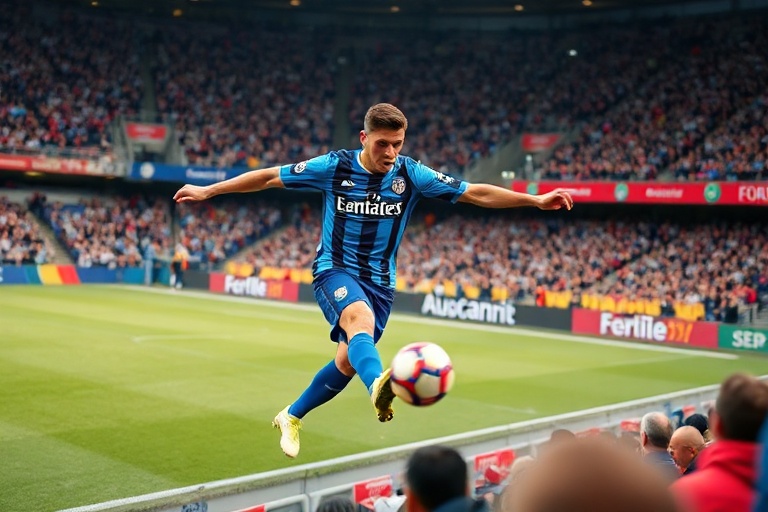
UEFA Conference League Explained: Format, Impact, and Future
“`html
What Is the UEFA Conference League?
The UEFA Conference League represents the third-tier club competition organized by European football’s governing body, UEFA. Introduced in the 2021–22 season, it was designed to provide more clubs across the continent with meaningful European football experience. Unlike the long-standing Champions League and Europa League, the Conference League offers a pathway for teams from smaller leagues to compete on a continental stage.
Its creation stemmed from UEFA’s desire to expand opportunities while maintaining competitive integrity. The competition features 177 clubs annually, divided into qualifying rounds, a group stage, and knockout phases. The winner earns a place in the following season’s Europa League playoffs, offering a tangible reward for domestic success.
A Structure Built for Inclusivity
The competition’s format is carefully balanced to ensure accessibility. Clubs enter through their domestic leagues, with the number of berths allocated based on UEFA’s country coefficient rankings. Lower-ranked nations receive more direct spots, while higher-ranked teams may drop into the Conference League after Champions League or Europa League elimination.
The group stage consists of eight groups of four teams, with each club playing six matches. The top two from each group advance to the knockout rounds, beginning with a two-legged playoff before progressing to the Round of 16.
This tiered approach ensures that even clubs from leagues like Kosovo, Andorra, or San Marino—previously with minimal European exposure—can now compete regularly. For smaller federations, it’s not just about prestige; it’s about financial survival and visibility.
Why Was It Created?
UEFA’s decision to launch the Conference League was driven by a combination of financial and competitive motivations. In an era where football’s wealth gap between elite clubs and the rest continued to widen, UEFA sought to redistribute resources more evenly. The new competition allowed more clubs to benefit from broadcasting revenue, prize money, and commercial opportunities.
The Europa League, previously the second-tier competition, had grown increasingly dominated by top clubs due to its expanded format. Many argued it had become a secondary Champions League rather than a true stepping stone for mid-level teams. The Conference League was positioned as a genuine alternative—one that could nurture talent and ambition outside the traditional powerhouses.
Financial Impact on Participating Clubs
For clubs outside Europe’s elite, participation in the Conference League can be transformative. Prize money, though less than the Europa League, still provides a significant boost. In its inaugural season, UEFA distributed over €100 million in solidarity payments to participating clubs. By 2023–24, total prize money exceeded €235 million.
This financial lifeline helps clubs invest in infrastructure, youth academies, and player development. For example, Italian side Fiorentina reached the 2022–23 final, earning €20 million in prize money—a sum that can stabilize a club’s budget for years.
Television rights also play a crucial role. Broadcasters in smaller markets now showcase their clubs on a European stage, increasing local and international interest. This exposure often leads to higher sponsorship deals and merchandise sales.
Key Moments and Standout Performances
The Conference League has already produced memorable moments, proving its competitive credibility. In the 2021–22 final, AS Roma defeated Feyenoord 1–0 in Tirana, Albania, in front of 19,597 fans. José Mourinho’s tactical mastery and the emotional weight of Roma’s victory resonated deeply with Italian supporters, many of whom had longed for a European trophy.
The following season saw West Ham United lift the trophy after a dramatic final against Fiorentina in Prague. Declan Rice’s late header secured a 2–1 win, ending the club’s 43-year wait for a major European title. For West Ham, a team not traditionally among England’s elite, the victory was a statement of intent.
Underdog Stories and New Narratives
One of the competition’s strengths is its unpredictability. Clubs like AZ Alkmaar, Union Berlin, and Bodø/Glimt have used the tournament as a springboard to greater success. Union Berlin’s run to the 2022–23 quarterfinals, despite being a Bundesliga mid-table side, showcased the competition’s ability to produce shocks.
Even smaller nations have celebrated breakthroughs. Albanian club Partizani Tirana advanced to the group stage in 2022–23, while FC Santa Coloma from Andorra became the first team from the principality to win a European match at home.
These stories reinforce the Conference League’s role as a platform for ambition, not just participation. It rewards clubs that perform consistently in their domestic leagues, offering a tangible reward for excellence.
Criticism and Challenges
Despite its positive intentions, the Conference League has faced criticism from various quarters. Some argue it dilutes the quality of European football by creating a third major competition. With more games added to already packed schedules, player welfare concerns have been raised, particularly for clubs competing domestically and in European qualifiers simultaneously.
Others question the long-term appeal of a competition perceived as less prestigious than the Europa League. Early television ratings in some markets were modest, raising doubts about its commercial viability. The competition’s identity—neither fully elite nor truly grassroots—has made it difficult to market consistently.
Balancing Tradition and Innovation
UEFA has attempted to address these concerns by refining the competition’s format. Starting in 2024–25, the group stage will expand to 32 teams in eight groups of four, with the introduction of a single-leg knockout playoff round. This change aims to reduce fixture congestion while maintaining competitive balance.
There are also discussions about further integrating the Conference League into UEFA’s broader competition ecosystem. Some propose linking it more closely to domestic cup winners or introducing a qualifying route for Europa Conference League winners to return to the Europa League.
The challenge lies in ensuring the competition remains relevant without overshadowing its predecessors. UEFA must strike a balance between inclusivity and prestige, between opportunity and tradition.
Looking Ahead: The Future of the Tournament
As the Conference League enters its fourth season, its future appears secure but not guaranteed. UEFA’s commitment to expanding European football’s footprint—particularly in emerging markets—suggests the competition will continue growing. The new broadcasting deals signed in 2023, covering 2024–27, indicate confidence in its long-term viability.
For clubs, the financial and competitive benefits remain clear. The Conference League offers a realistic path to European success, whether as a launchpad for ambitious teams or a lifeline for those in smaller leagues. Its ability to produce unexpected heroes and dramatic narratives ensures it remains a compelling watch.
What Fans Can Expect Next
Fans should expect continued innovation in the competition’s structure and presentation. UEFA has signaled a focus on fan engagement, with efforts to improve stadium atmospheres and digital content. The introduction of a final-four format in future editions has also been mooted, though no formal plans have been confirmed.
For clubs, the message is clear: the Conference League is more than a consolation prize. It is a legitimate stage for ambition, a platform for growth, and an opportunity to write new chapters in European football history.
As the competition evolves, one thing is certain—it has already redefined what it means to compete in Europe. For players, managers, and supporters alike, the UEFA Conference League is no longer an afterthought. It is a destination worth pursuing.
For more insights into European club competitions, visit our News and Sports sections.