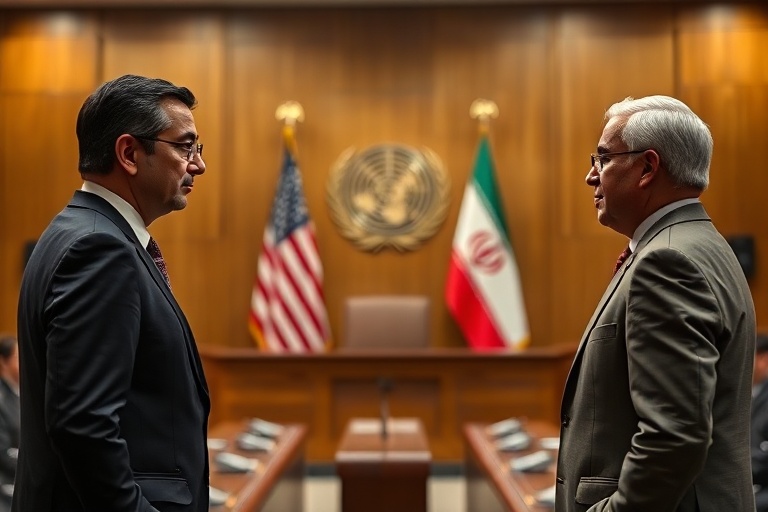
The relationship between the United States and Iran remains one of the most complex geopolitical dynamics in modern international relations. Recent developments have underscored the fragile nature of diplomatic efforts, as both nations navigate a landscape marked by sanctions, proxy conflicts, and occasional attempts at dialogue. Understanding these interactions requires examining recent events, historical context, and the broader implications for global stability.
Recent Diplomatic Shifts and Stalled Negotiations
The Biden administration has pursued a dual approach toward Iran: re-engaging in nuclear diplomacy while maintaining pressure through economic sanctions. In 2023, indirect talks between Washington and Tehran, mediated by European allies, showed intermittent progress but ultimately stalled. The primary sticking point remains Iran’s nuclear program, which Tehran insists is for peaceful purposes, while Western powers suspect military ambitions.
One notable development occurred in August 2023, when Iran released five American prisoners in exchange for the unfreezing of $6 billion in Iranian oil revenues held in South Korean banks. While this swap provided temporary relief, it also highlighted the ongoing humanitarian toll of prolonged tensions. Critics argue that such arrangements, while beneficial for the individuals involved, do little to address systemic issues.
Meanwhile, Iran’s regional influence continues to expand. The country maintains strong ties with militant groups in Lebanon, Yemen, and Syria, which the US and its allies view as destabilizing. These relationships complicate any potential thaw in US-Iran relations, as Washington remains wary of Iran’s long-term strategic goals.
Military Posturing and Regional Security Concerns
Military tensions have escalated in recent months, particularly in the Strait of Hormuz, a critical chokepoint for global oil shipments. In November 2023, reports emerged of Iranian naval exercises near the strait, prompting concerns from US officials about potential disruptions to shipping lanes. The US Fifth Fleet, based in Bahrain, has maintained a constant presence in the region as a deterrent.
Proxy conflicts in Iraq and Syria have further strained relations. Iranian-backed militias in Iraq have targeted US military installations, leading to retaliatory strikes by American forces. In Syria, Iran’s support for the Assad regime has drawn criticism from Washington, which views Tehran’s involvement as prolonging a devastating civil war. These flashpoints illustrate how regional conflicts often serve as proxies for the broader US-Iran rivalry.
The assassination of Iranian Revolutionary Guard Corps (IRGC) commanders has also fueled tensions. In January 2024, an Israeli strike in Damascus killed a high-ranking IRGC officer, an act widely attributed to Israeli intelligence but condemned by Iran as a violation of its sovereignty. The incident underscored the proxy warfare that defines much of the US-Iran proxy conflict in the Middle East.
Economic Sanctions and Their Humanitarian Impact
The US has imposed extensive sanctions on Iran since 2018, when the Trump administration withdrew from the Joint Comprehensive Plan of Action (JCPOA), commonly known as the Iran nuclear deal. These sanctions target Iran’s oil exports, banking sector, and military entities, aiming to curtail the country’s nuclear ambitions and regional influence. However, the economic fallout has been severe, particularly for ordinary Iranians.
Inflation rates in Iran have soared, reaching over 40% in 2023, while unemployment remains stubbornly high. The scarcity of essential medicines, including those for cancer treatment, has been widely documented. International aid organizations have struggled to deliver supplies due to banking restrictions and logistical challenges. The humanitarian crisis has prompted some policymakers to advocate for targeted sanctions relief, particularly for medical and food imports.
- Oil Exports: Iran’s oil exports have plummeted from over 2 million barrels per day in 2018 to less than 1 million in 2023, despite attempts to bypass sanctions through clandestine shipments.
- Currency Devaluation: The Iranian rial has lost over 70% of its value against the US dollar since 2018, eroding purchasing power for millions of citizens.
- Banking Restrictions: Major international banks have severed ties with Iranian financial institutions, complicating trade and humanitarian aid efforts.
Despite these challenges, Iran has found ways to circumvent some sanctions. The country has expanded trade with allies like China and Russia, leveraging barter agreements and alternative payment systems. However, these workarounds have done little to alleviate the broader economic strain on the Iranian population.
Public Sentiment and Domestic Politics in Both Nations
In the United States, public opinion on Iran remains deeply divided. A 2023 Pew Research poll found that 54% of Americans view Iran unfavorably, while only 12% hold a favorable view. The perception of Iran as a state sponsor of terrorism and a regional aggressor is deeply entrenched, fueled by decades of hostile rhetoric and proxy conflicts. However, some advocacy groups argue that diplomacy, rather than confrontation, is the only viable path forward.
Within Iran, the political landscape is equally complex. The hardline faction, led by Supreme Leader Ayatollah Ali Khamenei and President Ebrahim Raisi, has consistently opposed any concessions to the West. Raisi’s administration has doubled down on anti-American rhetoric, framing negotiations as a sign of weakness. Meanwhile, reformist factions and civil society groups continue to push for engagement, arguing that sanctions have failed to achieve their stated goals and have only harmed ordinary citizens.
Protests have erupted periodically in Iran, often sparked by economic grievances but quickly evolving into broader calls for political reform. The 2022-2023 protests, which began over the death of Mahsa Amini in police custody, demonstrated widespread dissatisfaction with the regime’s handling of both domestic and foreign policy. These movements have drawn international attention but have also been met with a harsh crackdown by security forces.
The interplay between domestic politics and foreign policy cannot be ignored. In both countries, leaders often use anti-foreign rhetoric to rally their bases, making substantive diplomatic progress difficult. Yet, the human cost of prolonged confrontation—whether through sanctions, military strikes, or proxy warfare—continues to mount.
Looking Ahead: Paths to De-escalation or Further Conflict
The coming months will be critical in determining whether US-Iran relations can stabilize or if further deterioration is likely. Several potential scenarios could unfold:
- Renewed Nuclear Diplomacy: If indirect talks resume, a new framework could emerge that balances sanctions relief with stricter oversight of Iran’s nuclear program. However, trust between the parties is at an all-time low, making compromise unlikely without significant concessions.
- Regional Proxy Conflicts: Continued clashes between Iranian-backed militias and US-aligned forces in Iraq, Syria, or Yemen could escalate into direct confrontations. The risk of miscalculation remains high, particularly in the Strait of Hormuz.
- Economic Collapse in Iran: If sanctions remain in place, Iran’s economy could face further collapse, potentially leading to internal unrest or a shift in leadership. Such instability could have unpredictable consequences for regional security.
- External Mediation: European or regional actors, such as Qatar or Oman, may attempt to broker new talks. However, their influence is limited by the deep mistrust between Washington and Tehran.
For now, the status quo appears entrenched. Both nations remain locked in a cycle of pressure and retaliation, with little sign of meaningful dialogue. Yet history has shown that prolonged confrontation rarely yields positive outcomes for either side. The Biden administration’s approach—mixing conditional diplomacy with targeted strikes—has so far failed to break the deadlock. Meanwhile, Iran’s leadership continues to prioritize resistance over engagement, despite the mounting costs.
The human toll of this standoff cannot be overstated. From the families separated by sanctions to the soldiers and civilians caught in proxy conflicts, the consequences of US-Iran tensions ripple across the globe. As both nations grapple with internal challenges, the opportunity for constructive engagement may yet arise—but it will require bold leadership and a willingness to compromise on both sides.
For those seeking to understand the broader Middle East landscape, the US-Iran dynamic remains a critical lens. Whether through political analysis or regional security reports, staying informed about these developments is essential for grasping the complexities of modern geopolitics.