US-Iran Relations: Nuclear Tensions, Proxy Wars, and Global Impact
“`html
US and Iran Tensions: A Global Tightrope Walk
The relationship between the United States and Iran remains one of the most volatile geopolitical dynamics of the 21st century. Decades of diplomatic estrangement, economic sanctions, and military posturing have created a fragile equilibrium—one that frequently teeters on the edge of escalation. While direct conflict has been avoided, proxy battles, cyber warfare, and economic pressure continue to define this uneasy standoff. Understanding this relationship requires looking beyond headlines to examine historical grievances, regional power plays, and shifting global alliances.
Iran’s strategic position in the Middle East amplifies its influence. Bordering Iraq, Afghanistan, Turkey, and the Persian Gulf, it serves as a crossroads for trade, migration, and military movement. The country’s nuclear program has been a focal point of international concern since the early 2000s, leading to a series of negotiations, agreements, and withdrawals—most notably the 2015 Joint Comprehensive Plan of Action (JCPOA), which the US abandoned in 2018. This withdrawal triggered a cycle of escalation: Iran resumed uranium enrichment, the US reimposed sanctions, and regional tensions flared across Syria, Yemen, and Lebanon.
Meanwhile, Iran’s Islamic Revolutionary Guard Corps (IRGC) has extended its reach through allied militias and political movements. This network, often described as the “axis of resistance,” challenges US interests and its regional partners, particularly Israel and Saudi Arabia. The IRGC’s influence is not limited to the battlefield. It operates in cyber space, financial systems, and cultural spheres, complicating efforts to isolate Iran diplomatically.
The Nuclear Shadow: From JCPOA to Current Standoffs
The 2015 nuclear deal, negotiated under President Barack Obama, was hailed as a breakthrough. It limited Iran’s uranium enrichment, imposed intrusive inspections, and lifted sanctions in exchange for compliance. European powers, Russia, and China remained committed even after the US withdrawal, attempting to salvage the agreement through the Instrument in Support of Trade Exchanges (INSTEX). But Iran’s patience wore thin.
By 2019, Iran began incrementally violating the JCPOA’s terms, citing the inability of European signatories to offset US sanctions. Enrichment levels rose, advanced centrifuges were installed, and access for international inspectors was restricted. The assassination of Iranian General Qasem Soleimani in January 2020 by a US drone strike in Baghdad marked a dangerous escalation. Soleimani, commander of the IRGC’s Quds Force, was a central figure in Iran’s regional strategy. His death prompted Iran to retaliate with missile strikes on US bases in Iraq, raising fears of a wider conflict.
The election of President Joe Biden in 2020 offered a glimmer of hope for diplomacy. The administration signaled a willingness to return to the JCPOA, provided Iran resumed full compliance. Talks in Vienna progressed slowly, mediated by European, Russian, and Chinese diplomats. Yet obstacles remained: Iran demanded guarantees that future US presidents wouldn’t abandon the deal again, while the US insisted on broader negotiations covering Iran’s missile program and regional activities. Progress stalled, and indirect talks were suspended in 2022.
Proxy Wars and Regional Power Struggles
Beyond the nuclear issue, the US and Iran are locked in a shadow war across the Middle East. Syria remains a key battleground. Iran, alongside Russia, has backed the regime of President Bashar al-Assad, providing military advisors, weapons, and fighters from allied groups like Hezbollah. The US, in contrast, has supported Kurdish-led forces in the fight against ISIS and maintains a military presence in eastern Syria to prevent the group’s resurgence.
In Yemen, Iran supports the Houthi rebels, while a Saudi-led coalition, backed by the US, has waged a prolonged campaign against them. The conflict has resulted in one of the world’s worst humanitarian crises, with millions displaced and facing famine. Despite UN-brokered ceasefires, sporadic fighting continues, and the humanitarian toll grows.
Lebanon presents another flashpoint. Hezbollah, Iran’s most powerful regional proxy, wields significant political and military power. The group’s arsenal of rockets and missiles poses a direct threat to Israel, a key US ally. Tensions flared in 2023 when Hezbollah launched drones into northern Israel, prompting retaliatory strikes. The US has repeatedly reaffirmed its commitment to Israel’s security, while Iran frames its support for Hezbollah as resistance against Western dominance.
Cyber warfare has emerged as a new domain of conflict. Both nations have accused each other of cyberattacks targeting critical infrastructure, financial systems, and government networks. In 2020, a US cyber operation disrupted Iranian systems linked to the IRGC. Iran, meanwhile, has been linked to attacks on US companies, universities, and even a 2021 ransomware strike on a major oil facility in the UAE. These digital skirmishes underscore the evolving nature of US-Iran confrontation.
The Human Dimension: Sanctions, Protests, and Cultural Exchange
The impact of US sanctions on Iran’s civilian population has been profound. Since 2018, the US has imposed more than 1,500 new sanctions targeting Iran’s banking, oil, shipping, and construction sectors. While intended to pressure the government, these measures have also restricted access to medicine, food, and humanitarian aid. The World Bank estimates that Iran’s economy contracted by nearly 14% between 2018 and 2020, with inflation soaring above 50% at times.
Domestic unrest has followed. In 2022, nationwide protests erupted after the death of Mahsa Amini, a 22-year-old Kurdish woman, in police custody. The demonstrations, led largely by young women, called for an end to mandatory hijab laws and broader political freedoms. The government responded with a brutal crackdown, deploying security forces, shutting down internet access, and arresting thousands. At least 500 protesters were killed, according to human rights groups. The US imposed sanctions on Iranian officials and entities linked to the repression, but the crackdown continued unabated.
Despite political tensions, cultural exchanges persist. Iranian cinema, once celebrated globally, continues to thrive. Filmmakers like Asghar Farhadi have won international awards, including Oscars, for works that subtly critique Iranian society. Meanwhile, Persian music, literature, and cuisine have gained popularity in the West. In 2023, a wave of Persian food festivals swept major US cities, showcasing dishes like ghormeh sabzi and tahdig. These cultural touchpoints offer rare moments of connection amid political hostility.
Education remains another bridge. Thousands of Iranian students study in the US, particularly in fields like engineering, medicine, and computer science. Many return home with skills and networks that benefit both societies. Yet visa restrictions and travel bans have made exchanges increasingly difficult. In 2020, the US suspended most student visas for Iranians, citing security concerns. The policy was later relaxed but remains a point of contention.
What Lies Ahead: Diplomacy, Deterrence, or Conflict?
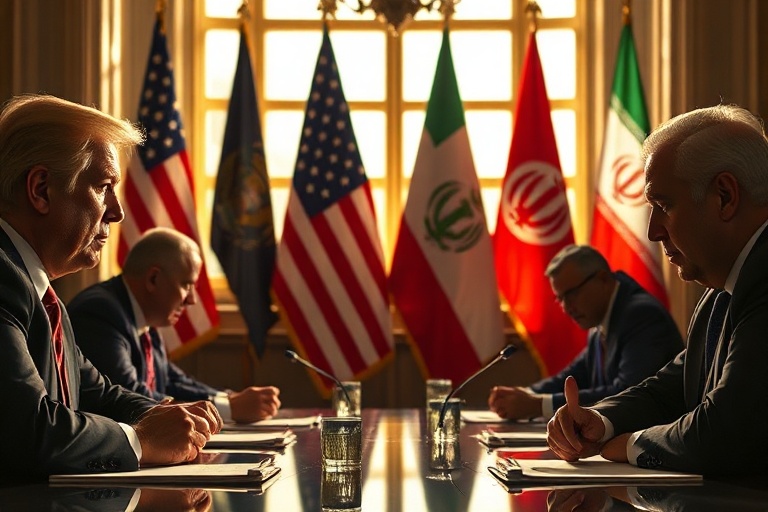
The path forward remains uncertain. Diplomacy offers the best chance to reduce tensions, but mistrust runs deep. A comprehensive agreement would require concessions on both sides: Iran would need to curtail its nuclear program and regional activities, while the US would need to ease sanctions and provide security guarantees. Such a deal faces fierce opposition in Washington and Tehran, where hardliners in both governments view compromise as weakness.
Military deterrence is another option. The US maintains a significant military presence in the Persian Gulf, including aircraft carriers, destroyers, and thousands of troops. Iran, despite its economic woes, has invested in ballistic missiles and drones capable of striking US bases and allies. The risk of miscalculation—a misidentified ship, a misfired missile—remains ever-present.
Regional players are also shaping the equation. Saudi Arabia, Israel, and the UAE have forged closer ties with the US, forming a de facto alliance against Iran. In 2020, the Abraham Accords normalized relations between Israel and several Arab states, further isolating Iran. Yet recent diplomatic overtures, including Saudi-Iran talks brokered by China in 2023, suggest that even rivals seek dialogue when the costs of confrontation grow too high.
For now, the US and Iran appear locked in a cycle of pressure and resistance. Neither side can afford to blink without risking loss of face. But history shows that prolonged standoffs often end not with grand bargains, but with quiet agreements reached under duress. Until then, the world watches as this high-stakes game plays out across boardrooms, battlefields, and digital networks.
One thing is clear: the stakes extend far beyond the two nations. Global energy markets, nuclear non-proliferation, and regional stability all hinge on whether cooler heads can prevail. The alternative—a misstep, a miscalculation, or a deliberate escalation—could plunge the Middle East and beyond into chaos.
For readers interested in the broader implications of Middle Eastern geopolitics, explore our Analysis section, where we break down complex international issues with expert insight. For a closer look at the cultural impact of these tensions, visit our Culture page, where we examine how politics shapes art, music, and daily life across the region.
Key Takeaways
- The US and Iran remain locked in a decades-long standoff rooted in historical grievances and competing strategic interests.
- The 2015 nuclear deal (JCPOA) collapsed after the US withdrawal, leading to increased uranium enrichment and regional proxy conflicts.
- Cyber warfare and digital attacks have become a new frontier in the conflict, targeting infrastructure and financial systems.
- US sanctions have crippled Iran’s economy, fueling protests and humanitarian crises, while cultural exchanges continue to bridge divides.
- Diplomatic solutions remain fragile, with military deterrence and regional alliances shaping the path forward.
The US-Iran relationship is not just a bilateral issue—it’s a global puzzle. Its resolution will depend on whether diplomacy can outpace division, and whether the world can afford another round of escalation.