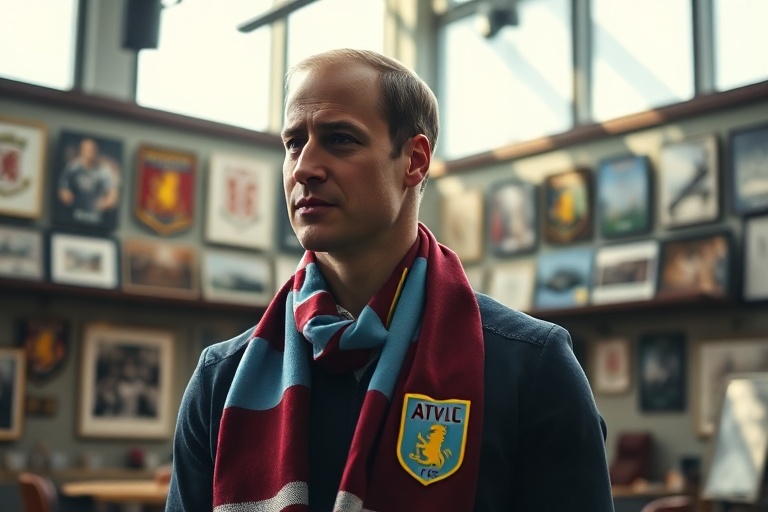
For decades, Aston Villa Football Club has enjoyed a unique distinction among English football clubs: it is one of the few teams supported by a senior British royal. Prince William, the Prince of Wales, has publicly identified Aston Villa as his football club of choice, a fact that has intrigued fans and media alike. This support is not a fleeting public relations gesture but reflects a long-standing personal connection to the club, its history, and its values.
The Early Roots of Royal Football Fandom
Prince William’s affection for Aston Villa dates back to his childhood. Growing up in the 1980s and 1990s, William was exposed to football through both family tradition and school life. His mother, Diana, Princess of Wales, was known to be a sports enthusiast, and football was a common interest shared among royal family members, including his uncle, Prince Andrew. However, it was Aston Villa that captured William’s imagination early on.
The club’s rich history—founded in 1874 and one of the twelve founding members of the Football League—made it a natural choice for someone interested in tradition and legacy. Aston Villa has a proud heritage, having won multiple league titles and the FA Cup, as well as the European Cup in 1982. This blend of history and success likely resonated with the prince, who has always shown respect for institutions with deep roots.
William attended Eton College, where football was a prominent part of school life. Reports indicate that he played in school matches, often wearing Aston Villa colors during training sessions. This early involvement helped solidify his connection to the club, making it more than just a casual interest.
Family Influence and Shared Sporting Passion
The influence of family cannot be underestimated in William’s support for Aston Villa. His grandfather, Prince Philip, was known to be a football fan, though he reportedly supported a different club—Queen’s Park Rangers. However, the broader royal family has long engaged with sports, from polo to sailing, reflecting a culture of participation and support across disciplines.
Prince William has often spoken about the values of teamwork, discipline, and resilience—qualities that are central to both football and royal duty. Aston Villa’s comeback from financial struggles in the early 2010s to regain Premier League status under the ownership of billionaire Nassef Sawiris and Wes Edens mirrors these values. The club’s resilience would have appealed to William, who has faced his own public challenges with a steady demeanor.
Moreover, William’s brother, Prince Harry, has been linked with Arsenal, another historic club, creating a subtle but meaningful division within the royal family’s football loyalties. This dynamic adds a layer of personal rivalry and shared family tradition that extends beyond mere fandom.
Public Gestures and Private Moments
Prince William’s support for Aston Villa has been marked by both public and private gestures. In 2012, he attended an Aston Villa match at Villa Park, sitting in the Royal Box and meeting players afterward. This was one of his first high-profile appearances as a football supporter, signaling his commitment to the club.
He has also been spotted wearing Aston Villa scarves and has included the club’s colors in events, such as during the 2022 Jubilee celebrations. These moments are not staged for the cameras but appear to reflect genuine enthusiasm. William’s approach to public life often emphasizes authenticity, and his support for Aston Villa aligns with this principle.
Beyond attendance, William has spoken about the role of football in society, particularly its ability to bring communities together and provide hope during difficult times. Aston Villa, with its working-class roots and deep connection to Birmingham, embodies this social role. The club’s fanbase, known for its passion and loyalty, mirrors the values William has championed throughout his public career.
Why Aston Villa Stands Out Among Royal Favorites
Aston Villa is not the most glamorous club in English football today. Unlike Manchester United or Chelsea, it does not have a global superstar brand, and its recent history has been marked by ups and downs. Yet, this unpredictability is part of its charm. The club represents a story of perseverance, local pride, and underdog spirit—qualities that likely resonate with Prince William.
Here are a few key reasons why Aston Villa stands apart in royal football support:
- Historical Significance: As one of the oldest clubs in England, Aston Villa carries a legacy that appeals to someone who values tradition and history.
- Community Connection: The club is deeply rooted in Birmingham, a city with a strong industrial heritage and working-class identity, aligning with William’s interest in social issues and regional identity.
- Resilience: The club’s ability to overcome financial and sporting challenges reflects the kind of perseverance William has often emphasized in his public speeches.
- Family Tradition: William’s early exposure to the club, combined with his family’s broader interest in sports, created a natural affinity for Aston Villa.
In contrast, other royal-supported clubs, such as Arsenal or Everton, do not carry the same historical weight or local resonance. Aston Villa’s story is one of survival and revival, making it a fitting choice for a prince who has navigated his own public and private challenges with quiet determination.
Broader Implications: Football, Royalty, and Public Engagement
Prince William’s support for Aston Villa is more than a personal quirk; it reflects broader trends in how modern royalty engages with popular culture. While previous generations of royals were often associated with more traditional sports like polo or cricket, William has embraced football—a sport with massive global appeal and cultural significance.
His involvement with Aston Villa helps humanize the monarchy, bridging the gap between the royal family and ordinary citizens. Football is a universal language, and by associating with a club like Aston Villa, William demonstrates an understanding of the everyday experiences of his subjects. This connection is particularly important in an era where public trust in institutions is often scrutinized.
Moreover, Aston Villa’s resurgence in recent years has provided William with a platform to celebrate success and resilience. The club’s return to the Premier League under American owners and its subsequent European campaigns have given the prince plenty of positive stories to highlight, reinforcing his image as a supporter who stands by his team through thick and thin.
Conclusion: A Loyalty Built on Shared Values
Prince William’s support for Aston Villa is not a passing fancy but a reflection of his personal values, family background, and appreciation for history and resilience. The club’s story mirrors many of the themes William has championed in his public life: perseverance, community, and the power of institutions to endure.
While his brother’s support for Arsenal adds a playful rivalry to the royal family’s football loyalties, William’s commitment to Aston Villa stands out for its authenticity and depth. It is a reminder that even in an era of globalized fandom, personal connection and history still matter.
For Aston Villa fans, the prince’s support is a badge of honor—a royal seal of approval that elevates the club’s status beyond the pitch. For the monarchy, it is a subtle yet effective way to remain relevant and connected to the public. In the end, William’s loyalty to Aston Villa is a story of shared values, making it one of the most compelling royal football stories of our time.
For more on royal connections to sports and culture, explore our Sports and Culture sections at Dave’s Locker.