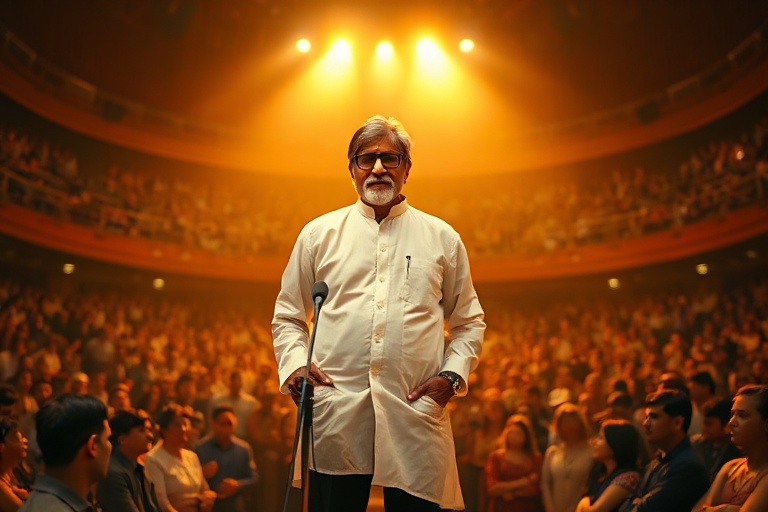
Amitabh Bachchan: How Bollywood’s Legend Redefined Cinema’s Golden Era
“`html
Amitabh Bachchan: The Man Who Defined Generations
Amitabh Bachchan stands as an unparalleled figure in Indian cinema. For over five decades, he has shaped the very fabric of Bollywood, transcending the role of mere actor to become a cultural institution. His voice, towering presence, and unmatched versatility have made him a household name across continents. From his early struggles to his current status as a living legend, Bachchan’s journey offers more than just cinematic inspiration—it reflects the evolution of Indian society itself.
The significance of Bachchan’s career extends beyond awards and box office numbers. He has become a symbol of resilience, reinvention, and the enduring power of storytelling. His work has influenced countless actors, directors, and filmmakers, both in India and abroad. To understand modern Indian cinema, one must first understand the monumental impact of Amitabh Bachchan.
The Early Years: From Struggle to Stardom
Amitabh Bachchan was born on October 11, 1942, in Allahabad, India. His father, Harivansh Rai Bachchan, was a renowned Hindi poet, while his mother, Teji Bachchan, came from a Sikh family. The young Bachchan initially pursued a career in the merchant navy but left after a year, finding the monotony unbearable. It was only in 1969, at the age of 26, that he made his film debut in “Saat Hindustani,” a low-budget drama that went largely unnoticed.
His breakthrough came in 1971 with “Anand,” where he played a terminally ill patient. The film showcased his ability to convey deep emotion, earning him his first Filmfare Award for Best Supporting Actor. Yet, it was his role in “Zanjeer” (1973) that catapulted him to stardom. As Inspector Vijay Khanna, Bachchan portrayed the quintessential “angry young man,” a character that resonated with a generation disillusioned by social and political strife. This role established him as a leading man and redefined the archetype of the Bollywood hero.
By the mid-1970s, Bachchan had become the face of a new wave of Indian cinema. Films like “Deewar” (1975) and “Sholay” (1975) cemented his status as a superstar. His portrayal of Vijay in “Deewar,” a man torn between loyalty to his criminal brother and his moral compass, remains one of his most iconic performances. These films did more than entertain; they reflected the socio-political tensions of the time, making Bachchan a voice of the masses.
The 1980s and 1990s: Reinvention and Resilience
The 1980s brought both triumph and tragedy for Bachchan. While he continued to deliver hits like “Laawaris” (1981) and “Namak Halaal” (1982), his personal life faced turmoil. In 1982, he suffered a near-fatal injury on the set of “Coolie,” which led to a period of reflection and spiritual growth. His recovery marked a turning point in his career, as he began to explore more nuanced roles.
By the 1990s, Bachchan’s dominance waned as younger actors took center stage. However, he refused to fade into obscurity. Instead, he embraced character roles, proving his versatility in films like “Agneepath” (1990), where his portrayal of a vengeful teacher earned him a National Film Award. His turn as the strict patriarch in “Family” (2006) further demonstrated his ability to adapt to changing cinematic trends.
His resurgence in the late 1990s and early 2000s was nothing short of remarkable. Films like “Mohabbatein” (2000) and “Kabhi Khushi Kabhie Gham” (2001) showcased his ability to play complex, multi-dimensional characters. These roles appealed to a new generation of viewers, proving that Bachchan’s talent was timeless. His collaboration with directors like Yash Chopra and Karan Johar revitalized his career, ensuring his relevance in the new millennium.
The Modern Era: A Legacy That Endures
In the 21st century, Amitabh Bachchan has seamlessly transitioned into a mentor and cultural icon. His television debut as the host of “Kaun Banega Crorepati” (the Indian version of “Who Wants to Be a Millionaire?”) introduced him to a younger audience, further solidifying his status as a household name. His participation in the show was not merely a career move but a strategic embrace of new media, ensuring his continued relevance.
Bachchan’s filmography in the 2000s and 2010s reflects his ability to evolve with the times. From his role as a conflicted father in “Piku” (2015) to his portrayal of a retired judge in “Pink” (2016), he has consistently delivered performances that challenge and inspire. His work in “Badla” (2019) and “Gulabo Sitabo” (2020) demonstrates his willingness to experiment with unconventional narratives, proving that age is no barrier to creativity.
Beyond cinema, Bachchan has become a philanthropist and a voice for social causes. His involvement in initiatives like the Polio Eradication Campaign and his support for education reflect his commitment to giving back to society. He has also used his platform to advocate for mental health awareness, sharing his own struggles with depression to help others.
The Broader Implications of Bachchan’s Influence
Amitabh Bachchan’s impact on Indian cinema and culture cannot be overstated. His career spans seven decades, during which he has witnessed and contributed to the transformation of Bollywood. From black-and-white classics to technicolor blockbusters, Bachchan has adapted to every era, proving that true artistry transcends trends.
His influence extends beyond India’s borders. Bachchan has been a cultural ambassador, introducing international audiences to the richness of Indian storytelling. His collaborations with foreign actors and directors, such as his role in “The Great Gatsby” (2013) and “Sridevi Bungalow” (2021), highlight his global appeal. In an industry often criticized for its insularity, Bachchan’s ability to connect with diverse audiences is a testament to his universal appeal.
For aspiring actors, Bachchan’s journey offers valuable lessons. His resilience in the face of setbacks, his willingness to take risks, and his commitment to his craft serve as a blueprint for success. He has shown that talent alone is not enough; perseverance, adaptability, and a deep connection with audiences are equally essential.
Key Takeaways from Amitabh Bachchan’s Career
To fully appreciate Amitabh Bachchan’s legacy, consider these pivotal moments and attributes:
- Versatility: Bachchan has played a diverse range of roles, from action heroes to character actors, proving his adaptability and depth.
- Cultural Impact: His characters reflected the socio-political climate of their time, making him a voice for the masses.
- Resilience: Despite setbacks, Bachchan reinvented himself multiple times, ensuring his longevity in an ever-changing industry.
- Philanthropy: His commitment to social causes, such as polio eradication and mental health awareness, highlights his dedication to giving back.
- Global Reach: Bachchan’s influence extends beyond India, making him a cultural ambassador for Indian cinema worldwide.
For those interested in exploring more about Bollywood’s evolution and its global impact, visit our Entertainment section. To delve deeper into the careers of other iconic actors, check out our Culture category.
Conclusion: The Enduring Legend of Amitabh Bachchan
Amitabh Bachchan’s career is a testament to the power of passion, perseverance, and reinvention. From his humble beginnings to his current status as a living legend, he has left an indelible mark on Indian cinema and culture. His ability to connect with audiences across generations is a rare feat, one that few actors can claim.
As he continues to take on new challenges, Bachchan’s legacy grows ever more significant. He is more than an actor; he is an institution, a symbol of excellence, and a reminder of the transformative power of storytelling. For fans and aspiring artists alike, his journey offers inspiration and a roadmap to success. In a rapidly changing world, Amitabh Bachchan remains a constant—a beacon of talent, resilience, and timeless artistry.