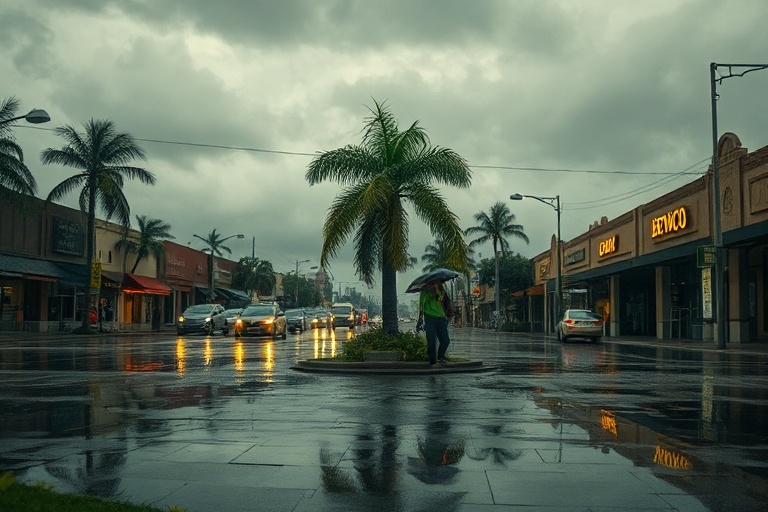
Reynosa, a bustling industrial city in the northeastern Mexican state of Tamaulipas, faces a climate paradox. Positioned along the Rio Grande, it endures some of the region’s most volatile weather—from searing summer heat to sudden, violent storms. Understanding these patterns isn’t just academic; it affects everything from public health to local infrastructure and economic stability.
The Seasons in Reynosa: A Study in Contrasts
Reynosa’s climate is classified as BSh (hot semi-arid) under the Köppen system, sharing traits with nearby Texas cities like McAllen and Brownsville. Yet its proximity to the Gulf of Mexico introduces unique variability. The year splits sharply into two seasons: a brutally hot, humid summer and a milder but unpredictable winter.
Summers in Reynosa are relentless. Temperatures regularly climb above 38°C (100°F), with heat indexes making it feel closer to 43°C (110°F). Nights offer little relief, often staying above 27°C (80°F). This heat is compounded by high humidity, especially during late summer when moisture from the Gulf drifts inland. The result? A city that operates in a near-constant state of thermal stress.
Winter, by contrast, is mild but erratic. Daytime highs average 22–25°C (72–77°F), but cold fronts—known locally as frentes fríos—can plunge temperatures overnight. These fronts often bring sudden storms, including rare but damaging hail or even brief tornadoes. The contrast between seasons forces residents and authorities to adapt quickly, a challenge that grows more complex with each passing year.
Key Weather Events in Recent Years
- June 2023 Heatwave: A prolonged period of extreme heat led to multiple heatstroke cases and strained the city’s electrical grid during peak demand.
- September 2022 Flooding: Tropical moisture from Hurricane Earl dumped over 200mm of rain in 48 hours, overwhelming drainage systems and causing localized flooding in low-income neighborhoods.
- February 2021 Cold Snap: Arctic air brought Reynosa its lowest temperature in decades (-3°C or 27°F), freezing pipes and leaving thousands without running water for days.
Why Reynosa’s Climate Matters Beyond Its Borders
Reynosa isn’t just a case study in extreme weather—it’s a bellwether for broader regional challenges. The city’s climate woes reflect larger trends across the U.S.-Mexico borderlands, where rapid urbanization collides with environmental stress.
Industrial activity plays a significant role. Reynosa hosts over 120 maquiladoras, many in sectors like automotive and electronics. These plants require vast amounts of water and energy, straining local resources during heatwaves or droughts. Meanwhile, the city’s rapid expansion has paved over natural floodplains, reducing the land’s ability to absorb heavy rainfall.
Climate change is amplifying these pressures. Studies by Mexico’s National Water Commission (CONAGUA) show that extreme weather events in Tamaulipas have increased by 40% over the past two decades. Projections suggest Reynosa could see 20% more days above 35°C (95°F) by 2050, alongside stronger hurricanes and more intense rainfall. These changes threaten not just quality of life but also the economic engine driving the region’s growth.
The stakes are particularly high for vulnerable populations. Low-income communities, often located in flood-prone areas, bear the brunt of these shifts. Lack of access to air conditioning, inadequate infrastructure, and precarious housing conditions create a perfect storm during extreme events. Public health officials have noted rising cases of respiratory illnesses during dust storms and heatwaves, while waterborne diseases spike after floods.
The Road Ahead: Adaptation and Resilience
Reynosa is taking steps to mitigate these risks, though progress is uneven. The local government has invested in early warning systems for severe weather, partnering with institutions like the University of Tamaulipas to improve forecasting accuracy. Urban planning initiatives aim to restore some of the city’s lost green spaces, which can help cool temperatures and absorb runoff.
Yet challenges remain. Funding for climate adaptation is often inconsistent, and coordination between municipal, state, and federal agencies can be fragmented. The private sector, too, has a role to play. Many maquiladoras are adopting water recycling programs and energy-efficient technologies, but broader industry-wide standards are still lacking.
For residents, resilience often comes down to individual adaptation. Community groups have sprung up to distribute water filters, share cooling centers during heatwaves, and educate neighbors on emergency preparedness. These grassroots efforts highlight an important truth: while climate change is a global phenomenon, its impacts are felt locally—and solutions must be too.
What Individuals Can Do
Understanding Reynosa’s climate isn’t just about tracking temperatures or rainfall. It’s about recognizing how weather shapes life in a city on the front lines of environmental change. Here are practical ways to engage:
- Stay Informed: Follow local weather services like SMN Mexico or Dave’s Locker News for real-time updates during extreme events.
- Support Sustainable Practices: Advocate for or participate in local initiatives that promote water conservation, green infrastructure, or renewable energy in Reynosa.
- Prepare Your Home: If you’re in Reynosa, ensure your residence is ready for extremes—install window screens for ventilation, seal leaks before rainy season, and have an emergency kit for power outages.
- Engage with Local Policies: Attend municipal meetings or join neighborhood associations pushing for climate-resilient urban planning.
- Share Resources: In tight-knit communities, pooling knowledge—like where to find the nearest cooling center—can save lives during heatwaves.
Conclusion: A City on the Edge
Reynosa’s climate is more than a backdrop to daily life—it’s an active force shaping the city’s present and future. From the factory floors of its industrial parks to the doorsteps of its most vulnerable neighborhoods, weather is a constant variable in the equation of survival and growth. As climate patterns grow more extreme, Reynosa’s ability to adapt will determine whether it thrives or merely survives.
The challenges are daunting, but they’re not insurmountable. By combining scientific rigor, community action, and forward-thinking policy, Reynosa can turn the tide. The question isn’t whether the city will face more heatwaves, storms, or freezes—it’s whether it will be ready when they come. The answer lies in the choices made today, in boardrooms, city halls, and homes across the Rio Grande.