Ebola Resurgence: Global Health Lessons from Recent Outbreaks
“`html
Ebola Resurgence: What Recent Outbreaks Reveal About Global Health Preparedness
The Ebola virus has re-emerged in regions previously declared free of active transmission, prompting renewed concerns about the fragility of global health security. In 2024 alone, confirmed cases have appeared in the Democratic Republic of Congo and Uganda, disrupting local healthcare systems and raising alarms among international health organizations. These developments underscore the persistent threat posed by zoonotic diseases and the challenges of maintaining control in under-resourced settings.
Understanding the Current Ebola Landscape
Recent outbreaks have been concentrated in Central Africa, where the virus is endemic. The World Health Organization (WHO) has reported that the strain responsible for these cases—Sudan Ebola virus—lacks an approved vaccine, complicating containment efforts. Unlike the more widely studied Zaire Ebola virus, which saw the development of effective vaccines during the 2014-2016 West Africa epidemic, the Sudan strain remains a significant challenge for researchers and public health officials.
The resurgence highlights several critical factors:
- Vaccine gaps: No licensed vaccines exist for the Sudan strain, leaving populations vulnerable without preventive measures.
- Cross-border transmission: Movement between affected regions and neighboring countries increases the risk of wider spread.
- Healthcare system strain: Local clinics often lack the infrastructure to manage outbreaks alongside other health priorities.
- Community trust issues: Misinformation and resistance to public health measures can hinder containment efforts.
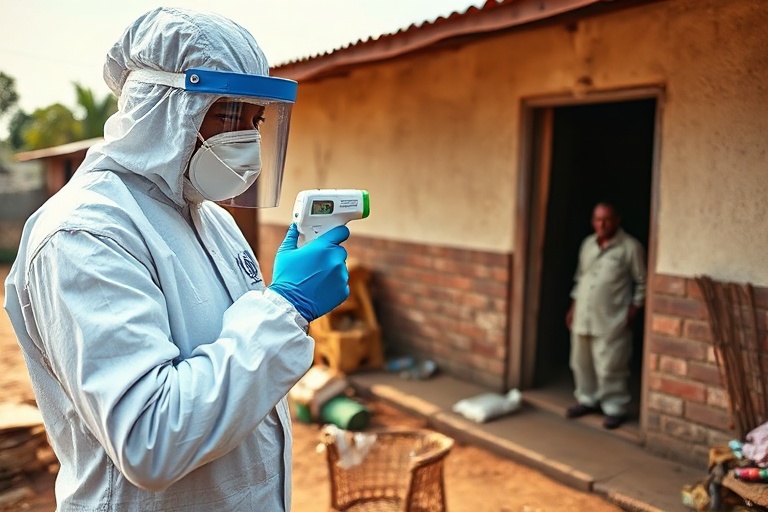
In response, global health agencies have deployed rapid-response teams to affected areas, focusing on contact tracing, safe burials, and community engagement. However, the delayed availability of vaccines for the Sudan strain means these efforts rely heavily on traditional containment strategies.
Global Health Implications: Lessons from Past Outbreaks
The Ebola virus first gained international attention during the 2014-2016 epidemic in West Africa, which resulted in over 11,000 deaths and exposed critical weaknesses in global pandemic preparedness. That crisis led to accelerated vaccine development, with organizations like Merck and Johnson & Johnson producing vaccines for the Zaire strain. Yet, the current Sudan Ebola resurgence reveals a troubling asymmetry in preparedness: while some strains are well-controlled, others remain dangerously under-addressed.
Experts argue that the disparity stems from prioritization in research and funding. The Zaire strain, responsible for the deadliest outbreaks, has received the majority of scientific attention, while less common strains like Sudan and Bundibugyo have been neglected. This imbalance leaves the global health community playing catch-up when new outbreaks emerge.
Another lesson from past outbreaks is the importance of international cooperation. During the 2014-2016 epidemic, delays in response and vaccine distribution were attributed to bureaucratic hurdles and logistical challenges. Today, organizations like the WHO and Gavi, the Vaccine Alliance, are working to streamline processes, but the urgency of the current situation demands even greater coordination.
Local Challenges and Community Responses
The impact of Ebola extends beyond immediate health risks. In affected communities, the virus disrupts economies, education, and social structures. Schools close, trade slows, and families face stigma if they are associated with infected individuals. In the Democratic Republic of Congo, for example, recent outbreaks have coincided with ongoing conflicts, further complicating access to healthcare and increasing the vulnerability of displaced populations.
Community engagement has emerged as a cornerstone of outbreak response. Health workers are prioritizing education campaigns to combat misinformation and encourage early reporting of symptoms. In some areas, trusted local leaders and religious figures are being enlisted to disseminate accurate information, bridging gaps where formal healthcare communication falls short.
Yet, challenges persist. In regions with limited healthcare infrastructure, even basic measures like isolation units and personal protective equipment are scarce. The reliance on international aid means that response times can lag, leaving communities to bear the brunt of the virus’s spread in the interim.
Looking Ahead: Preparing for Future Threats
The recurrence of Ebola outbreaks serves as a reminder that pandemic preparedness is not a one-time effort but an ongoing necessity. To address the gaps exposed by recent events, several strategies are being considered:
- Expanding vaccine development: Research into pan-Ebola vaccines could provide broader protection against multiple strains.
- Strengthening health systems: Investing in local healthcare infrastructure ensures countries can respond more effectively to outbreaks without relying solely on international aid.
- Improving surveillance: Enhanced monitoring and data-sharing between countries can help detect and contain outbreaks before they escalate.
- Addressing misinformation: Proactive communication strategies are essential to counter vaccine hesitancy and encourage community participation in public health measures.
For those interested in further reading on global health challenges, Dave’s Locker Health and Dave’s Locker Science sections offer in-depth analysis and updates on related topics.
Ultimately, the resurgence of Ebola is not just a health crisis but a test of global resilience. The world has made progress since the devastating outbreaks of the past decade, but the current situation demonstrates that complacency is not an option. By addressing the structural weaknesses in pandemic preparedness, the global community can better protect vulnerable populations and mitigate the impact of future threats.