Ferrari’s F1 Legacy: How the Italian Team Shaped Racing History
“`html
Ferrari’s F1 Legacy: Passion, Performance, and the Pursuit of Perfection
Few names in motorsport evoke the same level of reverence as Ferrari. Since its debut in Formula 1 in 1950, the Italian marque has become synonymous with speed, style, and an almost mythical connection to the sport. More than just a racing team, Ferrari represents a cultural institution—one that blends automotive excellence with a deep-rooted passion for competition. Its presence on the Formula 1 grid is not merely about winning races; it is about upholding a legacy that spans generations, continents, and generations of fans.
The Birth of a Legend: Ferrari’s Early Years in F1
Enzo Ferrari founded Scuderia Ferrari in 1929 as a racing team before evolving into a full-fledged manufacturer. The team’s official entry into Formula 1 came in 1950 at the British Grand Prix, marking the beginning of an unbroken streak that continues today. In those early years, Ferrari was more than a competitor—it was a pioneer. The team’s first victory came in 1951 at the British Grand Prix, with José Froilán González behind the wheel of the Ferrari 375 F1. This triumph was a statement: Italy now had a car capable of challenging the dominant Alfa Romeos and Maseratis.
By the mid-1950s, Ferrari had established itself as a force to be reckoned with. The 1956 season saw Juan Manuel Fangio win his fourth World Championship driving for Ferrari, cementing the team’s reputation for engineering brilliance and driver skill. These formative years were defined by raw mechanical innovation and an unrelenting pursuit of perfection. Each race was not just a contest but a narrative of human ingenuity and mechanical artistry.
Ferrari’s Cultural Impact: More Than a Racing Team
Ferrari’s influence extends far beyond the confines of the racetrack. It is a symbol of Italian craftsmanship, a testament to the country’s ability to blend art and engineering. The prancing horse logo, originally the emblem of World War I pilot Francesco Baracca, became a global icon under Ferrari’s stewardship. It adorns everything from road cars to merchandise, evoking a sense of prestige and passion.
In Italy, Ferrari is a point of national pride. The team’s home race, the Italian Grand Prix at Monza, is known as the “Temple of Speed” and draws hundreds of thousands of fans. The tifosi—Ferrari’s loyal fanbase—are renowned for their unwavering support, transforming Monza into a sea of red with scarves, flags, and chants. This fervor is not confined to Italy; Ferrari’s fanbase spans the globe, from São Paulo to Singapore, uniting people under the banner of a shared love for speed and style.
Ferrari’s cultural footprint is also evident in popular media. Films like Le Mans and documentaries such as Ferrari: Race to Immortality have immortalized the team’s legacy. Even in video games, Ferrari is a staple, featured prominently in franchises like Gran Turismo and F1, further embedding its status in the global consciousness.
Challenges and Triumphs: The Modern Era of Ferrari in F1
The past two decades have been a rollercoaster for Ferrari in Formula 1. After a dominant period in the early 2000s, which included back-to-back World Championships for Michael Schumacher in 2001 and 2002, the team faced a prolonged period of struggle. Technical regulations, leadership changes, and fierce competition from teams like Mercedes and Red Bull created a challenging environment.
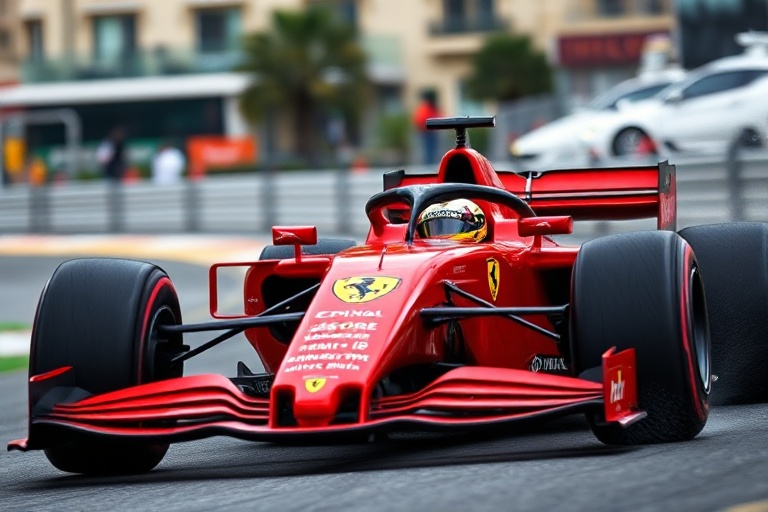
However, Ferrari’s resilience has been a defining characteristic. The 2017 season marked a turning point with the introduction of the Ferrari SF70H, a car that showcased the team’s ability to innovate under pressure. Sebastian Vettel’s near-championship challenge in 2017 and 2018 demonstrated that Ferrari could still compete at the highest level. The arrival of Charles Leclerc in 2019 further invigorated the team, with the Monegasque driver delivering podiums and victories that reignited the tifosi’s hopes.
Ferrari’s journey in the hybrid era of Formula 1 has been marked by both promise and frustration. The team’s focus on developing its own in-house capabilities, including a new wind tunnel and simulator, reflects a commitment to long-term success. Despite setbacks, Ferrari’s ability to adapt and evolve remains a testament to its enduring legacy.
Key Moments in Ferrari’s Modern F1 History
- 2000-2004: Michael Schumacher wins five consecutive World Championships, establishing Ferrari as the team to beat.
- 2010: Fernando Alonso nearly wins the championship in a tightly contested season, finishing second to Sebastian Vettel.
- 2017: The Ferrari SF70H debuts, marking a resurgence in performance and a return to winning ways.
- 2022: The introduction of ground-effect aerodynamics revitalizes Ferrari’s competitiveness, with Leclerc and Sainz consistently challenging for victories.
Ferrari’s Global Influence: A Brand That Transcends Borders
Ferrari’s appeal is universal. In Japan, the team’s partnership with sponsors like Shell and Kaspersky has strengthened its presence in one of motorsport’s most lucrative markets. In the United States, Ferrari’s collaboration with sports networks and streaming platforms has expanded its reach, making it a household name even among non-racing fans.
The team’s commitment to sustainability and innovation is also noteworthy. Ferrari’s push toward hybrid and electric technologies reflects a broader industry trend while staying true to its core identity. Initiatives like the Ferrari SF90 Stradale, a hybrid hypercar, demonstrate the team’s ability to merge racing DNA with cutting-edge automotive technology.
Ferrari’s global influence is further evidenced by its presence in esports. The Ferrari Esports Team competes in virtual racing series, engaging younger audiences and introducing them to the world of Formula 1. This digital expansion ensures that Ferrari remains relevant in an era where traditional sports are increasingly intersecting with virtual competition.
The Future of Ferrari in F1: A New Chapter
As Formula 1 looks ahead to a new era of regulation changes in 2026, Ferrari is positioning itself for sustained success. The team’s focus on developing young talent, such as Charles Leclerc and Carlos Sainz, underscores a commitment to building a future that honors its storied past while embracing innovation.
Ferrari’s ability to navigate the complexities of modern motorsport—balancing performance, financial constraints, and technological advancements—will determine its next chapter. Yet, one thing remains certain: the prancing horse will continue to gallop forward, driven by the same passion that has defined it for over seven decades.
The road ahead is fraught with challenges, but for Ferrari, every race is an opportunity to write another line in a legacy that is already the stuff of legend. Whether it’s the roar of the engines at Monza or the hushed anticipation of a new car launch, Ferrari’s story is far from over. It is a story of passion, perseverance, and the relentless pursuit of greatness.
As the world watches, Ferrari will continue to push the boundaries of what is possible, proving that in the world of Formula 1, the pursuit of perfection is not just a goal—it is a way of life.