French Open 2026: What’s Next for Tennis’ Most Iconic Slam
“`html
French Open 2026: The Future of Tennis’ Most Iconic Grand Slam
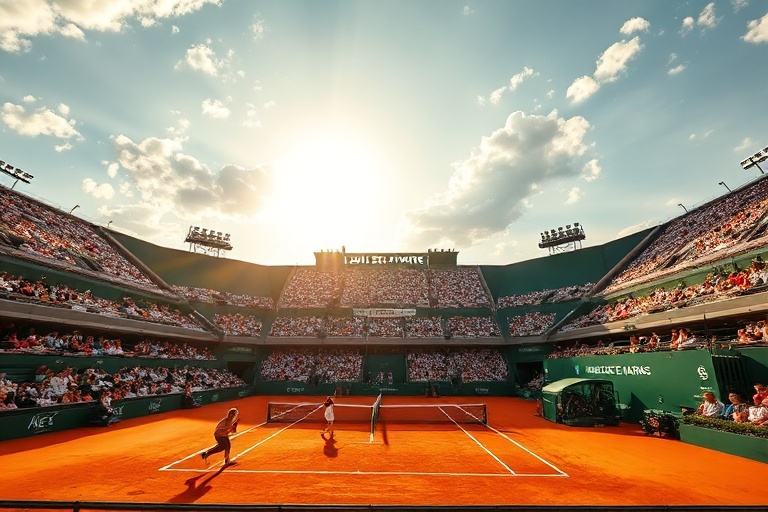
The French Open has long stood as tennis’ most demanding and visually arresting tournament. Played on the red clay of Roland-Garros, it tests not only skill and endurance but also adaptability to a surface that slows the ball and rewards patience. As the countdown to the 2026 edition begins, the event is poised to evolve in ways that reflect broader shifts in global sport, technology, and culture.
Organizers are preparing for a tournament that balances tradition with innovation. The stadium, recently expanded with the new Court Philippe-Chatrier roof and ongoing upgrades to the grounds, will host a field that includes rising stars and established legends. But the real story of 2026 may lie beyond the baseline rallies and dramatic upsets—it could be about how the tournament adapts to a changing world.
The Surface That Defines a Tournament: Clay’s Enduring Legacy
Clay courts remain the defining feature of the French Open. Unlike the fast-paced hard courts of the Australian and US Opens or the lush grass of Wimbledon, red clay forces players to construct points over multiple shots. It rewards strategy, patience, and physical resilience. In 2026, the surface will continue to shape the narrative of the tournament.
Recent discussions among the French Tennis Federation (FFT) have focused on maintaining the integrity of the clay while improving its consistency. Roland-Garros has experimented with slower drying treatments and adjusted the composition of the clay mixture to reduce excessive bounce variability. These changes aim to create a more predictable yet still challenging surface.
For players, this means preparation will be more crucial than ever. Many top athletes now include extended clay-court blocks in their off-season training. Coaches emphasize slide technique, topspin generation, and mental endurance—skills that are nearly irrelevant on other surfaces. The 2026 French Open will likely see a field deeply specialized in clay play, with fewer one-dimensional power baseliners and more versatile all-court players.
The Rise of the Clay Specialist
Over the past decade, the dominance of players like Rafael Nadal—who won a record 14 titles at Roland-Garros—has elevated the status of the clay specialist. While the “King of Clay” retired in 2024, his influence lingers in the playing styles of the current generation. Players such as Carlos Alcaraz, Jannik Sinner, and Iga Świątek have all shown adaptability on clay, but none yet possess the relentless consistency Nadal displayed.
By 2026, a new wave of clay specialists could emerge. The ATP and WTA tours have expanded their clay-court schedules, offering more warm-up tournaments like Monte-Carlo, Rome, and Madrid. This increased exposure helps players develop the nuanced touch and endurance required for Roland-Garros.
The French Open remains the ultimate proving ground. The 2026 edition will likely feature at least one breakthrough performance from a player who has spent years refining their game on the red dirt. Keep an eye on rising stars from South America and Europe—clay is their natural habitat.
Technology and Fan Experience: A New Era for Roland-Garros
The French Open has historically lagged behind other Grand Slam events in digital innovation. While Wimbledon embraced data analytics early and the US Open adopted high-tech fan experiences, Roland-Garros has prioritized tradition. But that is changing rapidly.
For the 2026 tournament, the FFT has announced a series of upgrades designed to enhance both player performance and spectator engagement. These include:
- AI-Powered Match Analytics: Real-time shot tracking and predictive modeling will provide fans with deeper insights into player strategies, shot selection, and movement patterns. This data will be available via an updated mobile app and large screens around the grounds.
- Augmented Reality (AR) Court Views: Using AR glasses or smartphone cameras, spectators will be able to overlay player statistics, historical comparisons, and even replay key points from unique angles.
- Sustainable Fan Engagement Zones: In response to global environmental concerns, the FFT will introduce interactive exhibits focused on sustainability, biodiversity, and the history of Roland-Garros within Parisian culture.
- Enhanced Broadcast Integration: With the rise of streaming platforms, the French Open will offer multi-camera feeds, player mic audio, and interactive commentary options for digital viewers.
These changes reflect a broader trend in sports: the blending of physical and digital experiences. The 2026 French Open aims to be both a sporting spectacle and a cultural event, accessible to global audiences regardless of location.
The Cultural Pulse of the French Open
Roland-Garros is more than a tennis tournament—it is a Parisian institution. The grounds sit in the 16th arrondissement, surrounded by elegant Haussmann-style buildings and lush Bois de Boulogne. The tournament’s timing, just before the height of summer, makes it a social anchor in the city’s calendar.
In 2026, the cultural significance of the French Open will be amplified by several factors. Paris continues to position itself as a global hub for art, fashion, and innovation. The tournament will once again collaborate with local designers, musicians, and chefs to create unique experiences.
For instance, the “Roland-Garros Village” will feature pop-up art installations inspired by tennis motifs, and the official poster will be unveiled in a live-streamed event featuring both athletes and contemporary artists. The tournament’s commitment to cultural fusion reflects its role as a bridge between sport and society.
Moreover, the French Open has increasingly become a stage for social and environmental advocacy. In recent years, players have used their platform to address climate change, gender equality, and mental health. The 2026 edition is expected to continue this trend, with dedicated panels and initiatives focused on sustainability and athlete well-being.
The Role of Women in the Modern French Open
The women’s game has undergone a renaissance in the past five years. The WTA’s decision to equalize prize money across all Grand Slams and the rise of charismatic stars like Aryna Sabalenka, Coco Gauff, and Elena Rybakina have brought unprecedented attention to women’s tennis.
At Roland-Garros, the women’s final often draws a global audience riveted by high-stakes drama. In 2026, the tournament will celebrate the 50th anniversary of the women’s singles final being held at the stadium (previously played at the Racing Club de France). This milestone will be marked with special exhibitions and tributes to pioneering players.
The push for gender parity continues off the court as well. The FFT has committed to increasing the number of women in coaching and administrative roles. The 2026 tournament will feature a dedicated “Women in Tennis” summit, bringing together athletes, executives, and journalists to discuss the future of the sport.
Looking Ahead: The 2026 French Open in Perspective
As the 2026 French Open approaches, the tournament stands at a crossroads. It must honor its storied past while embracing the future. The clay remains unyielding, the Parisian backdrop unchanged in its elegance, and the stakes higher than ever for the players.
One thing is certain: the tournament will continue to be a global stage where athleticism, artistry, and culture intersect. Whether through the emergence of a new clay champion, the integration of cutting-edge technology, or the bold statements made by players beyond the baseline, the 2026 French Open promises to be unforgettable.
For fans around the world, Roland-Garros remains a pilgrimage—a chance to witness tennis in its purest form, played under the Parisian sky. And as the tournament evolves, it will remind us why, after more than a century, the French Open still feels like the heart of the sport.