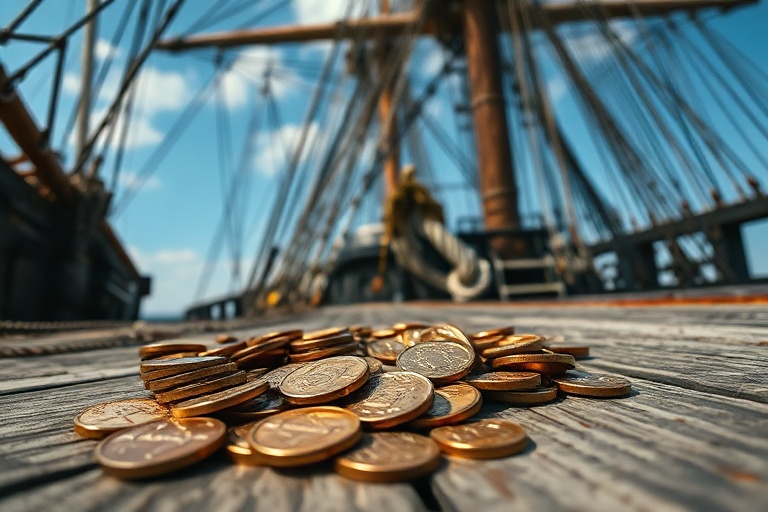
HMS Victory Mast Coins: History, Value, and Modern Collecting
“`html
HMS Victory Mast Coins: History, Value, and Modern Collecting
Among naval artifacts, few items carry the historical weight and romantic allure of the HMS Victory Mast Coins. These small but significant pieces were traditionally placed in the masts of British Royal Navy ships as part of a centuries-old maritime ritual. The HMS Victory, Lord Nelson’s flagship at the Battle of Trafalgar in 1805, is one of the most famous vessels associated with this tradition, and its mast coins have become highly sought-after collectibles.
The Tradition Behind Mast Coins in the Royal Navy
The practice of placing coins in ship masts dates back to at least the 17th century and is rooted in folklore as much as naval custom. Sailors believed that inserting a coin—often a silver one—into the mast would ensure safe passage across treacherous waters and protect the vessel from sinking. This ritual was particularly strong during long voyages or before major battles. While historical records are sparse, the tradition persisted well into the 19th century, with many ships in the Royal Navy participating.
The coins were typically lodged in a small compartment near the masthead or within the rigging itself. Over time, these coins became imbued with symbolic meaning. Some accounts suggest that they were meant to appease sea gods or ward off malevolent spirits. Others interpret the ritual as a form of maritime insurance—a tangible offering to fate in exchange for the crew’s safe return.
By the time of the Napoleonic Wars, the custom had evolved into a more formalized naval practice. Commanders and sailors alike participated, believing the coins carried protective powers. While the practice waned in the 20th century as naval technology advanced, the legacy of mast coins lived on in the artifacts that survived.
The Connection to HMS Victory and Its Legacy
The HMS Victory, now permanently dry-docked in Portsmouth, England, remains one of the most iconic ships in naval history. Launched in 1765, it served with distinction in the American Revolutionary War and reached its zenith at the Battle of Trafalgar, where Admiral Horatio Nelson defeated the combined French and Spanish fleets. Though Nelson was killed during the battle, his ship became a symbol of British naval supremacy.
While no definitive record confirms a specific mast coin from the HMS Victory during the Battle of Trafalgar, the ship’s storied past makes it a natural focal point for collectors interested in mast coinage. The tradition of placing coins in masts was still active during Nelson’s time, and it is plausible that such an artifact could have been part of the Victory’s rigging. The ship’s preservation as a museum vessel has also allowed for the careful examination of its timbers and fittings, though no authenticated mast coin has been recovered from the original structure.
This has not diminished collector interest. Instead, it has fueled demand for related artifacts—coins believed to be from the HMS Victory era, replicas crafted to commemorate the ship, and even coins found in other ships of the same class. The association with Nelson and Trafalgar elevates these items beyond mere numismatic curiosities. They become tangible links to one of history’s most pivotal naval engagements.
What Makes HMS Victory Mast Coins Valuable Today?
The value of a mast coin is determined by several key factors: historical provenance, condition, rarity, and association with a famous vessel. Unlike standard coinage, mast coins were not intended for circulation. Their irregular shape, often filed or cut to fit into tight spaces, makes them unique. Many were British silver coins of the period—such as shillings, sixpences, or half-crowns—chosen for their durability and recognizable value.
Several elements contribute to a mast coin’s appeal:
- Age and Metal Content: Coins from the 18th or early 19th centuries, especially those made of silver, are inherently valuable due to their age and precious metal content.
- Authenticity and Provenance: A documented chain of ownership or a clear link to a specific ship greatly increases value. Provenance from a well-known collection or auction can command premium prices.
- Condition and Modification: While wear is expected, coins that retain legible dates, mint marks, or engravings are more desirable. Some were intentionally defaced or bent, which adds character but may reduce numismatic value.
- Historical Association: Coins tied to famous ships like HMS Victory or events like Trafalgar carry emotional and historical weight, making them more collectible than anonymous pieces.
Recent auction results reflect this demand. In 2022, a silver sixpence believed to be from the HMS Victory era sold at a London auction for over £1,800, far exceeding its bullion value. Another coin, reportedly recovered from a wreck believed to be a British man-of-war from the same period, fetched nearly £3,000 at a maritime-themed sale. These prices underscore how the narrative around an object can outweigh its material worth.
Collecting and Preserving Maritime History
The collecting of HMS Victory and mast coins is a niche but passionate pursuit. Enthusiasts often specialize in naval history, British coinage, or maritime archaeology. Some focus on acquiring authenticated pieces, while others collect replicas or related memorabilia as a tribute to naval tradition.
For those interested in building a collection, several avenues exist:
- Auction Houses and Specialist Dealers: Major auction firms like Sotheby’s, Bonhams, and maritime-focused salerooms regularly feature naval artifacts. Dealers specializing in shipwreck coins or British milled silver often have mast coins in inventory.
- Maritime Museums and Archives: Institutions such as the National Maritime Museum in Greenwich or the HMS Victory Visitor Centre in Portsmouth may offer educational insights or occasional sales of reproduction coins.
- Online Platforms and Communities: Websites like eBay, VCoins, or Numista host a wide range of coins, including those labeled as “mast coins.” However, caution is advised—provenance and authenticity should always be verified.
- Numismatic and Historical Societies: Joining groups dedicated to British coinage or naval history can provide access to expert appraisals and networking opportunities with serious collectors.
Preservation is also a critical aspect of collecting. Since many mast coins are made of silver, they are susceptible to tarnishing. Collectors often store them in controlled environments, using archival-quality holders and avoiding exposure to moisture or direct sunlight. Some choose to display their coins in shadow boxes or within museum-style cases, accompanied by historical context or replica ship models for added narrative depth.
For those drawn to the intersection of history and numismatics, HMS Victory mast coins offer a rare opportunity to hold a piece of naval legend. Whether as a collector, historian, or simply a lover of maritime lore, these artifacts connect the present to a time when ships and sailors shaped the course of empires.
Conclusion: More Than Just a Coin
The HMS Victory mast coins are more than relics of the past—they are vessels of story, belief, and survival. They remind us how deeply superstition and ritual once shaped human endeavor, especially in environments as unforgiving as the open sea. In an age dominated by steel and satellite navigation, these small silver discs represent a humbler, more mystical relationship with the ocean.
As collecting continues to grow, so too does the appreciation for these artifacts. They serve as a bridge between naval history and modern culture, offering collectors a tangible connection to one of Britain’s greatest warships. Whether displayed in a private collection or studied in a museum, the legacy of the mast coin endures—not just as currency, but as a symbol of hope, faith, and the enduring human spirit at sea.
For anyone interested in exploring this fascinating world further, collectibles and history sections on Dave’s Locker offer curated selections and expert insights to guide your journey.