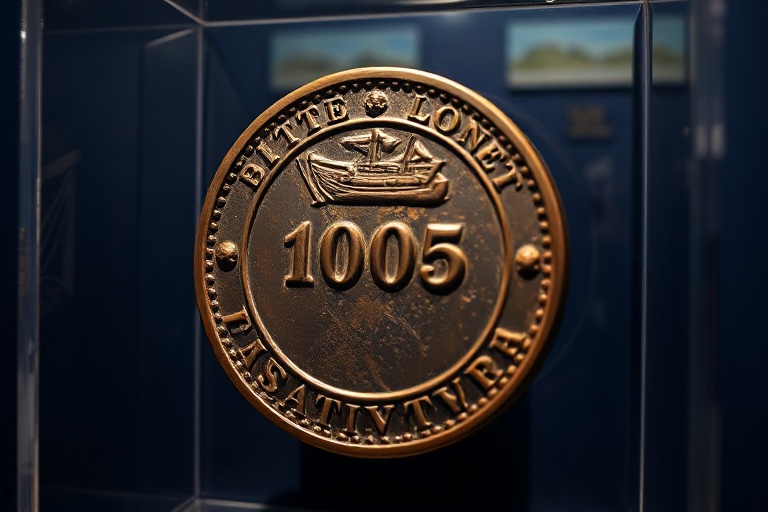
HMS Victory Mast Coins: A Tiny Piece of Naval History With Global Appeal
The HMS Victory is one of the most famous warships in history, a symbol of British naval power during the Age of Sail. Launched in 1765 and immortalized at the Battle of Trafalgar in 1805 under Admiral Horatio Nelson, the ship remains a point of pride for the United Kingdom. Yet beyond its wooden hull and towering masts lies a curious modern artifact: the HMS Victory mast coin. These small, metallic tokens are not just souvenirs. They are miniature bridges between centuries, linking naval tradition with contemporary collecting culture.
What began as a practical shipboard item—used to secure rigging and prevent fraying—has evolved into a sought-after collectible. Today, mast coins are traded among historians, naval enthusiasts, and general collectors worldwide. Their value lies not only in craftsmanship but in the story they carry: a silent witness to the daily life aboard Nelson’s flagship. From Portsmouth dockyards to online auctions in Tokyo and Toronto, these coins have quietly become a global cultural currency.
The Origin and Purpose of Mast Coins Aboard HMS Victory
Mast coins, also known as mast coins or rigging coins, originated as functional tools in 18th-century naval architecture. Made from copper or brass, they were wedged into holes drilled into wooden masts and spars. Their role was simple but critical: to protect the wood from splitting when ropes were tightened around the mast during heavy sailing. Without them, the constant stress of wind and waves could cause catastrophic damage.
The HMS Victory, now preserved in dry dock at the Portsmouth Historic Dockyard, still carries original mast coins in some of its restored sections. These artifacts are among the few surviving physical links to the ship’s active service. While most original coins were likely removed or replaced over time, replicas and period-correct reproductions are now produced for educational and commemorative purposes. These modern versions carry the same design as those used in Nelson’s era—a circular disc with a central hole, often stamped with naval symbols or dates.
A Global Collectible With Deep Historical Roots
The transformation of mast coins from utilitarian hardware to collectible items reflects a broader trend in heritage memorabilia. Items once considered disposable or purely functional are increasingly valued for their historical resonance. This phenomenon is not limited to naval artifacts. From Roman coins to vintage airline seatbelts, everyday objects from the past now command attention—and price tags—in global markets.
HMS Victory mast coins have found a niche among several collector communities:
- Naval historians – who study ship construction and daily life in the Royal Navy.
- Maritime archaeologists – interested in preserving and interpreting underwater and structural heritage.
- Royal Navy veterans – who see the coins as symbols of duty and tradition.
- General antique collectors – drawn to their age, patina, and connection to famous events.
Auction houses such as Christie’s and Bonhams occasionally feature mast coins in maritime sales, often alongside ship models, logbooks, and naval paintings. Prices vary widely depending on age, condition, and provenance. A well-documented 18th-century original might fetch several thousand pounds, while modern reproductions sell for as little as £20–£50. For many, the appeal lies in owning a tangible fragment of history—something that once helped hold aloft the sails that carried Nelson to victory.
From Ship to Showcase: How Mast Coins Are Preserved and Displayed
Preserving a mast coin requires careful handling. Original copper and brass alloys are susceptible to corrosion, especially in humid or salty environments. Museums like the National Museum of the Royal Navy in Portsmouth store mast coins in climate-controlled cases with controlled humidity and minimal light exposure. Some are displayed alongside other Victory artifacts, such as cannonballs and sailors’ tools, to tell a fuller story of shipboard life.
Collectors at home often choose to display their coins in shadow boxes or under magnification. Some mount them on velvet-lined trays or encase them in acrylic for protection. A growing trend among enthusiasts is creating themed collections—pairing mast coins with other Royal Navy relics, such as buttons, belt buckles, or fragments of the ship’s teak decking.
Online communities, including forums on Antiques and maritime history groups on Facebook, serve as hubs for sharing identification tips and valuation advice. Members often post images of coins with questions about markings or wear patterns, highlighting the detective work involved in provenance research.
The Cultural Legacy of HMS Victory Beyond the Battlefield
The legacy of HMS Victory extends far beyond its military achievements. The ship has become a cultural icon, featured in literature, film, and even video games. Mast coins, though small, play a role in this broader narrative. They remind us that history is not only written in treaties and biographies but also in the smallest, most overlooked objects.
In Japan, where miniature collecting (known as kawaii or figure culture) is a multi-billion-dollar industry, replicas of HMS Victory mast coins have appeared as part of naval-themed merchandise. In the United States, reenactment groups use similar coins in educational demonstrations of 18th-century sailing techniques. Even in educational settings, teachers use mast coins to illustrate concepts like friction, tension, and historical craftsmanship.
This global reach underscores a universal human impulse: the desire to connect with the past through touchable, tangible objects. In an age dominated by digital experiences, the tactile nature of a brass coin—its weight in the hand, its smooth or corroded edges—offers a rare and grounding connection to another era.
Why These Coins Matter Now
As climate change threatens coastal heritage sites and modern naval technology renders old tools obsolete, the preservation of objects like mast coins becomes increasingly urgent. They are not just collectibles; they are evidence. Each coin carries the potential to teach future generations about materials, engineering, and human ingenuity in a pre-industrial world.
For collectors, the hunt for an authentic mast coin is more than a hobby—it’s a form of cultural stewardship. For historians, it’s a puzzle piece. For the public, it’s an invitation to look closer at the stories hidden in plain sight.
And perhaps, in holding one of these small, unassuming discs, we hold a fragment of the wind that once filled Nelson’s sails—and in doing so, we keep the spirit of HMS Victory alive.