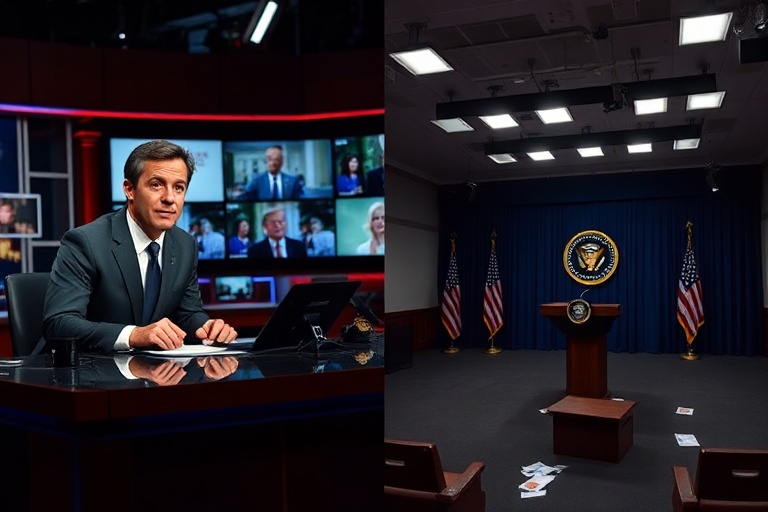
The relationship between late-night television comedy and political power is as old as the medium itself. When the Trump administration took office in January 2017, it inherited a late-night landscape already sharpening its satirical knives. What followed was not just comedy—it was a cultural feedback loop where headlines became punchlines and presidential tweets fueled monologue material.
Globally, this dynamic resonated far beyond American shores. International audiences, many already familiar with Trump’s brand of reality-TV politics, watched with fascination as U.S. late-night hosts weaponized humor against a figure who had built his career on media manipulation. The result was a fascinating case study in how comedy adapts to authoritarian bluster, cultural divides, and the 24-hour news cycle.
The Roots of the Conflict: Comedy as Counter-Narrative
Late-night comedy has long served as a pressure valve for public frustration. Shows like The Daily Show and Last Week Tonight had honed their satirical edge during the Bush and Obama administrations, but Trump’s presidency accelerated the evolution. His administration’s combative relationship with the press and its disregard for traditional political norms created a vacuum that comedy eagerly filled.
This wasn’t merely entertainment. It was a form of resistance. Research by the Pew Research Center found that viewers of late-night comedy shows were more likely to express negative views of Trump’s policies than those who relied solely on traditional news sources. The comedy became a gateway drug for political engagement, particularly among younger audiences who had disengaged from traditional politics.
Internationally, this phenomenon played out in different ways. In the UK, Have I Got News for You regularly skewered Trump’s antics, while German satire show heute-show used absurdist humor to highlight the absurdity of his administration’s rhetoric. The global appeal lay in the universality of the joke: when a leader openly flouts norms, comedy becomes a language everyone understands.
Key Moments in the Satirical War
The conflict between late-night hosts and the Trump administration unfolded in a series of viral moments, each escalating the stakes of political humor. These weren’t just jokes—they were cultural events that shaped public perception and, in some cases, even influenced policy discourse.
- Steve Bannon’s “Daily Show” Debut (2017): Jon Stewart’s return to The Daily Show to interview Steve Bannon was a masterclass in comedic confrontation. Stewart’s withering critique of Bannon’s role in the administration exposed the absurdity of the White House’s “alternative facts” narrative. The interview went viral globally, with clips shared widely on European and Asian social media platforms.
- Jimmy Kimmel’s Healthcare Monologues (2017-2018): Kimmel’s emotional monologues about his newborn son’s health crisis and the threat posed by Republican healthcare repeal efforts became a rallying cry for policy debate. His calls for bipartisan solutions forced politicians to respond publicly, blurring the line between comedy and advocacy.
- Trevor Noah’s “The Daily Show” Global Lens (2017-2021): As the first non-white host of a major U.S. late-night show, Noah brought an international perspective to Trump’s policies. His segments on immigration bans and trade wars resonated deeply in countries with similar political tensions, from Canada to South Africa.
- John Oliver’s “Last Week Tonight” Deep Dives (2017-2020): Oliver’s segments on topics like the EPA’s regulatory rollbacks or Trump’s conflicts of interest became must-watch television for policy wonks and casual viewers alike. His ability to turn complex issues into digestible, shareable content demonstrated the power of comedy as a tool for civic education.
- Seth Meyers’ “A Closer Look” and the Mueller Report (2019): Meyers’ recurring segment “A Closer Look” dissected the Mueller report in a way that mainstream media often failed to do. His breakdown of the report’s findings became a viral sensation, with clips viewed millions of times in Europe and Latin America.
The Cultural Ripple Effect: Comedy as Global Export
The late-night wars weren’t confined to the U.S. They became a cultural export, inspiring local adaptations worldwide. In India, comedian Kunal Kamra’s viral interviews with politicians and news anchors mirrored the confrontational style of U.S. late-night satire. In Brazil, late-night host Danilo Gentili’s show Agora É Tarde used humor to critique the Bolsonaro administration, drawing direct comparisons to Trump’s playbook.
This global adoption of U.S.-style political comedy revealed a fascinating paradox: while Trump’s administration was often criticized for its anti-globalist rhetoric, its cultural influence—particularly in the realm of comedy—spread globally. Late-night shows became a form of soft power, exporting American-style satire to audiences who saw their own political struggles reflected in Trump’s chaos.
The phenomenon also highlighted the role of social media in amplifying comedy’s reach. A single monologue clip from Saturday Night Live or Full Frontal with Samantha Bee could generate millions of views in hours, transcending language barriers through visual and contextual cues. Memes, GIFs, and viral clips became a universal language of dissent.
The Limits of Satire: When Comedy Meets Reality
Yet the late-night wars also revealed the limits of satire. While comedy could expose hypocrisy and rally public opinion, it struggled to enact real change. The Trump administration often dismissed criticism as “fake news” or “sour grapes,” rendering satire ineffective as a tool for direct political pressure.
There were also ethical questions. Could comedy inadvertently normalize toxic behavior by making it the butt of jokes? Some critics argued that the constant focus on Trump’s antics overshadowed more substantive issues, such as policy failures or humanitarian crises. Others worried that the saturation of political comedy desensitized audiences to real-world consequences.
Internationally, the debate took on different hues. In countries with state-controlled media, late-night satire was often censored or co-opted by governments. In Russia, for example, comedy shows that mocked Putin’s regime faced legal challenges, while in China, references to Trump were heavily censored on social media. The global reach of late-night comedy thus revealed stark inequalities in freedom of expression.
Legacy and Lessons: The Future of Political Comedy
The Trump administration’s tenure may have ended, but its impact on political comedy endures. The strategies honed during those years—rapid-response satire, viral monologues, and cross-platform engagement—have become standard tools for late-night hosts and digital creators alike.
For aspiring comedians and journalists, the late-night wars offered a masterclass in holding power to account through humor. Shows like The Daily Show and Last Week Tonight proved that comedy could be both entertaining and informative, bridging gaps between entertainment and activism. Even traditional news outlets began adopting comedic formats to reach younger audiences, further blurring the lines between news and satire.
As global audiences continue to grapple with political polarization, the lessons of the Trump era remain relevant. Comedy is not a panacea for political dysfunction, but it is a vital tool for critique, engagement, and resistance. Whether in the U.S., Europe, or beyond, the late-night wars demonstrated that when institutions fail, humor endures.
For those interested in exploring the intersection of comedy and politics further, check out our Entertainment and Politics sections for more analysis and commentary.