How Sugar Ray Leonard Redefined Boxing and Pop Culture
“`html
Sugar Ray Leonard: The Man Who Redefined Boxing’s Golden Era
Few names in boxing carry the weight of legacy like Sugar Ray Leonard. Born Ray Charles Leonard on May 17, 1956, in Wilmington, North Carolina, he rose from humble beginnings to become one of the most recognizable and influential figures in sports history. His career spanned the late 1970s and 1980s, a period often regarded as boxing’s golden era, where his rivalry with fellow legends like Roberto Durán, Thomas Hearns, and Marvin Hagler elevated the sport to new heights.
Leonard wasn’t just a fighter; he was a showman, a strategist, and a symbol of resilience. His ability to captivate audiences inside and outside the ring transformed him into a cultural icon. Even decades after his final bout, his impact on boxing and sports entertainment remains undeniable.
The Rise of a Legend: From Amateur to Olympic Gold
Leonard’s journey to greatness began long before his professional debut. At the age of 14, he moved to Washington, D.C., where he discovered boxing under the guidance of coach Dave Jacobs. His amateur career was nothing short of spectacular. By 1973, he had won the National Golden Gloves lightweight championship, and two years later, he claimed the gold medal at the Pan American Games in Mexico City.
The pinnacle of his amateur career came at the 1976 Montreal Olympics. Competing as a light welterweight, Leonard dominated the competition, showcasing the speed, precision, and flair that would later define his professional style. His performance earned him the Val Barker Trophy, awarded to the most technically gifted boxer at the Games. That victory was more than a personal triumph; it was a statement to the world that a new star was ascending in the boxing universe.
A Career Defined by Rivalries and Historic Fights
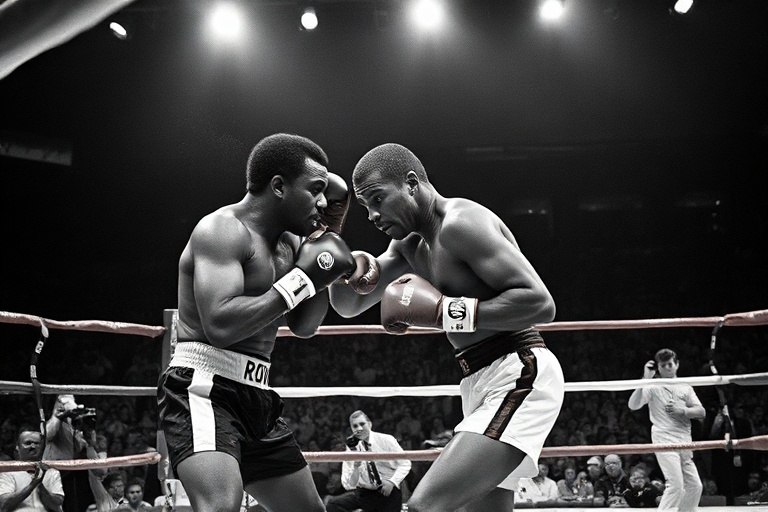
Leonard turned professional in 1977, and his early years were marked by a meteoric rise. He won his first 25 fights, 16 of them by knockout, and quickly became a top contender in the welterweight division. But it was his first fight against Roberto Durán in 1980 that catapulted him into the global spotlight. The bout, billed as “The Hands of Stone vs. Sugar,” ended in a 15-round unanimous decision victory for Durán, snapping Leonard’s unbeaten streak. The loss stung, but it also set the stage for one of the most storied rivalries in boxing history.
Leonard didn’t dwell on the defeat. Six months later, he avenged the loss in a rematch, this time winning by a stunning 8th-round knockout. The victory was a testament to his adaptability and mental toughness. But the fireworks didn’t end there. In 1981, Leonard faced Thomas Hearns in a fight billed as “The Fight of the Century.” The bout lived up to the hype, with Leonard rallying from a slow start to stop Hearns in the 14th round. The win solidified his status as a pound-for-pound great.
His career reached another peak in 1987 when he dethroned Marvelous Marvin Hagler to win the middleweight title. The fight, held in Las Vegas, was a masterclass in strategy and execution. Leonard, a natural welterweight, moved up in weight and outboxed a man many considered unbeatable. The victory was a declaration that his greatness transcended weight classes.
Key Fights in Sugar Ray Leonard’s Career
- 1976 Olympics: Won gold in Montreal, announcing his arrival on the world stage.
- 1980 vs. Roberto Durán: First professional loss, but set the stage for their epic rematch.
- 1981 vs. Thomas Hearns: “The Fight of the Century” showcased Leonard’s resilience and skill.
- 1987 vs. Marvin Hagler: Captured the middleweight title in a historic upset.
- 1988 vs. Don Lalonde: Unified light heavyweight title, further cementing his legacy.
Beyond the Ring: Leonard’s Influence on Boxing and Pop Culture
Sugar Ray Leonard’s impact extended far beyond his accomplishments in the ring. He was one of the first boxers to fully embrace the role of an entertainer, understanding that his charisma was as valuable as his fists. His fights were must-see events, drawing millions of viewers and helping to popularize boxing on pay-per-view. Leonard’s ability to transcend the sport made him a household name, paving the way for future generations of fighters to become global brands.
Leonard’s influence also extended to social issues. In an era when athletes were often expected to stay silent on political matters, he used his platform to address issues like racial equality and economic justice. His 1984 speech at the Democratic National Convention highlighted his commitment to using his voice for change. This willingness to engage with broader societal conversations set him apart from many of his peers.
His post-retirement career further demonstrated his versatility. Leonard became a successful commentator, a motivational speaker, and even ventured into acting. He also used his platform to advocate for mental health awareness, sharing his own struggles with depression and anxiety. His openness about these challenges helped reduce the stigma surrounding mental health issues, particularly among athletes.
The Legacy of a Champion: How Sugar Ray Leonard Changed the Game
Sugar Ray Leonard’s legacy is measured not just by his titles but by the way he redefined what it meant to be a champion. He was a pioneer in blending athleticism with entertainment, proving that boxers could be more than just fighters—they could be cultural icons. His rivalries with Durán, Hearns, and Hagler were more than just fights; they were spectacles that brought new audiences to the sport and elevated boxing to new heights.
Leonard’s career also had a ripple effect on the sport itself. His success inspired a generation of boxers to think beyond the traditional confines of their weight classes. Fighters like Floyd Mayweather Jr. and Canelo Álvarez have cited Leonard as an influence, not just for his in-ring skills but for his ability to adapt and reinvent himself.
Yet, Leonard’s legacy is not without its complexities. His later years were marked by financial struggles and legal troubles, a reminder that even the greatest champions face challenges off the canvas. Despite these setbacks, his contributions to boxing and society remain monumental. He proved that greatness is not just about what you achieve but how you inspire others to rise after falling.
Today, Sugar Ray Leonard’s name is synonymous with excellence, resilience, and transformation. Whether it’s the way he danced around opponents in the ring or the way he used his voice outside of it, Leonard left an indelible mark on the world. His story is a testament to the power of perseverance, adaptability, and the courage to stand out in a crowded field.
For those looking to understand the golden era of boxing, Leonard’s career is the perfect starting point. His fights were not just battles for titles; they were performances that captivated millions. And his journey from a young Olympic hopeful to a global icon serves as a reminder that true greatness is built on both skill and character.
As boxing continues to evolve, the lessons from Sugar Ray Leonard’s career remain relevant. He showed that to be a champion, you must be more than just strong—you must be smart, adaptable, and willing to take risks. In an era where sports are increasingly defined by instant gratification, Leonard’s career stands as a blueprint for sustained excellence.
For fans of the sweet science, his name will always be held in the highest regard. Sugar Ray Leonard didn’t just box—he redefined what it meant to be a fighter, an entertainer, and a champion.
Explore more about boxing legends and their cultural impact on Sports.
For in-depth analysis of sports history and trends, visit Analysis.