late-night hosts vs trump administration
“`html
Late-Night Hosts vs. the Trump Administration: A Global Stage for Political Satire
The relationship between late-night television hosts and the Trump administration became one of the most visible cultural battlegrounds of the 2010s. While political satire has long been a staple of American comedy, the Trump era elevated it to a near-nightly spectacle, drawing audiences far beyond traditional comedy fans. In an era marked by rapid-fire tweets, controversial policies, and a president unafraid of direct confrontation, late-night hosts found an unprecedented platform to critique power.
This dynamic wasn’t confined to U.S. borders. Internationally, audiences watched clips of these shows go viral, sparking discussions in living rooms from Berlin to Bangkok. The global appeal lay not just in the jokes, but in the way satire became a shared language for questioning authority. Late-night hosts didn’t just entertain; they provided a form of global political commentary, blending humor with dissent.
The Rise of Satirical News Programs
Before the Trump administration, satirical news programs like The Daily Show and Last Week Tonight already held significant influence. But the arrival of Donald Trump to the political stage accelerated their evolution into primary sources of political analysis for many younger viewers. Programs such as Late Night with Seth Meyers and The Late Show with Stephen Colbert turned their monologues into detailed dissections of presidential rhetoric, policy reversals, and media bias.
The format became more than comedy. It functioned as a real-time fact-checking service, often outpacing traditional news outlets in responding to breaking political developments. Viewers who felt alienated by mainstream media gravitated toward these shows for both information and catharsis. The result was a rise in audience numbers that rivaled or surpassed those of cable news networks during key political moments.
In Europe, programs like the UK’s Have I Got News for You began dedicating entire episodes to dissecting American political culture, particularly the Trump phenomenon. Even in countries with less direct exposure to U.S. politics, late-night satire became a way to discuss populism, media manipulation, and democratic backsliding—issues that transcended national boundaries.
From Jokes to Journalism: The Blurring of Boundaries
The Trump administration’s relentless news cycle forced late-night hosts to adapt quickly. What began as lighthearted monologue jokes evolved into in-depth segments that read like investigative journalism. Stephen Colbert, for instance, devoted entire episodes to explaining the mechanics of the Mueller investigation, while John Oliver dedicated a segment to the family separation policy at the U.S.-Mexico border, blending sharp satire with emotional appeals and policy analysis.
This shift raised questions about the role of comedy in public discourse. Some critics argued that satire was being used to fill gaps left by traditional journalism, especially as trust in mainstream media declined. Others contended that the blending of humor and hard news diluted the seriousness of political issues. Yet the format endured because it worked: it made complex policies accessible, held power to account, and—most importantly—made people laugh in the face of frustration.
Internationally, this approach resonated with audiences living under populist leaders of their own. In Brazil, where Jair Bolsonaro’s presidency mirrored Trump’s rhetorical style, comedians and satirists drew direct inspiration from American late-night formats. In India, late-night shows like The News with Ravish Kumar (though not a traditional comedy program) adopted a similarly critical tone, blending investigative journalism with sharp commentary on government overreach.
The Audience: A Generation Seeking Clarity Through Laughter
Surveys during the Trump era consistently showed that younger viewers relied on late-night comedy shows for political news at higher rates than older demographics. A 2018 study by the Pew Research Center found that 21% of adults under 30 cited comedy shows as a regular source of political news—more than print newspapers or network news programs. The appeal was clear: satire made politics digestible, relatable, and even fun.
This demographic shift had global implications. As American late-night clips circulated on social media platforms like YouTube and TikTok, they inspired local versions of political satire in countries such as Canada, Australia, and South Africa. In Germany, shows like heute-show on ZDF adopted a format blending satire with political reportage, becoming a go-to source for younger audiences frustrated with traditional news coverage.
The cultural impact extended beyond viewership numbers. Memes born from late-night monologues became a universal language of dissent. Phrases like “covfefe” and references to “covidiots” during the pandemic spread across languages and borders, proving that political humor could transcend cultural barriers.
The Backlash and the Limits of Satire
Of course, the relationship between late-night hosts and the Trump administration was not without conflict. The president frequently attacked comedians on social media, calling shows like The Tonight Show and SNL biased and unfair. In 2017, Trump boycotted a White House Correspondents’ Dinner after the event hosted satirical roasts, signaling a new era of hostility toward media criticism.
This pushback raised ethical and practical questions. Could satire remain effective when its targets refused to engage with it seriously? Did the constant mockery risk normalizing political figures, no matter how outrageous their actions? Some critics argued that the relentless focus on Trump overshadowed other pressing issues, while others believed it was necessary to keep the public informed in an age of misinformation.
Internationally, similar debates emerged. In Turkey, where satirical programs face censorship, late-night comedy became a form of resistance—but also a target for government reprisal. In the Philippines, shows like GMA News TV’s satirical segments were temporarily suspended after jokes about President Rodrigo Duterte’s drug war.
The Legacy Beyond Trump
Even after the Trump administration left office, the influence of late-night satire persisted. The format had proven its staying power as a tool for accountability, education, and entertainment. Programs like Full Frontal with Samantha Bee and The Problem with Jon Stewart continued to tackle issues like racial justice, climate change, and economic inequality with the same blend of humor and urgency.
Globally, the model inspired new formats. In South Korea, Yoo Jae-suk’s variety shows began incorporating political satire, while in Nigeria, comedians like Basketmouth used stand-up to critique government corruption. The late-night wars of the Trump era had redefined the relationship between comedy and politics—proving that laughter could be as powerful as a protest sign.
The cultural exchange went both ways. American late-night hosts increasingly featured international correspondents and addressed global issues like climate change, migration, and authoritarianism. The format had become a transnational platform for political discourse, one that transcended borders and languages.
Conclusion
The late-night hosts versus the Trump administration was more than a clash between comedy and power. It was a global conversation about how societies process political turmoil, how humor can challenge authority, and how entertainment can shape public opinion. In an era of misinformation and partisan divide, satire offered a rare space for shared understanding—one joke at a time.
As political landscapes continue to evolve, the role of comedy in public discourse remains vital. Whether it’s holding leaders accountable, educating new generations, or simply offering relief in difficult times, late-night satire has cemented its place in the global media ecosystem. And if history is any guide, the next political storm will once again find its satirists ready with a monologue—and a punchline.
—
METADATA
{
“title”: “How Late-Night Satire Reshaped Global Views of Trump”,
“metaDescription”: “Explore how late-night hosts like Colbert and Meyers influenced global politics through satire during the Trump era.”,
“categories”: [“Entertainment”, “Politics”],
“tags”: [“late night satire”, “Trump administration”, “political comedy”, “global media”, “Stephen Colbert”],
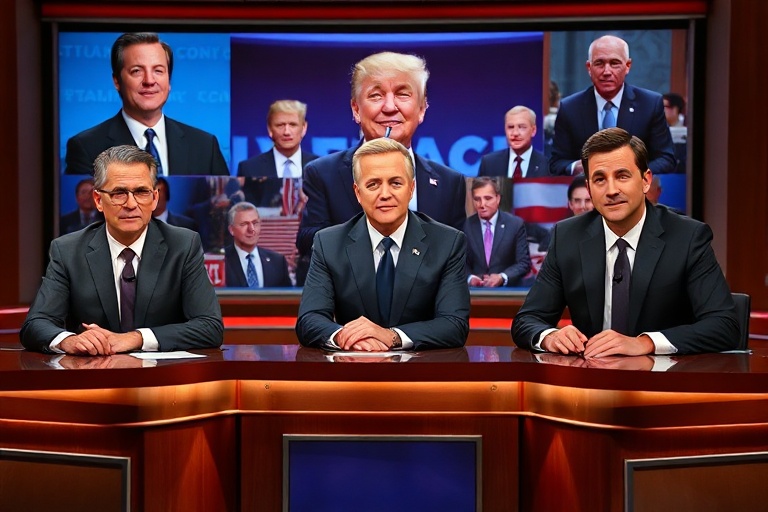
“imageDescription”: “A split-screen image: on the left, Stephen Colbert at his desk on The Late Show with a serious expression; on the right, a fiery monologue segment with exaggerated gestures and a live audience laughing. The background shows a blurred image of Donald Trump speaking at a podium. The tone is satirical and energetic, blending politics with comedy.”
}
—END METADATA—
“`