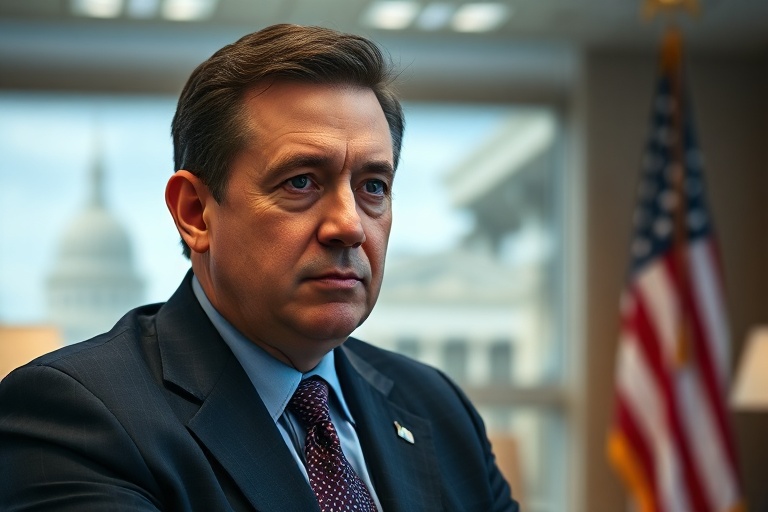
Michael Caputo’s HHS Tenure: A Case Study in Pandemic Politics
“`html
Michael Caputo: The Public Health Official Who Faced Unprecedented Scrutiny
Michael Caputo’s tenure as an assistant secretary at the Department of Health and Human Services (HHS) during the Trump administration remains one of the most contentious periods in modern public health governance. His outspoken views, abrupt communications style, and clashes with career scientists thrust him into the national spotlight. While some saw him as a necessary disruptor challenging bureaucratic inertia, critics accused him of politicizing a crisis that demanded apolitical urgency.
Caputo’s role during the COVID-19 pandemic was defined by volatility. He frequently clashed with the Centers for Disease Control and Prevention (CDC), at one point alleging that career scientists were undermining the president’s messaging. His public statements often amplified skepticism about the severity of the virus, fueling tensions between political appointees and career public servants. These dynamics raised broader questions about the balance of power in federal agencies during emergencies.
From Political Operative to Public Health Spokesperson
Before joining HHS, Caputo was known primarily as a political strategist and communications advisor. His career included stints on Capitol Hill, in Republican campaigns, and as a media consultant. His transition into a public health role was unusual, given his lack of medical or scientific training. Caputo was appointed to oversee the Office of Public Affairs at HHS in 2020, a position that put him at the center of the federal response to COVID-19.
His appointment was part of a broader Trump-era strategy to reshape federal agencies, prioritizing political loyalty over traditional expertise. Caputo’s hiring reflected a belief that public health messaging needed to be aligned with the administration’s broader political goals. This approach, however, led to friction with career scientists who viewed health communications as a domain requiring technical precision over partisan messaging.
Caputo’s background in political media prepared him for a different kind of battle. He had worked as a journalist and a communications director for New York Republicans, including former Congressman Chris Collins. His experience in crisis communications—shaped by partisan politics—clashed with the realities of a global health emergency. The result was a series of public statements that often prioritized political optics over scientific consensus.
Key Moments in Caputo’s Tenure
Caputo’s time at HHS was marked by several defining incidents that drew national attention. These moments not only shaped his legacy but also highlighted the challenges of managing public health communications during a pandemic.
- Pressuring CDC Scientists: Caputo publicly criticized CDC scientists for what he described as overly cautious and politically motivated reports. He alleged that career officials were deliberately undermining the administration’s messaging by releasing data that contradicted the president’s optimistic framing of the pandemic.
- Accusations of Retaliation: Former and current CDC employees accused Caputo’s team of retaliating against scientists who disagreed with the administration’s approach. Reports surfaced of career officials being sidelined or reassigned after challenging the political narrative surrounding COVID-19.
- Personal Health Struggles: In September 2020, Caputo took a medical leave of absence after experiencing severe stress, which he attributed to the relentless criticism he faced. His temporary departure underscored the psychological toll of managing a high-profile role during a global crisis.
- Resignation and Aftermath: Caputo ultimately resigned from HHS in October 2020, citing health concerns and the need to support his family. His departure left behind a legacy of distrust between political appointees and career scientists, a divide that persisted long after he left office.
The Broader Implications of Caputo’s Tenure
Caputo’s tenure at HHS raises critical questions about the role of politics in public health. The COVID-19 pandemic demonstrated the consequences of politicizing science, from delayed responses to misinformation that undermined public trust. Caputo’s approach—prioritizing political messaging over scientific integrity—exacerbated these challenges, creating a climate of uncertainty and distrust.
His conflicts with career scientists also highlighted systemic issues within federal agencies. The tension between political appointees and career public servants is not new, but the pandemic exposed how quickly such divisions could escalate into crises. Caputo’s actions underscored the risks of prioritizing loyalty to a political agenda over the expertise required to manage a global health emergency.
Beyond the immediate fallout, Caputo’s tenure has had lasting effects on public health governance. The erosion of trust in federal agencies, particularly the CDC, has made it harder to implement effective public health policies. Future administrations will need to address these divisions to restore credibility and ensure coordinated responses to crises.
Caputo’s story also serves as a cautionary tale about the dangers of blending politics with public health. While political oversight is necessary, it must be balanced with respect for scientific expertise. The pandemic demonstrated that when politics trumps science, the consequences can be catastrophic.
What Comes Next for Public Health Leadership?
Caputo’s departure did not resolve the underlying tensions between politics and public health. The Biden administration has sought to rebuild trust in federal agencies by emphasizing scientific integrity and transparency. However, the scars left by the Trump era’s politicization of health communications will take time to heal.
For future leaders in public health, Caputo’s tenure offers several lessons. First, the importance of clear, consistent, and science-based messaging cannot be overstated. Second, the need for collaboration between political appointees and career scientists is essential to effective governance. Finally, the public health community must prioritize rebuilding trust in institutions, a task that will require sustained effort and transparency.
As the nation continues to grapple with the aftermath of the pandemic, the debate over Caputo’s legacy remains relevant. His tenure serves as a reminder of the stakes involved in public health leadership and the dangers of letting politics overshadow science.
For those interested in the intersection of politics and public health, Caputo’s story offers a compelling case study. It challenges us to consider how we can ensure that science remains the foundation of health policy, even in the face of political pressure. Read more about current events in public health and politics on Dave’s Locker.
Caputo’s legacy is a complex one, shaped by his political background and the extraordinary circumstances of a global pandemic. His story forces us to confront uncomfortable questions about the role of politics in science and the consequences of politicizing health crises.