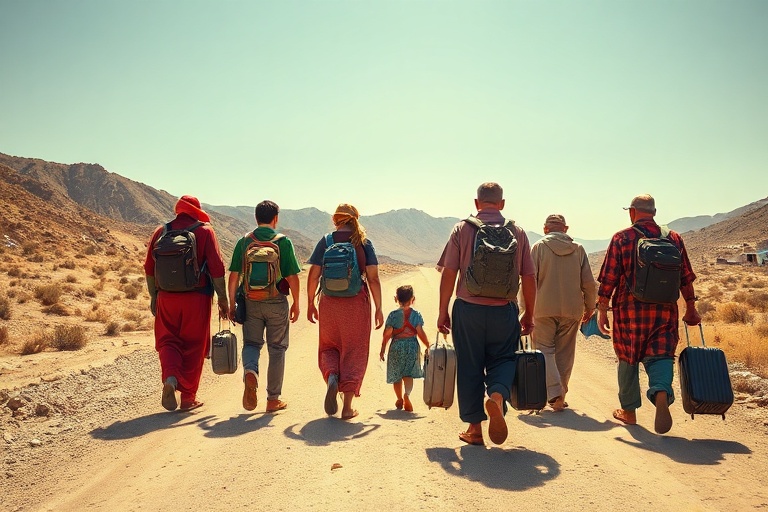
Migration in 2024: Global Patterns and Policy Responses
“`html
Migration in 2024: Patterns, Pressures and the Path Forward
Migration has always shaped human civilization, but in 2024, it has become one of the most defining forces of our time. Economic disparities, climate change, political instability and digital connectivity are accelerating population movements across continents. These shifts are not just demographic; they are reshaping labor markets, cultural landscapes and geopolitical alliances.
The United Nations estimates that over 280 million people now live outside their country of birth—more than the entire population of Indonesia. This figure includes refugees fleeing conflict, students pursuing education abroad and professionals chasing better opportunities. What was once a steady trickle has become a global tide, with ripple effects felt in cities, villages and international policy chambers alike.
The Drivers Behind Modern Migration
Understanding why people move requires examining both push and pull factors. Conflict remains a powerful push factor. In 2023 alone, over 110 million people were forcibly displaced due to war and persecution, according to UNHCR. Syria, Ukraine and Sudan continue to send waves of refugees into neighboring regions and beyond. Climate change acts as a silent but accelerating catalyst, especially in the Sahel, Bangladesh and small island nations, where rising seas and droughts make agriculture unsustainable.
On the other side, economic opportunity draws millions toward urban centers in China, India and the Gulf States. High-skilled migration—especially in tech, healthcare and engineering—is being fueled by digital nomad visas and remote work policies. Countries like Portugal, Estonia and Canada now actively compete for talent using streamlined immigration systems. Meanwhile, aging populations in Europe and Japan are creating labor shortages that migration helps fill.
These trends are not isolated. They are interconnected. A drought in Mexico can push agricultural workers northward. A tech boom in Ireland can pull developers from Eastern Europe. The result is a complex web of movement that defies simple categorization.
Key Factors Influencing Migration Flows
- Economic disparity: Wage gaps between countries drive labor migration.
- Climate change: Environmental degradation increases displacement risks.
- Digital connectivity: Social media and smartphones make migration easier to plan and narrate.
- Policy shifts: Nations alternately open and close borders based on economic and political needs.
- Demographic imbalances: Aging societies need young workers; young populations seek opportunities abroad.
Economic and Social Consequences
The impact of migration is visible in every major economy. In the United States, immigrants make up nearly 18% of the workforce, filling critical roles in healthcare, agriculture and technology. Germany’s aging population would shrink faster without its robust immigration system, which now attracts workers from India, Vietnam and Turkey. Meanwhile, countries like the Philippines and Mexico rely heavily on remittances—over $647 billion was sent home by migrants in 2022—sustaining local economies.
Yet migration also creates friction. Housing shortages in cities like Toronto and Berlin are partly attributed to rapid population growth driven by international arrivals. Cultural tensions occasionally flare, especially in areas unaccustomed to diversity. In some cases, political parties exploit these anxieties, framing migration as a threat rather than a transformation.
But the narrative is shifting. Cities such as Amsterdam and Singapore have reframed immigration as essential to innovation and growth. They invest in integration programs, language training and community-building initiatives. The result is often economic dynamism: immigrant-founded companies in the U.S. alone contribute over $775 billion to the economy annually.
Policy Responses: From Walls to Bridges
Governments are responding in divergent ways. The U.S. has oscillated between restrictive border policies and pathways to citizenship for undocumented workers. The European Union has attempted to balance humanitarian obligations with border security, often sparking internal disputes. Meanwhile, Canada and Australia have adopted points-based systems that prioritize skills, education and language proficiency.
Some nations are rethinking their approach entirely. Portugal’s digital nomad visa, introduced in 2022, has attracted over 10,000 remote workers in two years. Estonia offers e-residency programs that allow entrepreneurs to run businesses without relocating. These models suggest a future where migration is not just about permanent settlement but about flexible, temporary participation in global economies.
Yet challenges remain. Visa backlogs, bureaucratic hurdles and anti-immigrant sentiment continue to slow integration. International cooperation on migration is fragmented. The UN’s Global Compact for Migration, adopted in 2018, remains non-binding, leaving countries to navigate these issues largely on their own.
The Human Dimension: Stories That Define Movement
Behind every statistic is a person. A Syrian doctor now running a clinic in Berlin. A Venezuelan engineer working remotely for a Canadian startup. A Bangladeshi farmer whose village is swallowed by rising waters. These stories reveal the emotional cost of migration—separation from family, the struggle to learn a new language, the hope of building a better life.
Technology is changing the migration experience. Apps like Remitly and Wise have made sending money home cheaper and faster. Facebook groups connect newcomers with job opportunities and housing leads. Crowdfunding platforms help refugees cover travel costs. Digital tools are democratizing migration, allowing more people to make informed decisions about when and where to move.
But technology also enables surveillance and control. Border surveillance drones, biometric tracking and AI-driven visa screening systems are becoming standard in many countries. These tools promise security but risk deepening inequality, as access to safe migration corridors becomes a privilege of the connected and the wealthy.
What Lies Ahead: Scenarios for the Future
Three possible futures emerge from current trends.
- Fragmentation: Countries retreat behind borders, erecting digital and physical walls. Migration becomes a privilege reserved for the skilled and the wealthy. Global inequality widens as opportunities concentrate in a few hubs.
- Integration: Nations adopt flexible, humane policies that prioritize skills, family reunification and climate adaptation. Cities become more diverse and innovative, but face pressure to manage rapid change.
- Transformation: Migration drives a new social contract. Remote work dissolves national barriers. Climate adaptation funds support planned relocations. Education and healthcare systems become globally accessible, reducing the need for permanent emigration.
The path chosen will depend on leadership, technology and public will. But one thing is clear: migration is not a crisis to be managed. It is a reality to be harnessed.
Conclusion: Rethinking Migration for the 21st Century
Migration in 2024 is not a temporary challenge—it is a permanent condition of our interconnected world. It demands a new kind of thinking: one that sees movement not as a threat but as a feature of human progress. Countries that embrace migration, with smart policies and inclusive institutions, will thrive. Those that resist risk stagnation and decline.
The future belongs not to those who build walls, but to those who build bridges—between nations, between cultures and between generations. Migration is not the problem. It is part of the solution.
As we move forward, the question is not whether people will migrate. It is whether we will let them do so with dignity, opportunity and hope.
For more insights into global mobility and policy trends, visit our News and Analysis sections.