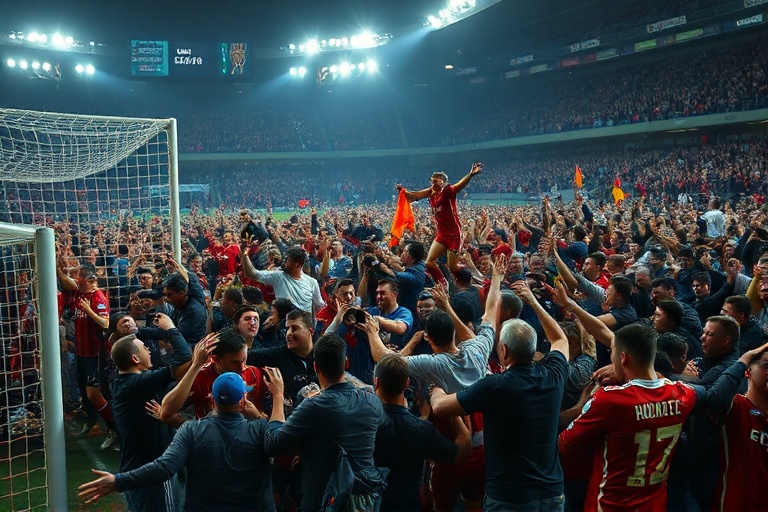
The roar of the crowd erupts as the final whistle blows. A player, overcome with emotion, sprints toward the stands. Fans surge onto the field, cameras in hand, phones raised high. What begins as jubilation quickly spirals into chaos—a pitch invasion has begun. This spontaneous act of celebration, while rooted in passion, often carries consequences that extend far beyond the moment of glory.
The Anatomy of a Pitch Invasion
Not all pitch invasions are created equal. Some are spontaneous eruptions of joy, while others are meticulously planned stunts. The most common form occurs when fans, unable to contain their excitement, flood the playing surface after a decisive victory or a championship win. These moments are typically unscripted, driven purely by raw emotion.
Other invasions are orchestrated, often as part of a protest or a statement. These are less about celebration and more about making a point. In 2020, for example, climate activists invaded the pitch during a Premier League match to demand action on environmental issues. Their goal was clear: to disrupt the spectacle and force a conversation.
The motivations behind a pitch invasion can vary widely:
- Victory celebrations: Fans celebrating a team’s triumph, often after a long-awaited championship.
- Protests: Activists using the platform of a high-profile event to draw attention to a cause.
- Fan engagement: Individuals or groups seeking to create viral moments or challenge authority.
- Mental health awareness: Some invasions aim to highlight issues like depression and anxiety in sports.
The line between celebration and disruption is thin, and once crossed, it can lead to a cascade of unintended consequences.
The Ripple Effects of Uncontrolled Celebration
The immediate impact of a pitch invasion is often felt in the form of delayed games, rescheduled matches, and financial losses. Stadiums incur cleanup costs, and clubs face fines from governing bodies. In severe cases, injuries occur—both to fans rushing onto the field and to players caught off guard. The emotional toll on athletes can be significant, as their post-match rituals are interrupted, and their focus is shattered.
Beyond the physical and financial repercussions, pitch invasions can also tarnish reputations. Clubs may be seen as unable to control their fanbase, leading to scrutiny from sponsors and governing bodies. For the individuals involved, legal consequences can follow. Trespassing charges, stadium bans, and even criminal records are not uncommon outcomes for those who cross the line.
Yet, the broader implications go deeper. Pitch invasions challenge the very nature of sports as an orderly spectacle. They force a reckoning with the balance between fan passion and institutional control. When does celebration become trespass? When does protest become spectacle? These questions don’t have easy answers, and the fallout from pitch invasions often forces leagues and clubs to confront them head-on.
Historical Moments That Defined Pitch Invasions
Pitch invasions are not a modern phenomenon. They have been part of sports history for decades, each leaving a unique mark on the cultural landscape. One of the most iconic occurred in 1976 during the FA Cup Final replay between Southampton and Manchester United. Fans stormed the pitch after a thrilling 1-0 win, creating a scene of pure jubilation that became synonymous with the era.
In the United States, baseball has its own legendary pitch invasion moments. During the 1991 World Series, fans of the Minnesota Twins stormed the field after their team’s victory, setting the stage for a tradition that continues today. These moments are celebrated as part of the sport’s folklore, but they also serve as cautionary tales about the fine line between joy and chaos.
More recently, pitch invasions have taken on new dimensions. In 2019, a fan invaded the pitch during the Women’s World Cup final, not to celebrate, but to kneel in protest against racial injustice. The act sparked global conversations about the intersection of sports and activism, proving that pitch invasions can be more than just spontaneous outbursts—they can be deliberate statements.
These historical moments highlight a key truth: pitch invasions are not just about the act itself. They reflect the cultural, social, and emotional currents of their time. Whether driven by victory, protest, or personal expression, they leave an indelible mark on the sports world.
Navigating the Future of Pitch Invasions
As sports continue to evolve, so too will the nature of pitch invasions. The rise of social media has amplified the reach of these moments, turning them into viral sensations almost instantly. Fans no longer need to be physically present to witness or participate in a pitch invasion—they can share in the chaos from afar, further blurring the lines between reality and spectacle.
Leagues and clubs are increasingly turning to technology to mitigate the risks associated with pitch invasions. Enhanced security measures, such as facial recognition and stricter entry protocols, are becoming more common. However, these solutions often come at the cost of alienating genuine fans who simply want to celebrate their team’s success.
For athletes, the psychological impact of pitch invasions cannot be ignored. Players invest years of effort into their careers, and a sudden disruption can feel like a violation. Mental health professionals in sports have begun to address this issue, advocating for better support systems to help athletes cope with the aftermath of such events.
The future of pitch invasions may lie in dialogue rather than disruption. Some clubs have started engaging with fan groups to channel their passion in more constructive ways, such as pre-planned celebrations or designated areas for post-match mingling. These initiatives aim to preserve the joy of sports while minimizing the risks associated with uncontrolled invasions.
Ultimately, pitch invasions are a reminder of the power of sports to unite, disrupt, and inspire. They are moments where emotion takes center stage, and the boundaries between the field and the stands dissolve. Whether viewed as a celebration of triumph or a platform for protest, pitch invasions challenge us to reconsider the role of the fan in the modern sporting landscape.
For those who have experienced the thrill of a pitch invasion—whether as a participant, a witness, or an athlete—it is a memory that lingers long after the final whistle. It is a testament to the unbridled passion that sports can evoke, and a reminder that in the world of sports, the line between order and chaos is always just one step away.
For more insights into the intersection of sports and culture, explore our Sports and Analysis sections.