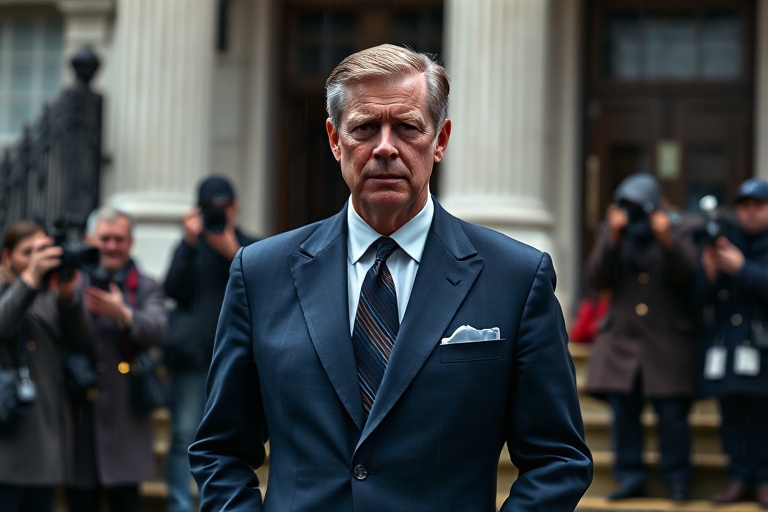
Prince Andrew’s Legacy: From Royal Hero to Controversial Figure
“`html
Prince Andrew: The Duke’s Shifting Place in the Modern Monarchy
The British royal family has always existed at the intersection of tradition and public perception. Few figures embody this duality more than Prince Andrew, the Duke of York. Once a celebrated naval officer and diplomat, his life and legacy have been reshaped by decades of controversy and evolving societal expectations. As the monarchy adapts to a new era, Prince Andrew’s role remains a subject of intense scrutiny, both in the United Kingdom and globally.
Born in 1960 as the third child of Queen Elizabeth II and Prince Philip, Andrew was groomed for a life of service. His early career in the Royal Navy, marked by active duty in the Falklands War, established him as a figure of duty and discipline. Yet, as his public image has fluctuated between admiration and reproach, questions about his place in the royal family have grown louder. The intersection of his personal choices, institutional expectations, and public sentiment has created a complex narrative that reflects broader tensions within modern monarchy.
The Early Years: A Prince of Promise
Prince Andrew’s upbringing was one of privilege, but also rigorous preparation for royal responsibilities. Educated at elite institutions like Gordonstoun and the Britannia Royal Naval College, he followed in the footsteps of his father by pursuing a military career. His service during the Falklands War in 1982—where he flew helicopters under enemy fire—cemented his reputation as a brave and dedicated officer. For many, these years represented the ideal of a royal figure: selfless, courageous, and grounded in duty.
His marriage to Sarah Ferguson, known as Fergie, in 1986 further endeared him to the public. The couple’s charisma and youthful energy made them one of the monarchy’s most popular during the late 20th century. Yet beneath the surface of public adoration, personal struggles and financial controversies began to emerge, foreshadowing the challenges ahead.
A Career in Diplomacy and Its Complications
Prince Andrew’s post-naval career focused on international trade and diplomacy, leveraging his royal status to strengthen Britain’s economic and diplomatic ties. His role as Special Representative for International Trade and Investment took him across the globe, from China to the Middle East. These efforts were not without criticism; some argued that his business engagements blurred the lines between personal interests and official duties.
One of his most controversial diplomatic missions involved promoting British trade in Libya during the regime of Muammar Gaddafi. Emails later revealed that he received substantial financial benefits from associates tied to Gaddafi’s government. This episode, along with other lucrative ventures, raised ethical questions about the conduct of senior royals in the private sector.
The Turning Point: Scandal and Public Reckoning
The year 2019 marked a watershed moment in Prince Andrew’s life. His association with Jeffrey Epstein, the convicted sex offender, became impossible to ignore. A BBC interview in which he denied any knowledge of Epstein’s crimes while displaying awkward body language and questionable memory of events drew widespread mockery and condemnation. The fallout was swift: institutions severed ties with him, and the royal family distanced itself.
In 2020, Prince Andrew stepped back from public duties, a move that underscored the severity of the situation. The following year, he settled a civil lawsuit brought by Virginia Giuffre, one of Epstein’s victims, agreeing to pay a reported $12 million without admitting wrongdoing. This settlement, while avoiding a public trial, did little to quell criticism of his conduct and judgment.
A Family in Transition
The monarchy has undergone significant changes in recent years, with King Charles III prioritizing a more streamlined and transparent institution. Prince Andrew’s reduced role reflects this broader shift. While he remains a working member of the royal family—attending limited engagements and maintaining a presence at ceremonial events—his influence has waned considerably.
His children, Princesses Beatrice and Eugenie, have taken more visible roles in royal duties, signaling a generational transition. Beatrice, in particular, has been active in charity work and public appearances, embodying a different approach to royal service—one that emphasizes discretion and focus. This evolution suggests a deliberate move away from the controversies that have shadowed previous generations.
The Global Perspective: Monarchy in the Age of Scrutiny
Prince Andrew’s story is not unique to Britain. Across Europe, royal families face increasing pressure to reconcile tradition with modern expectations of transparency and accountability. The Dutch monarchy confronted scandals involving Prince Bernhard in the late 20th century, while Spain’s King Juan Carlos resigned amid corruption allegations in 2020. These cases highlight a global trend: when royal figures become entangled in personal or financial controversies, the institution as a whole is forced to adapt.
In Britain, the monarchy has responded by emphasizing core values—service, duty, and humility—while distancing itself from figures whose actions threaten its credibility. Prince Andrew’s situation illustrates this tension. Though he remains a prince by birthright, his ability to represent the Crown has been severely limited by his personal history.
A Legacy Still Unfolding
What, then, is Prince Andrew’s legacy? It is a story of contrasts: a man who once represented the best of British naval tradition, only to become a symbol of the monarchy’s struggles with modernity. His naval career and early diplomatic efforts are undeniably part of his legacy, but they are now overshadowed by the controversies that followed.
As the monarchy continues to evolve under King Charles III, Prince Andrew’s role will likely remain peripheral. Yet his story serves as a cautionary tale about the perils of unchecked privilege and the unforgiving nature of public scrutiny in the digital age. For historians and royal observers alike, his life offers a window into the challenges faced by institutions rooted in tradition but operating in an era of relentless transparency.
Looking ahead, the royal family’s ability to navigate these challenges will determine its relevance in the 21st century. Prince Andrew’s journey—from naval hero to a figure of controversy—is a microcosm of this broader struggle.
The Public Response: From Sympathy to Skepticism
The British public’s reaction to Prince Andrew has been anything but uniform. Initially, many expressed sympathy for a man whose personal life had spiraled into scandal. His decision to step back from public duties was seen by some as an acknowledgment of his missteps and a commitment to addressing them.
Over time, however, public sentiment has grown more skeptical. The BBC interview in 2019, widely panned as a PR disaster, further eroded trust. Social media amplified criticism, with memes and viral videos mocking his demeanor and perceived lack of remorse. Even charitable organizations once associated with him distanced themselves, wary of reputational damage.
Surveys conducted in the aftermath of the Epstein scandal revealed a sharp decline in favorable views of Prince Andrew. While some segments of the public retain a degree of sympathy—especially those who remember his naval service—most now view him through the lens of his controversies. This shift reflects broader societal changes, where personal conduct is increasingly scrutinized and judged in real time.
The Role of Media and Public Perception
The media’s coverage of Prince Andrew has played a pivotal role in shaping his public image. Early reports focused on his achievements, portraying him as a devoted husband and father. As scandals emerged, coverage became more investigative, with outlets digging into his connections to Epstein and his financial dealings.
Social media has amplified these narratives, creating an environment where public opinion can shift rapidly. The viral spread of memes, tweets, and viral videos has made it difficult for Prince Andrew—or the monarchy—to control his narrative. This dynamic is not unique to him; it reflects the broader challenges faced by public figures in an era of digital immediacy.
For the monarchy, this underscores the need for careful management of its members’ public personas. The days when royal controversies could be contained or spun are largely over. Transparency and accountability are now expected, and failure to meet these standards risks further erosion of public trust.
Conclusion: A Prince Out of Step with the Times
Prince Andrew’s story is one of promise unfulfilled, at least in the public eye. His early years suggested a future as a respected royal figure, but a series of personal choices and controversies have reshaped his legacy. While he remains a prince by birth, his ability to serve as a representative of the Crown has been severely compromised.
The monarchy, too, is at a crossroads. As it adapts to a new era—one defined by transparency, accountability, and a desire for relevance—figures like Prince Andrew serve as cautionary examples. His story highlights the risks of unchecked privilege and the unforgiving nature of public scrutiny in the digital age.
For now, Prince Andrew’s public role remains limited. His engagements are carefully curated, and his presence is often met with a mix of curiosity and skepticism. Whether he can ever regain the public’s trust remains an open question. What is clear, however, is that his story will be remembered as a chapter in the monarchy’s ongoing struggle to reconcile tradition with modernity.
As the royal family continues to evolve, Prince Andrew’s legacy may ultimately serve as a reminder of the costs of personal missteps in an era where the world watches—and judges—closely.