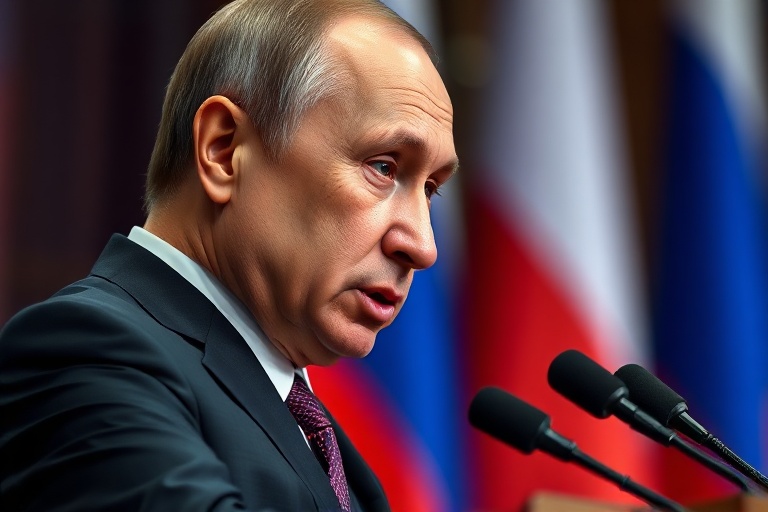
Putin’s Russia: Domestic Crackdowns and Global Ambitions in 2024
“`html
Putin’s Latest Moves: What’s Happening and Why It Matters
The past few months have seen a flurry of activity in the upper echelons of Russian politics, with President Vladimir Putin maintaining a firm grip on power while navigating a complex web of domestic and international pressures. Recent developments suggest a strategic recalibration, as Moscow continues to assert itself on the global stage despite ongoing sanctions and geopolitical tensions. Analysts are closely watching these shifts, which range from domestic policy adjustments to bold diplomatic initiatives.
Domestic Policy Shifts: Consolidating Control
Putin’s domestic agenda has focused on reinforcing stability within Russia, particularly in the lead-up to key political events. In March 2024, regional elections saw a predictable outcome, with Kremlin-backed candidates securing victories across the board. This outcome was widely anticipated, yet it underscored Putin’s enduring ability to shape the political landscape. The Kremlin’s strategy included a mix of administrative pressure, media control, and selective concessions to opposition figures.
One notable development has been the tightening of laws around public dissent. New legislation targeting “foreign agents” and “extremist organizations” has expanded the government’s ability to silence critics. Critics argue these measures are designed to stifle opposition before it gains traction, particularly as economic challenges mount. Inflation and stagnant wages have fueled public frustration, yet organized dissent remains minimal, thanks in part to the state’s robust surveillance apparatus.
The government has also prioritized infrastructure projects, particularly in the Far East and Arctic regions. These initiatives are framed as part of Putin’s long-term vision for economic development, though skeptics view them as attempts to distract from domestic woes. The Kremlin’s messaging emphasizes national pride and sovereignty, a narrative that resonates with many Russians despite the country’s economic struggles.
International Relations: A Calculated Balancing Act
On the global stage, Putin has pursued a policy of pragmatic engagement, seeking to strengthen ties with non-Western partners while maintaining a defiant stance toward the United States and its allies. Russia’s relationship with China remains a cornerstone of this strategy, with bilateral trade reaching record highs in 2024. The two nations have deepened cooperation in energy, technology, and military sectors, though their partnership is not without friction.
Putin’s recent visits to key allies in the Middle East and Africa have further cemented Russia’s role as a major geopolitical player. In March, he met with Iranian President Ebrahim Raisi to discuss joint efforts in Syria and beyond. The talks highlighted Russia’s strategic interests in the region, particularly its military presence in Syria and its role in brokering deals between conflicting factions. Meanwhile, African nations like Mali and the Central African Republic have increasingly turned to Russia for security and economic support, often in exchange for access to resources.
However, Russia’s relationships are not without strain. Tensions with Turkey have flared over issues like energy supplies and regional influence, while relations with the European Union remain frosty. The EU’s continued support for Ukraine and its sanctions regime have left little room for diplomatic breakthroughs. Putin’s rhetoric has grown increasingly confrontational, with warnings about NATO expansion and accusations of Western hypocrisy resonating in domestic propaganda.
Economic Challenges: Sanctions and Adaptation
The Russian economy continues to grapple with the fallout from Western sanctions, which have targeted key sectors like finance, technology, and energy. Despite these pressures, the Kremlin has managed to stabilize the ruble and maintain a budget surplus, thanks in part to high oil prices and import substitution policies. However, long-term growth remains stifled by structural issues, including a lack of foreign investment and a brain drain of skilled workers.
One of the most significant economic shifts has been the pivot toward Asia. Russia has redirected much of its energy exports to China, India, and other Asian markets, reducing its reliance on Europe. This reorientation has come with trade-offs, as Asian buyers often demand steep discounts. Still, it has allowed Moscow to weather the storm of sanctions, at least temporarily.
The government has also encouraged domestic industries to fill gaps left by departing Western companies. In the automotive sector, for example, Russian brands like AvtoVAZ have seen a surge in production as foreign manufacturers exit the market. While these efforts have provided a short-term boost, experts warn of the risks of long-term inefficiency and technological stagnation.
Putin’s Future: What’s Next for Russia?
As Putin approaches the twilight of his political career, speculation about his succession is intensifying. The Russian constitution was amended in 2020 to allow him to run for two more terms, potentially keeping him in power until 2036. This move has raised concerns about a potential power vacuum or a prolonged period of instability once he eventually steps down. Meanwhile, the Kremlin is grooming a new generation of loyalists to ensure continuity, with figures like Prime Minister Mikhail Mishustin and Security Council Secretary Nikolai Patrushev seen as potential kingmakers.
Domestically, Putin’s focus remains on maintaining control, even as public discontent simmers beneath the surface. The government’s response to protests and labor strikes has been swift and repressive, reflecting a zero-tolerance approach to dissent. Yet, the economic pressures show no signs of abating, and demographic challenges—such as a shrinking workforce—pose long-term threats to stability.
Internationally, Russia’s strategy hinges on its ability to outmaneuver Western sanctions and expand its influence in the Global South. Putin’s diplomatic overtures to Africa, Latin America, and Asia suggest a long-term effort to build an alternative coalition to the Western-led order. Whether this strategy succeeds will depend on several factors, including the outcome of the war in Ukraine and the resilience of Russia’s economy.
For now, Putin’s grip on power remains unchallenged, but the road ahead is fraught with uncertainty. The next few years will be critical in determining whether Russia can adapt to its new geopolitical reality or succumb to the pressures of isolation and decline.
Key Takeaways for Observers
Putin’s Russia is a study in contradictions: a regime that clings to power while facing mounting challenges, both at home and abroad. Here’s a quick rundown of the key trends to watch:
- Domestic Control: The Kremlin is tightening its grip on dissent while attempting to address economic grievances through nationalist rhetoric and targeted spending.
- Foreign Policy: Russia is deepening ties with non-Western partners, particularly in Asia and Africa, as a counterbalance to Western isolation.
- Economic Resilience: Sanctions have forced Moscow to adapt, but long-term growth remains uncertain without structural reforms.
- Succession Questions: The eventual transition of power looms large, with potential for both stability and upheaval.
For those seeking deeper analysis, our Politics section offers ongoing coverage of Russia’s evolving role in global affairs, while our News section provides real-time updates on key developments.
Conclusion: A Regime in Transition
Putin’s Russia remains a paradox—a superpower in decline, yet a resilient player on the world stage. The coming years will test the limits of its adaptability, both economically and politically. While the Kremlin projects strength, the underlying pressures are undeniable. For observers, the challenge lies in separating propaganda from reality, and in recognizing that even the most entrenched regimes are not immune to change.
The world is watching closely, and the stakes could not be higher. Whether Russia can navigate these turbulent waters will shape the global balance of power for decades to come.