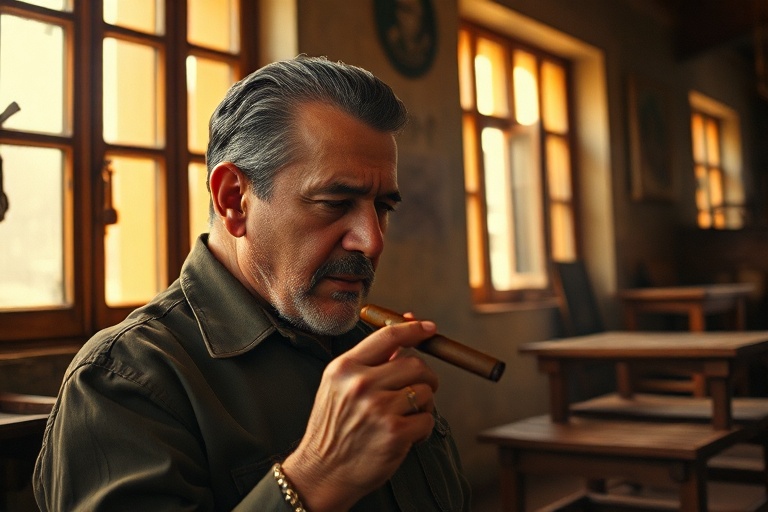
Raúl Castro, the younger brother of Fidel Castro and former president of Cuba, leaves behind a complex legacy marked by reform, resilience, and the quiet reshaping of a nation’s political and economic landscape. His leadership, though often overshadowed by his brother’s revolutionary persona, was instrumental in steering Cuba through a pivotal era of transition. After formally taking control in 2008, Raúl Castro initiated a series of gradual but significant changes that sought to modernize the island’s socialist system without dismantling its core ideological pillars.
The Rise of Raúl Castro: From Rebel to Reformer
Raúl Castro’s journey began long before he assumed the presidency. Born in 1931, he was the youngest of three brothers in a family that would shape 20th-century Cuban history. Unlike Fidel, whose charisma and oratory skills made him the face of the revolution, Raúl was often described as more pragmatic and methodical. His early involvement in the revolutionary movement led to his role in the Cuban military, where he earned a reputation for discipline and organizational skill.
After the 1959 revolution succeeded, Raúl became a key figure in Cuba’s new government. He served as Minister of the Armed Forces for nearly five decades, overseeing the transformation of Cuba’s military into a highly disciplined and professional institution. His tenure in this role allowed him to cultivate relationships with international allies, particularly in the Soviet bloc, and to develop a deep understanding of Cuba’s strategic interests.
When Fidel Castro stepped down due to health issues in 2008, Raúl assumed the presidency. His leadership style contrasted sharply with his brother’s. Where Fidel was a firebrand revolutionary, Raúl was a technocrat who prioritized stability and incremental change. This shift in approach was evident in his early reforms, which focused on economic liberalization while maintaining the Communist Party’s dominance.
Key Reforms Under Raúl Castro’s Leadership
Raúl Castro’s presidency was defined by a series of reforms aimed at addressing Cuba’s economic stagnation and aging infrastructure. While he remained committed to socialism, he recognized the need for pragmatic adjustments to improve living standards and reduce dependency on foreign aid. Below are some of the most significant changes implemented during his tenure:
- Economic Liberalization: Raúl Castro introduced market-oriented reforms, allowing small private businesses to operate for the first time in decades. These changes, known as the “Lineamientos,” permitted Cubans to buy and sell homes, rent out rooms, and operate small enterprises like restaurants and taxis.
- Foreign Investment Expansion: To stimulate growth, Raúl Castro sought to attract foreign investment, particularly in sectors like tourism, biotechnology, and renewable energy. Policies were loosened to encourage partnerships with international companies, though bureaucratic hurdles often slowed progress.
- Normalization of Relations with the United States: One of Raúl Castro’s most historic achievements was the restoration of diplomatic ties with the U.S. in 2015, following decades of hostility. This thaw in relations, negotiated in secret, opened new economic opportunities and eased travel restrictions for Cubans and Americans alike.
- Term Limits and Succession Planning: Unlike his brother, who ruled for nearly five decades, Raúl Castro introduced term limits for senior government and party officials. He also carefully groomed a successor, Miguel Díaz-Canel, ensuring a smooth transition of power in 2018.
These reforms were not without controversy. Critics argued that the changes did not go far enough, failing to address systemic issues like corruption, inequality, and political repression. Meanwhile, hardline factions within the Communist Party resisted further liberalization, fearing it would erode the revolution’s principles. Despite these challenges, Raúl Castro’s pragmatic approach helped Cuba navigate a period of global uncertainty, from the collapse of Venezuela’s economy to the tightening of U.S. sanctions under the Trump administration.
Global Implications: Cuba’s Place in a Shifting World Order
Raúl Castro’s leadership coincided with a transformative period in global politics. The rise of China as a global power, the resurgence of U.S. imperialism under different administrations, and the increasing isolation of Cuba’s traditional allies all posed challenges to the island’s sovereignty. Yet, Raúl Castro’s ability to adapt to these changes was a testament to his political acumen.
One of the most significant geopolitical shifts during his tenure was Cuba’s pivot toward China and Russia. As relations with the U.S. remained fraught, Raúl Castro strengthened economic and military ties with Beijing and Moscow, securing new sources of investment and diplomatic support. This realignment allowed Cuba to withstand U.S. pressure and maintain its independence in a rapidly changing world.
Domestically, Raúl Castro’s reforms had a tangible impact on Cuban society. The expansion of private enterprise led to the emergence of a new entrepreneurial class, while increased access to remittances from abroad improved living standards for many families. However, the benefits of these changes were unevenly distributed, exacerbating social inequalities and fueling discontent among younger generations eager for greater freedoms.
The normalization of relations with the U.S. also had cultural and economic ripple effects. Tourism boomed, particularly in Havana, where restored colonial buildings and vintage cars became symbols of the island’s unique charm. Cultural exchanges flourished, with American musicians, artists, and athletes visiting Cuba in greater numbers. Yet, the promise of economic prosperity remained elusive for many Cubans, who continued to face shortages of food, medicine, and basic goods.
Legacy and the Road Ahead for Cuba
Raúl Castro’s departure from the presidency in 2021 marked the end of an era in Cuban politics. His leadership was defined by a delicate balancing act—modernizing the economy while preserving the revolution’s socialist foundations. While his reforms were incremental, they laid the groundwork for future changes that his successor, Miguel Díaz-Canel, would need to navigate.
Looking ahead, Cuba faces formidable challenges. The COVID-19 pandemic devastated the island’s tourism-dependent economy, and U.S. sanctions continue to stifle growth. The Communist Party, now led by Díaz-Canel, must address rising discontent among the population, particularly among younger Cubans who have grown impatient with the slow pace of reform. Raúl Castro’s legacy will be judged not only by what he accomplished but by how his successors build upon—or retreat from—his vision.
For observers of Cuban politics, Raúl Castro’s tenure offers valuable lessons. His ability to adapt to changing circumstances while maintaining the revolution’s core principles demonstrates the resilience of Cuba’s political system. Yet, his reforms also highlight the limitations of gradual change in a country where systemic issues demand bold solutions.
As Cuba moves forward, the world will watch closely to see whether the island can carve out a new path—one that balances economic pragmatism with political stability, and sovereignty with global engagement. Raúl Castro’s leadership may be over, but the questions he left behind will shape Cuba’s future for years to come.
For those interested in exploring more about Cuba’s political and cultural landscape, Dave’s Locker Culture section offers in-depth analysis and diverse perspectives on the island’s evolving identity.