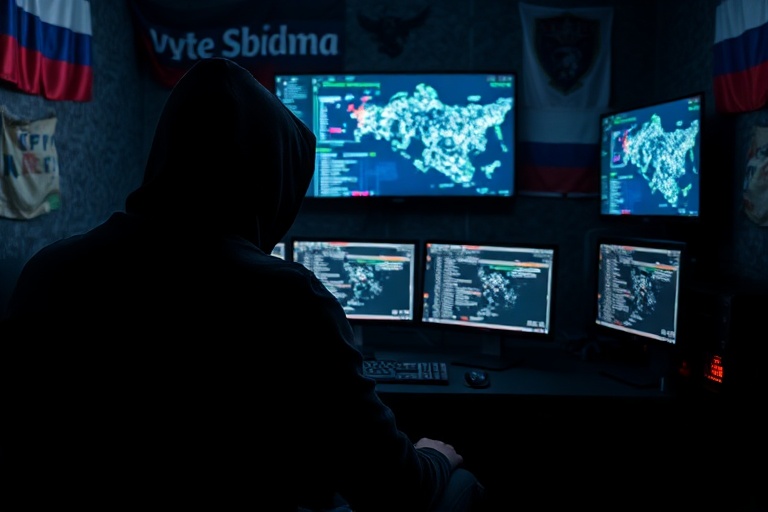
Russian Hackers: The Rising Threat in Global Cyber Warfare
“`html
Russian Hackers: The Evolving Threat in Cyber Warfare
The specter of Russian hackers looms large over global cybersecurity, representing a persistent and adaptive threat to governments, corporations, and individuals alike. These actors, often tied to state-sponsored groups like APT29 (Cozy Bear) and APT28 (Fancy Bear), have become synonymous with sophisticated cyber operations that blend espionage, sabotage, and influence campaigns. Their activities span decades, evolving from early phishing attempts to today’s highly targeted, multi-vector attacks that can destabilize economies and sway public opinion.
Their methods are as diverse as they are relentless. From stealing sensitive intelligence to disrupting critical infrastructure, Russian hackers operate with a level of precision that reflects both technical prowess and strategic intent. Understanding their tactics—and the broader implications of their actions—is essential for anyone concerned about digital security in an increasingly interconnected world.
The Evolution of Russian Cyber Operations
Russian cyber capabilities didn’t emerge overnight. They are the product of decades of investment, experimentation, and adaptation. During the Cold War, Soviet-era intelligence agencies laid the groundwork for what would later become a formidable cyber apparatus. By the 1990s and early 2000s, Russian hackers began making names for themselves through high-profile attacks, such as the 2007 cyberattacks on Estonia, which many attribute to Kremlin-backed groups.
The 2016 U.S. presidential election marked a turning point. Russian hackers, specifically APT28, infiltrated the Democratic National Committee’s servers, exfiltrating emails that were later weaponized through coordinated disinformation campaigns. This incident demonstrated how cyber operations could transcend traditional espionage, merging technical intrusion with psychological manipulation. Since then, Russian hacking groups have refined their approach, integrating ransomware, data leaks, and hybrid warfare tactics into their playbook.
Today, their operations are characterized by:
- State-Sponsored Precision: Groups like Cozy Bear and Fancy Bear are widely believed to operate under the umbrella of Russian intelligence agencies, including the FSB and GRU. Their targets often align with geopolitical objectives, whether stealing vaccine research or disrupting energy supplies.
- Hybrid Warfare Tactics: Russian hackers don’t just steal data—they weaponize it. Leaks, disinformation, and social media manipulation are used to sow discord, undermine trust in institutions, and influence elections.
- Ransomware as a Tool of Coercion: Attacks like the 2021 Colonial Pipeline hack, which disrupted fuel supplies on the U.S. East Coast, reveal how ransomware has become a geopolitical lever. While not always directly state-sponsored, these attacks often align with Russian interests.
- Constant Adaptation: Russian hackers are early adopters of new technologies, from AI-driven phishing to exploiting zero-day vulnerabilities. Their ability to pivot quickly keeps cybersecurity experts perpetually on the back foot.
Key Targets and Motivations
The targets of Russian hackers are as varied as their motivations. While espionage remains a primary driver, the scope of their operations has expanded to include financial gain, political interference, and even destructive cyberattacks.
Governments and militaries are prime targets. In 2020, Russian hackers breached SolarWinds, a major IT firm, and inserted malware into its software updates. This supply-chain attack compromised multiple U.S. government agencies, including the Department of Defense and Department of Treasury. The sophistication of the operation underscored the lengths to which Russian actors will go to achieve strategic objectives.
Corporations, particularly in sectors like energy, aerospace, and technology, are also in the crosshairs. The 2017 NotPetya attack, widely attributed to Russian hackers, caused over $10 billion in global damages by crippling companies like Maersk and Merck. Unlike traditional ransomware, NotPetya was designed to destroy data permanently, highlighting a shift toward destructive rather than merely extractive cybercrime.
Civil society is not immune. Independent media outlets, human rights organizations, and opposition figures have all fallen victim to hacking campaigns aimed at silencing dissent. The 2018 indictment of Russian hackers for interfering in the 2018 World Cup in Russia—yes, even the FIFA tournament wasn’t off-limits—further illustrates the breadth of their ambitions.
Defending Against an Unrelenting Threat
Combating Russian hackers requires a multi-layered approach that combines technological defenses, intelligence sharing, and international cooperation. Governments and private entities alike must prioritize cybersecurity as a core operational function, rather than an afterthought.
First and foremost, organizations need robust cyber hygiene. This includes regular software updates, multi-factor authentication, and employee training to recognize phishing attempts. The human element remains the weakest link in cybersecurity, and Russian hackers exploit this relentlessly.
Intelligence sharing is another critical component. Initiatives like the Cybersecurity and Infrastructure Security Agency’s (CISA) Technology hubs provide platforms for organizations to exchange threat intelligence and best practices. Meanwhile, private cybersecurity firms are developing AI-driven tools to detect and neutralize attacks in real time.
International collaboration is perhaps the most challenging yet necessary aspect of defense. Cybercrime knows no borders, and Russian hackers often operate from jurisdictions that provide safe haven. Diplomatic efforts, sanctions, and indictments—like those issued by the U.S. Department of Justice—can deter some actors, but the cat-and-mouse game continues.
For individuals, vigilance is key. Using password managers, avoiding suspicious links, and keeping abreast of cybersecurity news can mitigate the risk of falling victim to a hacking campaign. The rise of decentralized finance and cryptocurrency has also given hackers new avenues for extortion, making financial literacy in the digital age more important than ever.
The Broader Implications of Russian Cyber Operations
The activities of Russian hackers extend far beyond individual attacks. They reflect a broader strategy to undermine Western democracies, disrupt global stability, and assert Russian influence on the world stage. The implications are profound, touching on everything from election integrity to economic security.
One of the most concerning trends is the normalization of cyberattacks as a tool of statecraft. If hacking is treated as a legitimate form of warfare, the threshold for conflict in cyberspace will continue to erode. This could lead to a dangerous escalation, where minor incidents spiral into full-blown cyber conflicts with real-world consequences.
Economically, the cost of cybercrime is staggering. A 2023 report by the Center for Strategic and International Studies (CSIS) estimated that cybercrime costs the global economy over $1 trillion annually. Russian hackers are a significant contributor to this figure, targeting everything from hospitals to banks. The ripple effects—such as disrupted supply chains and lost productivity—can take years to fully manifest.
Culturally, the impact of Russian disinformation campaigns cannot be overstated. Social media platforms have become battlegrounds where narratives are manipulated, trust is eroded, and public discourse is hijacked. The 2016 U.S. election was just the beginning; similar tactics have since been deployed in Europe, Africa, and Latin America.
Yet, there is a silver lining. The heightened awareness of Russian cyber threats has spurred innovation in cybersecurity. Governments are investing more in cyber defense, private companies are developing cutting-edge solutions, and international alliances like NATO’s Cyber Defense Pledge are strengthening collective resilience. The question remains whether these efforts can keep pace with the evolving tactics of Russian hackers.
Ultimately, the story of Russian hackers is one of persistence and adaptation. They are not a passing trend but a permanent fixture in the cybersecurity landscape. Understanding their methods, motivations, and impact is the first step toward building a more secure digital future.
For those looking to dive deeper into the world of cybersecurity and its broader implications, resources like Dave’s Locker News and Technology sections offer in-depth analysis and expert insights. Staying informed is the best defense against an ever-evolving threat.