Toby Samuel: The Artist Merging Sound, Vision, and Technology
“`html
Toby Samuel: The Artist Redefining Digital Storytelling
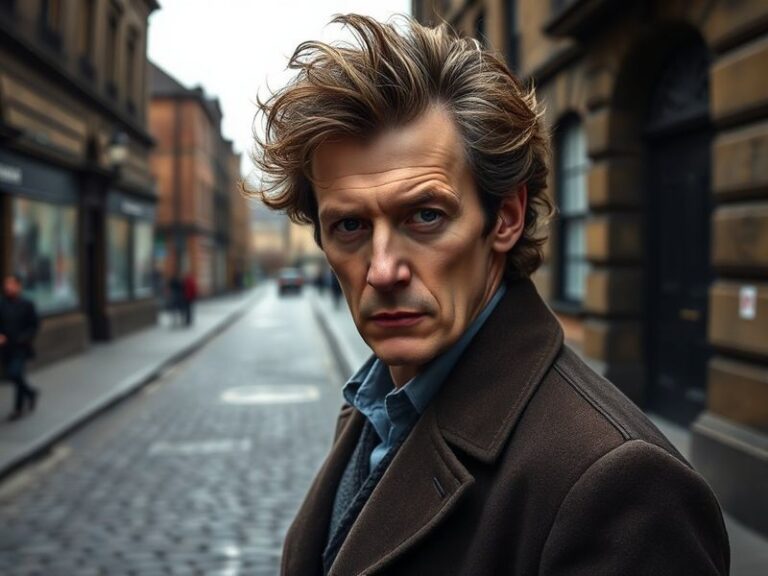
In an era where visual and auditory experiences increasingly dominate global culture, Toby Samuel has emerged as a distinctive voice. His work bridges gaps between traditional art forms and digital innovation, creating a language that resonates across continents. Samuel’s approach is not confined to a single medium; instead, it weaves together music, visual art, and interactive experiences to craft narratives that feel both intimate and expansive.
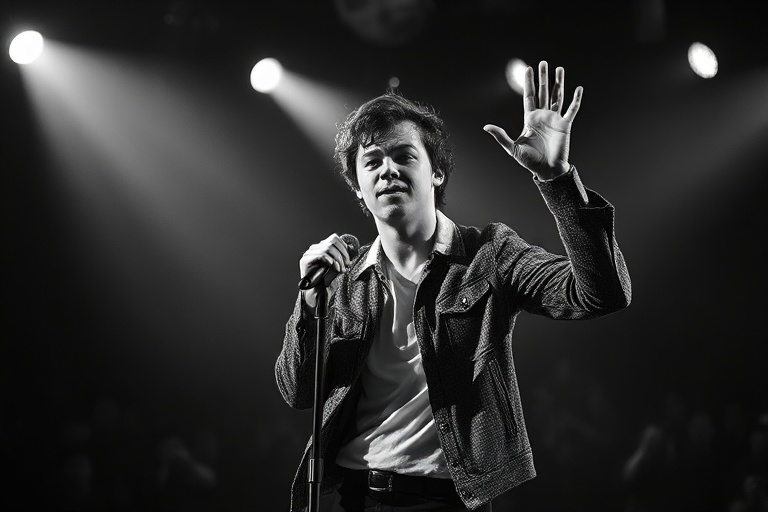
The London-based creator first gained attention through his experimental soundscapes, which blend organic instrumentation with glitchy, electronic textures. His 2022 debut album Fragments became a critical darling, praised for its ability to evoke emotion through sonic landscapes that feel both futuristic and nostalgic. But Samuel’s talents extend beyond music. His collaborations with digital artists and filmmakers have produced multimedia installations exhibited in galleries from Berlin to Tokyo, showcasing his knack for merging sensory experiences.
The Early Years: From Classical Training to Digital Experimentation
Samuel’s journey began in a modest suburb of Manchester, where he grew up surrounded by the industrial hum of the city and the lush greenery of the countryside. His mother, a music teacher, introduced him to piano at age five, while his father, an engineer, nurtured his curiosity for technology. This dual influence—rooted in discipline and innovation—shaped his artistic development.
By his teens, Samuel was composing classical pieces while also tinkering with early digital audio workstations. His formal training at the Royal Academy of Music in London provided a foundation in composition and theory, but it was his extracurricular experiments that set him apart. He spent hours dissecting the works of Aphex Twin and Brian Eno, dissecting how sound could evoke movement and emotion without relying on traditional structures.
- Key Influences During Formative Years:
- Classical composers like Debussy and Messiaen, known for their harmonic richness.
- Electronic pioneers such as Kraftwerk and Autechre, who pushed the boundaries of texture.
- Japanese ambient artists like Hiroshi Yoshimura, whose work blends nature and technology.
- Early Projects: Samuel’s first public performances were in underground venues, where he tested unconventional setups—mixing live piano with live-coded generative music.
Breaking Boundaries: The Rise of a Multimedia Storyteller
Samuel’s breakthrough came in 2021 with Echo Chamber, an immersive audio-visual project that toured European cultural festivals. The piece combined his compositions with generative visuals created by an AI trained on 19th-century landscape paintings. Audiences wore wireless headphones, allowing the sound to move dynamically around them while projections shifted in real-time based on the music’s rhythm and tone.
Critics hailed Echo Chamber as a landmark in sensory storytelling, noting how it transcended the passive experience of traditional concerts. Samuel’s ability to create synesthetic moments—where sound and vision merge seamlessly—positioned him as a leader in the emerging field of “experience design.” His work aligns with a global trend: the blurring of lines between artist, audience, and medium. In cities like Seoul and São Paulo, similar experiments are redefining how people engage with art, moving away from static displays toward participatory encounters.
Samuel’s international appeal is no accident. He deliberately crafts his work to avoid cultural specificity, focusing instead on universal themes like memory, time, and human connection. His 2023 piece Neon Hymns, created for the Venice Biennale, invited visitors to walk through a tunnel of shifting lights and sounds, each section representing a different emotional state. The project was later adapted for a virtual reality platform, allowing global audiences to experience it remotely.
The Philosophy Behind the Art: Lessons in Connection and Impermanence
At the core of Samuel’s work is a philosophy that values impermanence and human connection. He often cites the Japanese concept of mono no aware—the awareness of the impermanence of things—as a guiding principle. This philosophy is evident in his use of generative music, where no two performances are identical, and in his collaborations with dancers and poets whose work is ephemeral by nature.
Samuel also emphasizes the role of technology in fostering intimacy. In an interview with Culture magazine, he noted, “Digital tools allow us to create experiences that feel deeply personal, even when shared with thousands. The paradox is that technology, often seen as isolating, can bring people closer together when used thoughtfully.” His recent project Whisper Networks, a series of interactive sound installations in public parks, encourages visitors to leave voice messages that are woven into a collective soundscape. The result is a living archive of human voices, blending individual stories into a shared narrative.
Looking Ahead: The Future of Samuel’s Vision
As Samuel prepares for his next major project—a collaboration with a Japanese robotics team to create a humanoid performer that improvises music and movement in real-time—his influence shows no signs of waning. His work challenges audiences to reconsider their role in the creative process, asking them to become active participants rather than passive observers. This shift is part of a larger cultural movement, where art is no longer something to be admired from a distance but an experience to be lived.
The global arts community has taken notice. Samuel’s upcoming residency at the Entertainment Technology Center in Los Angeles will focus on developing tools for collaborative, decentralized art creation. His goal is to create a platform where artists from different disciplines and geographies can co-create in real-time, regardless of physical location. This aligns with a growing demand for art that reflects the interconnectedness of the modern world.
For now, Samuel continues to tour, exhibit, and experiment. His latest album, Horizon Lines, is set for release in early 2025 and promises to push further into the realm of spatial audio, using 3D sound technology to create an enveloping listening experience. Whether through a gallery installation or a live performance, his work reminds us that art is not just about what we see or hear—it’s about how we feel, connect, and remember.
A Final Thought: The Role of Artists in a Fragmented World
In an age marked by division and distraction, artists like Toby Samuel serve a vital function. They remind us of our shared humanity, not by preaching unity but by creating spaces where it can be experienced. His work doesn’t offer solutions to global challenges; instead, it offers moments of clarity, beauty, and introspection. In doing so, it invites us to slow down, listen, and perhaps—just for a moment—forget the noise.