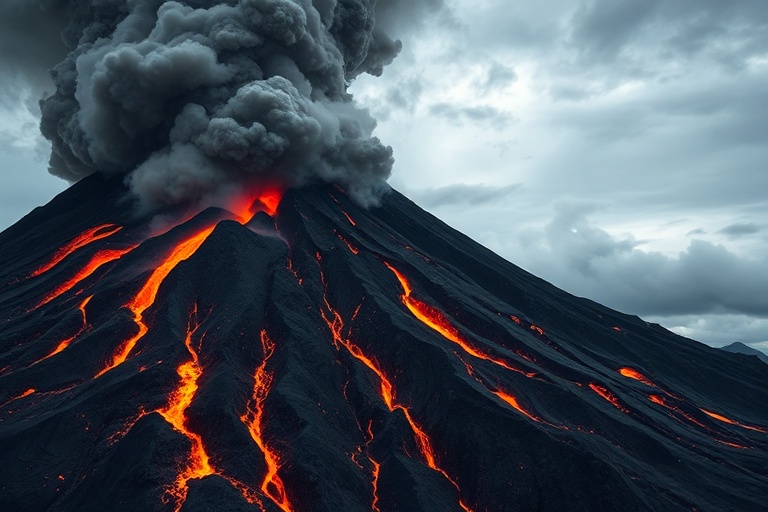
Few natural phenomena command attention like a volcanic eruption. The ground trembles, the sky darkens, and molten rock reshapes the landscape in hours. These events are not just geological spectacles; they are forces that influence climate, economies, and human settlements for generations. The recent activity at Iceland’s Reykjanes Peninsula, for instance, has reminded the world that volcanoes remain active and unpredictable, even in seemingly quiet regions.
Volcanic eruptions occur when magma from beneath the Earth’s crust forces its way to the surface. This process can be gradual, marked by steam vents and sulfur emissions, or explosive, sending ash plumes miles into the atmosphere. The severity depends on magma viscosity, gas content, and tectonic setting. Subduction zones, where one tectonic plate dives beneath another, often produce the most violent eruptions. The Pacific Ring of Fire, home to 75% of the world’s active volcanoes, exemplifies this dynamic.
The Science Behind the Fury: How Eruptions Unfold
At the heart of every volcanic eruption is magma—a molten rock mixture that rises through cracks in the Earth’s crust. When magma reaches the surface, it becomes lava. The type of lava, whether basaltic, andesitic, or rhyolitic, determines the eruption’s style. Basaltic lava, low in silica, flows easily, creating broad shield volcanoes like those in Hawaii. Andesitic and rhyolitic magmas, thicker and richer in gas, often erupt explosively, producing pyroclastic flows and towering ash columns.
Volcanic eruptions also release gases such as sulfur dioxide, carbon dioxide, and water vapor. These gases can form aerosols in the stratosphere, reflecting sunlight and temporarily cooling the planet. The 1991 eruption of Mount Pinatubo in the Philippines, for example, lowered global temperatures by about 0.5°C for two years. Such events highlight the dual role of volcanoes as both destroyers and regulators of Earth’s climate.
Monitoring volcanic activity has improved significantly thanks to advances in seismology and satellite technology. Instruments detect tremors, ground deformation, and gas emissions, providing early warnings to nearby communities. Yet, despite these advancements, predicting the exact timing and magnitude of an eruption remains a challenge. The 2021 eruption of La Soufrière in St. Vincent and the Grenadines, for instance, demonstrated how quickly conditions can change, forcing evacuations with little notice.
Human and Environmental Toll: The Ripple Effects of Eruptions
The immediate impact of an eruption is often devastating. Pyroclastic flows—fast-moving currents of hot gas and rock—can incinerate everything in their path. Ashfall disrupts air travel, contaminates water supplies, and damages crops. The 2010 eruption of Iceland’s Eyjafjallajökull volcano grounded flights across Europe for nearly a week, costing airlines an estimated $1.7 billion. In agricultural regions, ash can linger for years, reducing soil fertility and forcing farmers to abandon land.
Health risks extend beyond the blast zone. Fine ash particles can penetrate lungs, exacerbating respiratory conditions like asthma. Sulfur dioxide, when inhaled, forms sulfuric acid in the respiratory tract, causing irritation and long-term damage. Communities near active volcanoes must also contend with lahars—volcanic mudflows triggered by melted snow or heavy rain mixing with ash. These mudflows can travel rapidly, burying towns under meters of debris, as seen in the 1985 Nevado del Ruiz disaster in Colombia, which killed over 23,000 people.
Eruptions also displace populations, straining resources and creating humanitarian crises. The 2022 eruption of Mauna Loa in Hawaii, though less deadly, forced thousands to evacuate as lava flows advanced toward residential areas. Displacement can lead to overcrowded shelters, food shortages, and psychological trauma. The long-term recovery often requires international aid, as local infrastructure may be severely compromised.
Beyond the Destruction: Volcanoes as Architects of Life
Despite their destructive potential, volcanoes play a crucial role in shaping Earth’s ecosystems. The minerals in volcanic ash enrich soil, making it fertile for agriculture. Regions like Italy’s Campania and Indonesia’s Java owe their lush landscapes to centuries of volcanic activity. Over time, volcanic islands, such as those in the Hawaiian archipelago, become biodiversity hotspots, hosting unique species found nowhere else on Earth.
Volcanoes also contribute to the formation of new land. The 2014-2015 eruption of Hunga Tonga-Hunga Ha’apai in Tonga created a new island that, despite erosion challenges, has become a subject of scientific study. These landmasses provide habitats for marine and terrestrial life, demonstrating nature’s resilience. Even underwater volcanoes, like those along mid-ocean ridges, drive hydrothermal vent ecosystems that support chemosynthetic bacteria and deep-sea creatures.
The energy potential of geothermal activity is another overlooked benefit. Countries like Iceland and New Zealand harness geothermal power to generate electricity and heat homes, reducing reliance on fossil fuels. The Blue Lagoon in Iceland, a geothermal spa, is a testament to the tourism revenue generated by volcanic landscapes. These examples underscore how volcanoes, though feared, are integral to Earth’s balance.
Preparation and Policy: Mitigating the Risks
Living with active volcanoes requires a combination of science, policy, and community engagement. Countries in volcanically active regions have developed sophisticated monitoring systems and emergency plans. Japan, for instance, operates a nationwide volcano observation network, combining seismometers, GPS, and gas analyzers to issue real-time alerts. Public education campaigns teach residents how to respond during an eruption, from seeking higher ground to protecting water supplies.
Urban planning also plays a role in minimizing risk. Zoning laws in cities like Naples, Italy, restrict construction in high-risk zones near Mount Vesuvius. Building codes mandate reinforced roofs to withstand ash loads, and evacuation routes are clearly marked. International cooperation further strengthens resilience. The United Nations Office for Disaster Risk Reduction (UNDRR) collaborates with countries to share best practices and coordinate responses to volcanic crises.
Investment in research is critical for improving predictions. Projects like the Deep Carbon Observatory study the carbon cycle through volcanic activity, offering insights into long-term climate impacts. Meanwhile, drone technology allows scientists to safely collect samples from active craters, reducing the need for human exposure. These advancements, though incremental, bring us closer to understanding the complex behaviors of volcanoes.
Key Takeaways: What to Remember About Volcanic Eruptions
- Eruptions are diverse: They range from gentle lava flows to catastrophic explosions, depending on magma composition and tectonic setting.
- Global consequences: Ash and gases can disrupt air travel, cool the climate, and affect agriculture worldwide.
- Human costs are high: Evacuations, health risks, and economic losses are common, particularly in densely populated regions.
- Nature’s paradox: Volcanoes destroy yet create, forming fertile soil, new land, and geothermal energy sources.
- Preparedness saves lives: Monitoring systems, urban planning, and public education are essential for reducing risks.
A Balanced Perspective: Respecting Nature’s Forces
Volcanic eruptions are a reminder of Earth’s dynamism—a planet constantly reshaping itself. While modern technology offers tools to predict and mitigate risks, the sheer power of these events demands humility. Communities near active volcanoes must balance economic opportunities, such as tourism and agriculture, with the ever-present threat of disaster. Policymakers, scientists, and residents alike must prioritize long-term resilience over short-term gains.
For the rest of the world, volcanoes serve as a cautionary tale about the unpredictability of nature. They challenge our assumptions about safety and progress, forcing us to reconsider how we coexist with the planet. The next time a volcano stirs, the world will watch—not just for the spectacle, but for the lessons it offers about preparation, adaptation, and the enduring power of Earth beneath our feet.
As climate change alters weather patterns and stresses ecosystems, the role of volcanoes in regulating the planet’s thermostat may become even more significant. Understanding these forces is not just an academic pursuit; it is a necessity for safeguarding the future. Whether through awe or adversity, volcanoes will continue to shape the story of humanity.
For more on natural disasters and their broader implications, explore our Science and News sections.