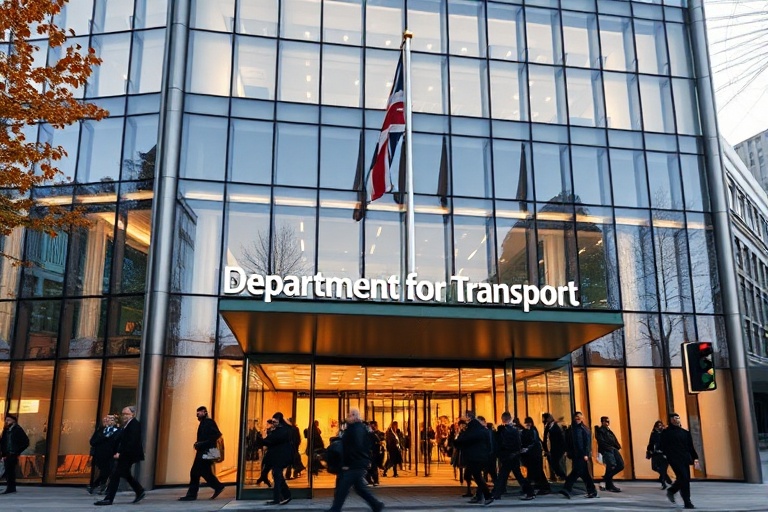
What Does the UK Department for Transport Actually Do?
“`html
The Department for Transport: Shaping the Future of UK Mobility
The Department for Transport (DfT) sits at the heart of the UK government’s efforts to keep the nation moving. Established in 2002 under the Department for Transport, Local Government and the Regions, the DfT has evolved into a central agency responsible for developing transport policy, regulating services, and ensuring safety across roads, rail, aviation, and maritime sectors.
From delivering HS2 to managing the transition to electric vehicles, the DfT’s work impacts millions daily. Yet its role is often misunderstood. This article examines the department’s structure, key responsibilities, recent initiatives, and the challenges it faces in balancing innovation with regulation.
The DfT’s Core Responsibilities and Structure
The Department for Transport operates under the leadership of the Secretary of State for Transport, currently reporting directly to the Prime Minister. It manages an annual budget of over £25 billion and employs around 1,000 civil servants across London and regional offices.
The DfT’s remit covers a broad spectrum of transport modes:
- Roads: Policy on highways, vehicle standards, and road safety
- Rail: Oversight of Network Rail, rail franchising, and HS2
- Maritime: Regulation of shipping, ports, and maritime safety
- Aviation: Management of UK airspace, airports, and aviation security
- Public Transport: Strategy for buses, trams, and cycling infrastructure
Each area is supported by agencies and public bodies such as Highways England, the Office of Rail and Road, and the Maritime & Coastguard Agency. These bodies deliver day-to-day services while the DfT focuses on long-term strategy and regulation.
The Strategic Vision: Net Zero, Connectivity, and Innovation
In recent years, the DfT has placed sustainability at the core of its mission. The Transport Decarbonisation Plan, published in 2021, sets out a phased approach to achieving net-zero emissions from domestic transport by 2050.
Key milestones include:
- Phasing out the sale of new petrol and diesel cars by 2035
- Expanding the electric vehicle charging network to 300,000 public chargers by 2030
- Supporting hydrogen and battery-powered trains on non-electrified routes
- Promoting active travel through the £2 billion Active Travel Fund
This transition is not only environmental but economic. The UK automotive sector, worth £82 billion annually, stands to gain from early adoption of green technologies. However, success depends on resolving supply chain bottlenecks and ensuring equitable access to charging infrastructure across rural and urban areas.
Major Projects Under the DfT’s Watch
The department oversees some of the UK’s most ambitious infrastructure projects. High Speed 2 (HS2), despite ongoing scrutiny over costs and delays, remains a flagship initiative aimed at improving connectivity between London, Birmingham, Manchester, and Leeds.
Critics argue that the £98 billion budget is excessive, especially as passenger demand forecasts have softened post-pandemic. The DfT has responded by launching the Integrated Rail Plan, which prioritises upgrades to existing lines in the Midlands and North over full HS2 completion.
Another major initiative is the Restoring Your Railway Fund, which has allocated £500 million to reopen disused stations and restore local rail links. Projects like the reopening of the Leicester to Burton line and the reinstatement of the Leamside line in County Durham reflect a growing emphasis on regional connectivity.
The Role of Technology and Digital Transformation
The DfT is also driving digital innovation in transport. The introduction of smart motorways, which use technology to manage traffic flow, has been both praised for reducing congestion and criticised following safety incidents.
The department is now piloting AI-powered traffic management systems in the West Midlands and Greater Manchester. These systems use real-time data to adjust speed limits, reroute vehicles, and predict incidents before they occur.
In rail, the DfT supports the rollout of digital signalling, which increases capacity and reliability. Network Rail’s East Coast Digital Programme is a £1.4 billion project aiming to replace traditional signalling with a modern, data-driven system by 2029.
Challenges and Controversies Facing the DfT
Despite its ambitious agenda, the DfT faces significant challenges. One of the most pressing is the backlog in MOT testing centres, which has led to delays for drivers needing vehicle inspections. The department has responded by extending testing windows and increasing funding for test centre capacity.
Another controversy surrounds the management of the HS2 project. The Public Accounts Committee has repeatedly criticised the DfT for poor financial oversight and lack of transparency. In response, the department has introduced stricter quarterly reporting and independent cost reviews.
The DfT has also been criticised for its handling of the fuel crisis in 2022, when panic buying led to temporary shortages at petrol stations. The department attributed the disruption to global supply chain issues but acknowledged the need for better communication with the public during such events.
The Future: Balancing Ambition with Practicality
Looking ahead, the DfT must navigate a complex landscape. Brexit has reshaped trade routes, requiring new strategies for freight and logistics. The rise of e-scooters and micromobility presents regulatory challenges, with calls for clearer legal frameworks.
The department is also preparing for the long-term impacts of climate change on transport infrastructure, from flooding on rail lines to heat damage on roads. Investment in resilient design is now a priority, with £5.2 billion allocated under the Flood and Coastal Resilience Programme.
As the UK seeks to position itself as a global leader in sustainable transport, the DfT’s role will only grow in importance. Success will depend not just on policy innovation but on effective delivery, cross-sector collaboration, and public trust.
Conclusion: A Department at a Crossroads
The Department for Transport stands at a pivotal moment. It must deliver on its net-zero commitments while maintaining a reliable, affordable, and safe transport network. The projects it oversees today will shape the UK’s economic competitiveness and environmental legacy for decades to come.
For the public, the DfT’s work is often invisible until something goes wrong—a pothole, a cancelled train, or a delayed flight. Yet its influence is everywhere. From the roads we drive to the trains we take, the department’s policies touch every corner of daily life.
As technology accelerates and climate urgency intensifies, the DfT’s ability to balance ambition with pragmatism will define its legacy. Whether through HS2, electric vehicle adoption, or digital rail, the choices made today will determine the mobility—and prosperity—of future generations.
For those interested in the broader landscape of UK transport policy, further insights can be found in our Automotive and Science categories on Dave’s Locker.