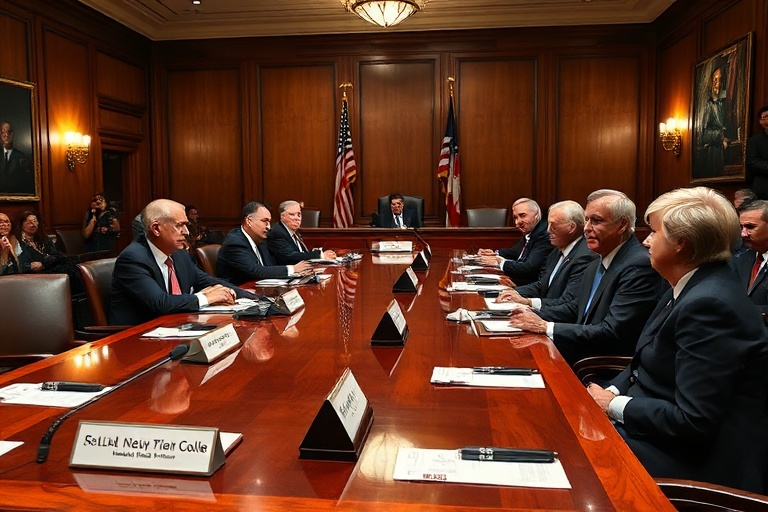
The United States Senate Republican Conference serves as the organizational backbone for the Republican Party within the upper chamber of Congress. It plays a pivotal role in shaping legislative agendas, coordinating party strategy, and maintaining unity among Republican senators. While often overshadowed by the more visible House Republican caucus, the Senate Republican Conference wields significant influence over national policy, particularly during periods of divided government.
The Conference’s structure reflects both historical traditions and modern political realities. Established in the late 19th century, it has evolved into a sophisticated operation that balances regional interests, ideological diversity, and electoral imperatives. In an era marked by intense polarization, the Conference’s ability to maintain cohesion—or fracture along factional lines—often determines the legislative fate of major initiatives.
The Role and Responsibilities of the Senate Republican Conference
The Senate Republican Conference is more than a gathering of like-minded senators; it functions as a de facto governing body within the Republican Party’s Senate delegation. Its primary responsibilities include setting legislative priorities, selecting committee assignments, and electing party leadership. The Conference also serves as a forum for debating policy positions, resolving intra-party disputes, and presenting a unified front to the public and media.
At its core, the Conference operates through a hierarchical structure. The Senate Republican Leader, currently Mitch McConnell, serves as the Conference’s chair and primary spokesperson. Beneath the leader, the position of Senate Republican Whip—currently John Thune—plays a crucial role in counting votes, enforcing party discipline, and ensuring that members adhere to the Conference’s agenda. These roles are not ceremonial; they directly impact the Senate’s legislative output and the Republican Party’s national standing.
The Conference’s influence extends beyond Capitol Hill. It shapes the Republican Party’s messaging, coordinates with state party organizations, and interacts with conservative media outlets. This interconnected web of relationships ensures that the Conference’s priorities align with broader conservative objectives, from tax policy to judicial confirmations.
Key Components of the Senate Republican Conference
The Conference’s effectiveness depends on several functional components:
- Conference Chair: Leads the biweekly meetings where senators discuss legislative strategy and policy priorities. The chair also represents the Conference in negotiations with the Senate Democratic Caucus.
- Policy Committees: Subgroups within the Conference that focus on specific issues, such as healthcare, national security, or economic policy. These committees draft policy proposals and coordinate messaging.
- Regional Caucuses: Groups of senators from the same geographic region who collaborate on issues affecting their constituents. Examples include the Western Caucus and the Northeast Republican Coalition.
- Campaign Arm: The National Republican Senatorial Committee (NRSC), which works to elect Republican candidates to the Senate. The Conference closely collaborates with the NRSC to align legislative goals with electoral strategy.
These components ensure that the Conference remains responsive to both ideological and electoral pressures. However, they also create tensions, particularly when regional interests clash with national priorities or when moderate and conservative factions vie for influence.
Historical Evolution and Cultural Context
The Senate Republican Conference has undergone significant transformations since its inception. In the early 20th century, the Conference was dominated by conservative Republicans who resisted progressive reforms. During the New Deal era, it became a bastion of opposition to President Franklin D. Roosevelt’s policies, embodying the Republican Party’s resistance to expanding federal power.
The Conference’s role shifted dramatically in the 1980s under Ronald Reagan, when it became a vehicle for advancing conservative principles such as deregulation, tax cuts, and a robust national defense. Reagan’s presidency aligned the Conference with the broader conservative movement, a partnership that has persisted to this day. However, this alignment has also intensified ideological divisions within the Conference, particularly on issues like healthcare, climate change, and social policy.
Culturally, the Conference reflects the evolution of the Republican Party itself. In the post-World War II era, the party was a coalition of fiscal conservatives, libertarians, and Southern Democrats who had realigned with the GOP. Today, the Conference includes a mix of traditional conservatives, populist insurgents, and libertarian-leaning senators, each bringing distinct perspectives to the legislative process.
This diversity has led to both innovation and conflict. For example, the rise of the Tea Party movement in the early 2010s pushed the Conference toward a more confrontational approach to governance, epitomized by the 2013 government shutdown. Conversely, the election of moderates like Mitt Romney and Lisa Murkowski has tempered some of the Conference’s more extreme tendencies, particularly on issues like climate change and LGBTQ+ rights.
Global Perspectives and Comparative Analysis
While the Senate Republican Conference is uniquely American, its dynamics resonate in other parliamentary systems where party caucuses play a central role in governance. For instance, the United Kingdom’s Conservative Party operates through a similar structure of backbench committees and whips, though it lacks the Senate’s distinct constitutional role. Similarly, Canada’s Conservative Party caucus in the Senate of Canada mirrors many of the Conference’s functions, albeit with less power due to the country’s parliamentary system.
Internationally, the Conference’s emphasis on regional representation and ideological diversity offers lessons for other conservative movements. In Europe, conservative parties often struggle to balance the demands of rural voters with urban professionals, much like the Conference’s regional caucuses. However, the Conference’s ability to maintain cohesion despite these divisions stands out as a model of pragmatic conservatism.
The Conference’s relationship with global conservative movements also highlights its broader significance. It collaborates with organizations like the International Democrat Union, which brings together conservative parties from around the world. Through these partnerships, the Conference influences global policy debates, particularly on issues like trade, national security, and climate change. For example, its opposition to the Paris Climate Accord in 2017 reflected a broader trend among conservative parties in Europe and Australia, where climate skepticism remains a potent political force.
Challenges and Future Directions
The Senate Republican Conference faces several challenges in the coming years. The first is the generational shift within the Republican Party. Younger senators, such as Josh Hawley and Tom Cotton, bring a more populist and confrontational style to the Conference, challenging the traditional leadership of figures like McConnell. This generational divide has already led to fractures, as seen in the 2021 debate over the January 6th Capitol riot and the 2023 debt ceiling negotiations.
A second challenge is the Conference’s relationship with the presidency. Under unified government, the Conference’s role is largely supportive, as it aligns with the president’s agenda. However, under divided government, the Conference often becomes a vehicle for opposition, as it was during the Obama and Biden administrations. This dynamic complicates the Conference’s ability to present a coherent policy vision to the American public.
Finally, the Conference must navigate the growing influence of grassroots movements, particularly on the right. Groups like the Club for Growth and FreedomWorks have increasingly targeted Republican senators who deviate from their preferred policy positions, creating a climate of constant electoral pressure. This environment makes it difficult for the Conference to pursue long-term legislative strategies or compromise with Democrats.
Despite these challenges, the Senate Republican Conference remains a critical institution in American politics. Its ability to adapt to changing circumstances—whether through leadership transitions, policy innovations, or electoral realignments—will determine its future influence. For observers of global politics, the Conference offers a case study in how conservative movements balance tradition and innovation in an era of rapid change.
Conclusion: The Conference’s Enduring Significance
The Senate Republican Conference is more than a political club; it is a microcosm of the Republican Party’s struggles and triumphs. Its structure reflects the party’s ideological diversity, its history is intertwined with the nation’s political evolution, and its future will shape the direction of American conservatism. In an era of heightened polarization, the Conference’s role in maintaining party unity—and navigating its fractures—will be crucial to the Senate’s ability to function and the nation’s ability to govern.
For those seeking to understand the Republican Party’s inner workings, the Conference offers a window into the forces that drive American politics. Whether through its policy debates, leadership contests, or electoral strategies, the Conference remains a barometer of the conservative movement’s health and direction. As the political landscape continues to shift, the Senate Republican Conference will undoubtedly remain at the center of the action.