alan greenspan
“`html
Alan Greenspan: The Maestro Who Shaped Modern Finance
Few economists have wielded as much influence over global markets as Alan Greenspan. Serving as the 13th Chairman of the Federal Reserve from 1987 to 2006, Greenspan became a defining figure in modern finance. His tenure spanned multiple economic cycles, from the Black Monday crash of 1987 to the dot-com bubble and the early stages of the 2008 financial crisis. Often called the “maestro” for his perceived orchestration of economic stability, Greenspan’s policies left an indelible mark on both American and international financial systems.
Born in 1926 in New York City, Greenspan grew up during the Great Depression, an experience that shaped his early skepticism of unregulated markets. His academic journey took him through New York University and Columbia University before he earned a Ph.D. in economics from New York University in 1977. Before his Federal Reserve appointment, he worked as a private economic consultant and served on the Council of Economic Advisers under President Gerald Ford. His reputation as a pragmatic, data-driven thinker made him a trusted advisor to policymakers long before he led the central bank.
The Greenspan Era: Policies That Defined an Era
Greenspan’s leadership at the Federal Reserve was marked by a unique blend of ideological flexibility and technical rigor. He took office just weeks before the 1987 stock market crash, a moment that tested his crisis management skills. His response—rapid liquidity injections and reassurances to financial markets—helped stabilize the economy and earned him early credibility.
One of Greenspan’s most controversial innovations was his approach to monetary policy. He championed the idea of “preemptive strikes” against inflation, raising interest rates preemptively to curb price pressures before they spiraled out of control. This strategy became a hallmark of his tenure and was credited with maintaining low inflation throughout the 1990s, a period later dubbed the “Great Moderation.” Inflation fell from double digits in the early 1980s to below 3% by the late 1990s, fostering a climate of economic optimism.
His influence extended beyond U.S. borders. The Federal Reserve’s decisions under Greenspan often triggered ripple effects in global markets. Emerging economies, particularly in Asia and Latin America, closely monitored U.S. interest rate moves, as capital flows and currency values were directly affected. Countries like Mexico, South Korea, and Brazil experienced financial turbulence during periods of dollar strength or Fed tightening, underscoring the interconnectedness of modern finance.
Greenspan’s leadership also coincided with the rise of financial innovation. The 1990s saw the explosive growth of derivatives, hedge funds, and mortgage-backed securities—tools that would later play central roles in the 2008 crisis. While Greenspan was an advocate for financial deregulation, believing markets could self-correct, his later years at the Fed were marked by growing concerns about excessive risk-taking.
The Dot-Com Bubble and Greenspan’s Legacy
The late 1990s presented Greenspan with a new challenge: the dot-com bubble. As tech stocks soared to unprecedented valuations, Greenspan delivered a now-famous speech in 1996 questioning whether the market was experiencing “irrational exuberance.” The comment sent shockwaves through global markets, with the S&P 500 falling nearly 3% the following day. While he did not raise interest rates immediately, the warning reflected his cautious approach to asset bubbles.
By 2000, the bubble had burst. The Nasdaq Composite lost nearly 78% of its value by 2002, wiping out trillions in wealth. Greenspan faced criticism for not acting sooner to rein in speculative excesses. In hindsight, his reluctance to intervene more forcefully in asset markets became a point of debate among economists. Some argue that the Fed’s mandate focuses on price stability and employment, not asset prices, making intervention difficult. Others believe that a stronger response could have softened the crash’s impact.
Despite the downturn, Greenspan’s reputation remained largely intact. His advocacy for free markets and globalization aligned with the broader economic consensus of the time. As globalization accelerated, Greenspan became a vocal proponent of open trade and capital flows, arguing that they promoted efficiency and growth across nations.
His final years at the Fed were marked by a gradual shift in tone. By 2004, with inflationary pressures rising, Greenspan began a series of interest rate hikes that would continue until his departure in 2006. These moves were aimed at preventing an overheating economy, but they also set the stage for the housing bubble that would later contribute to the 2008 financial crisis.
The 2008 Crisis and Greenspan’s Reckoning
The collapse of Lehman Brothers in September 2008 marked the beginning of the worst financial crisis since the Great Depression. As markets froze and banks teetered on collapse, Greenspan found himself at the center of a political and economic firestorm. In testimony to Congress, he admitted to a “flaw” in his ideology—that financial markets did not always self-regulate as efficiently as he had believed.
Greenspan’s legacy became a focal point of the crisis. Critics argued that his deregulatory stance had contributed to the excesses that led to the housing bubble and subsequent crash. Subprime mortgages, complex financial instruments, and shadow banking systems all flourished in an environment of low interest rates and light-touch regulation—policies Greenspan had championed.
The crisis forced a reevaluation of his tenure. While he had been hailed as a maestro during the Great Moderation, the 2008 meltdown exposed vulnerabilities in his framework. The Federal Reserve’s emergency interventions—quantitative easing, bank bailouts, and near-zero interest rates—were a stark departure from the hands-off approach Greenspan had favored in earlier decades.
In his memoir, The Age of Turbulence, published in 2007, Greenspan reflected on his career and the challenges of economic policymaking. He acknowledged that his belief in self-correcting markets was not absolute, and that human psychology played a far larger role in financial crises than models could predict.
Global Influence and Cultural Impact
Greenspan’s influence extended beyond economics into the realm of popular culture. His enigmatic persona, characterized by his pipe-smoking, measured speeches, and thick glasses, made him a recognizable figure in media and politics. He appeared in films, documentaries, and even inspired characters in novels and television shows. His name became synonymous with economic power, often invoked in discussions about wealth, inequality, and financial crises.
Internationally, Greenspan was both admired and scrutinized. Central bankers from Europe to Asia studied his policies, adapting elements of his approach to their own contexts. The European Central Bank, for instance, adopted a similar inflation-targeting framework, while emerging markets looked to the Fed’s actions as a barometer for global liquidity.
Yet, his legacy remains contested. In some circles, he is revered as a stabilizing force who guided the U.S. economy through multiple crises. In others, he is seen as a symbol of the deregulatory excesses that contributed to financial instability. His 2008 mea culpa before Congress became a defining moment in the post-crisis narrative, signaling a shift in how policymakers viewed the role of government in financial markets.
Greenspan’s life and career also reflect broader cultural shifts in the 20th and early 21st centuries. The rise of neoliberal economics, the globalization of finance, and the increasing complexity of financial instruments all unfolded during his tenure. His story is, in many ways, a microcosm of the era—one of optimism, innovation, and ultimately, reckoning.
Conclusion: A Legacy of Influence and Debate
Alan Greenspan’s career offers a window into the evolution of modern finance. From his early days as a policy advisor to his role as the most powerful central banker in the world, Greenspan shaped economic policy in ways that continue to resonate today. His tenure at the Federal Reserve coincided with a period of remarkable stability, but also laid the groundwork for future crises.
Greenspan’s story is not just one of economic theory or policy decisions. It is a narrative about power, ideology, and the unintended consequences of well-intentioned actions. His legacy invites ongoing debate about the role of government in markets, the limits of regulation, and the balance between growth and stability.
As the world grapples with new economic challenges—ranging from climate change to artificial intelligence—Greenspan’s career serves as a reminder of the complexities inherent in managing global economies. His life’s work underscores the need for humility, adaptability, and a willingness to challenge long-held beliefs.
For those interested in the intersection of economics, politics, and culture, Alan Greenspan remains an essential figure to study. His influence persists not only in the policies of central banks but in the broader conversation about the future of global finance.
—
METADATA—
{
“title”: “Alan Greenspan: How the Fed Chairman Shaped Global Finance”,
“metaDescription”: “From the 1987 crash to the 2008 crisis, Alan Greenspan’s Fed policies defined modern finance and sparked lasting debate.”,
“categories”: [“Business”, “Politics”],
“tags”: [“Federal Reserve”, “Alan Greenspan”, “Monetary Policy”, “2008 Financial Crisis”, “Economic History”],
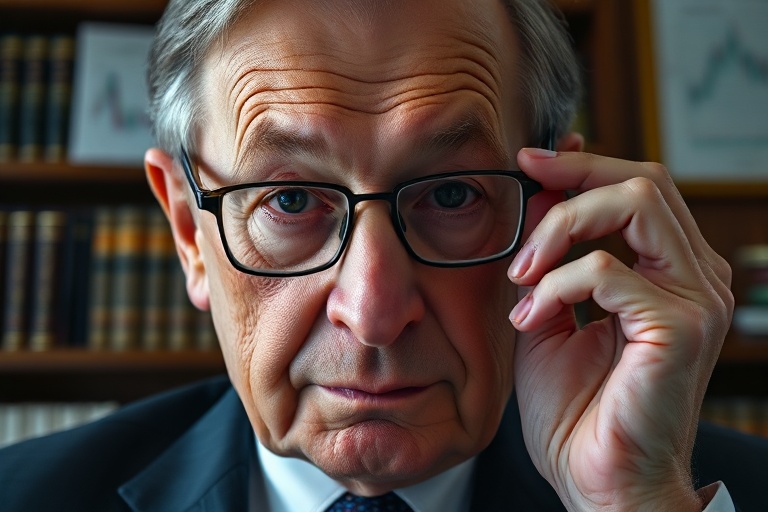
“imageDescription”: “A formal portrait of Alan Greenspan in his Federal Reserve office, wearing a suit and glasses, with a serious expression. Behind him, a bookshelf filled with economic reports and a small American flag. The setting conveys authority, professionalism, and the institutional weight of the Federal Reserve.”
}
—END METADATA—
“`