Basketball Fouls Explained: Rules, Global Variations, and Impact on the Game
“`html
What Constitutes a Foul in Basketball?
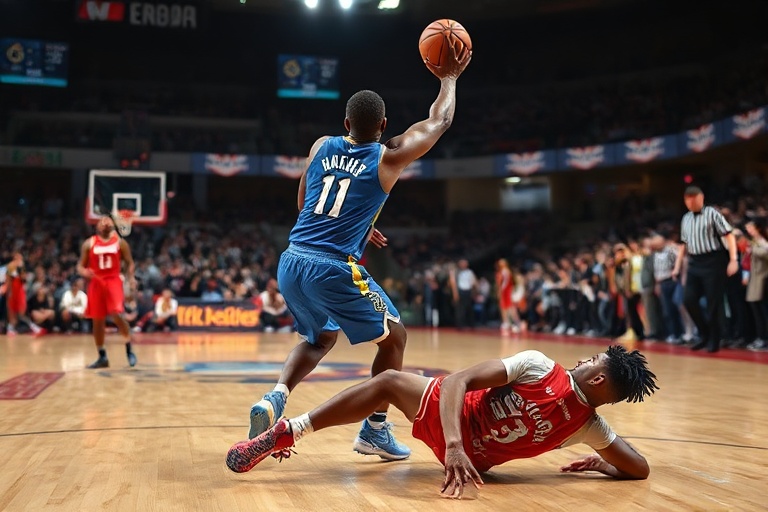
Basketball fouls represent one of the most debated and analyzed aspects of the game, where split-second decisions can alter momentum, strategy, and even outcomes. At its core, a foul occurs when a player makes illegal physical contact with an opponent, violating the sport’s rules designed to ensure fair play. The definition extends beyond mere physicality; it encompasses actions such as holding, pushing, blocking with the body, or making contact with the hands, arms, or legs.
These rules are enforced by referees who must weigh the intent behind each action against the letter of the law. A charge, for instance, is called when an offensive player initiates contact with a stationary defender who has established legal guarding position. Conversely, a blocking foul is whistled if the defender moves into the path of an offensive player without giving them space to avoid contact. The nuances in these calls often spark discussions about consistency in officiating, especially during high-stakes moments.
The Global Evolution of Foul Rules
Basketball’s foul rules have evolved significantly since the sport’s inception in 1891, shaped by cultural adaptations and strategic innovations worldwide. The original 1894 rules allowed only two fouls per half before a player was disqualified, a stark contrast to today’s five-foul limit per game in most professional leagues. This evolution reflects broader changes in the sport’s physicality and the increasing emphasis on athleticism and speed.
In Europe, where basketball has grown under the governance of FIBA (International Basketball Federation), foul rules tend to prioritize flow and continuity. The FIBA rules, used in international competitions like the Olympics and World Cup, permit more physical defense compared to the NBA. For example, hand-checking—a defensive technique where a player uses their hands to impede an opponent’s movement—was banned in the NBA in 2004 but remains more permissible in FIBA play. This difference influences how the game is played globally, with European teams often excelling in team-oriented, less isolation-driven styles.
In contrast, the NBA’s approach to fouls has increasingly focused on protecting offensive players from defensive overreach. The league’s rule changes, such as the 2016 crackdown on “no-calls” and the emphasis on “clear path fouls,” aim to reduce excessive physicality while maintaining the game’s entertainment value. These adjustments highlight the tension between preserving the sport’s integrity and adapting to modern athletic demands.
Types of Fouls and Their Strategic Impact
Fouls in basketball are categorized based on their severity and intent, each carrying distinct consequences for teams and players. The most common types include personal fouls, shooting fouls, flagrant fouls, and technical fouls. Understanding these distinctions is crucial for players, coaches, and fans alike, as they directly influence game strategy and player development.
- Personal Fouls: These are the most frequent, occurring when a player makes illegal contact with an opponent. Accumulating too many personal fouls can lead to disqualification or force a team into penalty situations, such as the “bonus” or “penalty” scenarios where free throws are awarded after a certain number of fouls.
- Shooting Fouls: Awarded when a player is fouled while in the act of shooting. The outcome depends on whether the shot was successful; if it was, the basket counts, and the player gets an additional free throw. If the shot misses, the player receives two or three free throws, depending on the distance of the attempt.
- Flagrant Fouls: These are more severe, involving excessive or dangerous contact that could injure a player. They result in two free throws and possession for the opposing team, and the offending player may be ejected. The NBA’s “flagrant foul 1” and “flagrant foul 2” designations help referees differentiate between intentional and reckless actions.
- Technical Fouls: Issued for unsportsmanlike conduct, such as taunting, disrespecting officials, or excessive arguing. These fouls result in a single free throw for the opposing team and may also lead to player ejections if accumulated. Technical fouls often serve as a tool to maintain decorum and respect within the game.
The strategic impact of fouls cannot be overstated. Teams must balance aggression and discipline, knowing that excessive fouling can lead to free-throw opportunities for opponents or even player ejections. Coaches often employ “foul trouble” management, substituting players who accumulate fouls early to avoid putting them at risk of disqualification. This dynamic adds a layer of psychological chess to the game, where players must read the referees’ tendencies and adapt their defensive approach accordingly.
Cultural Perspectives on Fouls: How Different Regions Play the Game
Basketball’s global expansion has led to diverse interpretations of fouls, influenced by regional playing styles, cultural attitudes toward competition, and historical development. In the Philippines, for example, basketball is deeply embedded in the national identity, with pickup games and local leagues emphasizing physicality and grit. Fouls in these settings are often viewed as part of the game’s intensity, with players expected to “take a hit” for the team’s success.
In contrast, Japanese basketball culture prioritizes discipline and teamwork, reflecting broader societal values. The Japan Basketball Association (JBA) enforces foul rules with a focus on minimizing disruptions to the game’s flow. This approach aligns with Japan’s emphasis on harmony and collective effort, where individual mistakes—like fouling—are seen as failures of the group rather than isolated incidents.
In Africa, basketball is rapidly growing, with countries like Angola and Nigeria producing NBA talent. The continent’s playing style blends European teamwork with American athleticism, creating a unique interpretation of fouls. Nigerian players, known for their physicality and versatility, often draw fouls by using their bodies to shield opponents or initiate contact. This style has forced referees in international competitions to adapt, as African teams challenge traditional officiating norms.
The NBA’s international influence has also led to a hybridization of foul interpretations. Players from Europe and Australia, for instance, often bring a more disciplined defensive approach to the league, avoiding unnecessary fouls. Meanwhile, players from the United States, where basketball is deeply tied to street culture and one-on-one play, may be more prone to aggressive defensive maneuvers that result in fouls. This cultural exchange has enriched the sport but also created occasional friction in officiating consistency.
The Psychology Behind Foul Calls and Player Reactions
The psychology of foul calls extends beyond the players on the court to include referees, coaches, and fans. Referees must make split-second decisions under immense pressure, often in front of thousands of spectators and millions watching on television. The cognitive load of officiating is immense, requiring them to assess not just the action but also the intent behind it, all while maintaining fairness and consistency.
Players, too, are deeply affected by foul calls. A controversial foul can shift momentum, demoralize a team, or even spark altercations. The emotional response to fouls varies widely; some players channel frustration into their performance, while others struggle to regain composure. Coaches frequently employ psychological tactics, such as arguing a call to disrupt the opposing team’s rhythm or motivating their players to “play through” foul trouble.
Fans play an equally critical role in the psychology of fouls. Their reactions—whether cheers for a favorable call or boos for a perceived injustice—create an electric atmosphere that can influence referees. In high-pressure situations, such as playoff games, the crowd’s energy can amplify the stakes of foul decisions, sometimes leading to contentious outcomes. This interplay between players, referees, and fans underscores the human element of basketball fouls, where objectivity often collides with subjectivity.
Conclusion: The Future of Foul Rules in Basketball
Basketball fouls are more than just rule violations; they are a microcosm of the sport’s global evolution, cultural diversity, and psychological complexity. As basketball continues to expand worldwide, the interpretation and enforcement of foul rules will inevitably adapt, reflecting the changing dynamics of the game.
Technological advancements, such as the NBA’s implementation of replay centers and FIBA’s use of video reviews, are already enhancing the accuracy of foul calls. These tools help referees make more informed decisions, reducing controversies and improving the overall fairness of the game. However, the human element—referees’ judgment, players’ reactions, and fans’ expectations—will always remain central to the conversation.
For fans and players alike, understanding the intricacies of fouls enriches the appreciation of basketball. Whether it’s the strategic chess match between coaches, the cultural nuances of regional playing styles, or the psychological battles on the court, fouls are an integral part of what makes basketball compelling. As the sport evolves, so too will the discussions around fouls, ensuring that they remain a focal point of the game’s ongoing narrative.
For more insights into the world of basketball and its global impact, explore our Sports section, where we delve into the latest trends, rule changes, and cultural shifts shaping the game today.