Basketball Fouls Explained: Rules, Strategies, and Controversies
“`html
Understanding Basketball Fouls: Rules, Impact, and Controversies
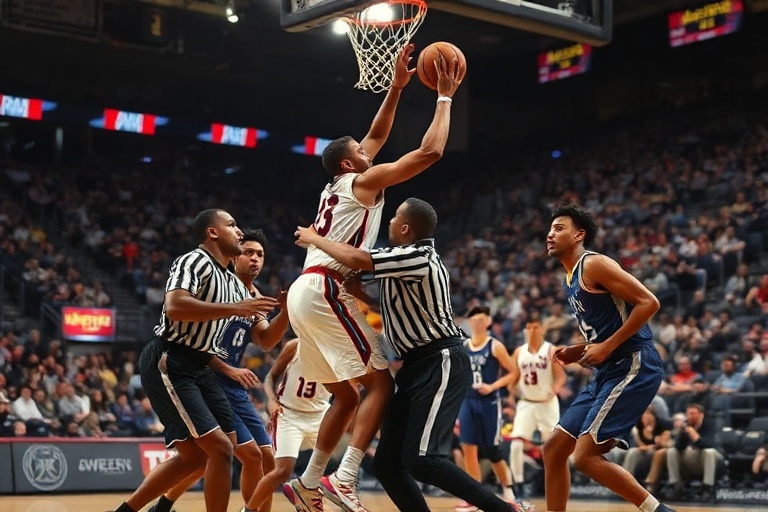
The whistle blows, the crowd groans, and the referee signals a foul. In basketball, fouls are an inevitable part of the game, shaping its flow, strategy, and even its controversies. Whether it’s a hard foul under the basket or a questionable call in transition, fouls can shift momentum, influence officiating, and spark debates among fans and players alike.
Fouls aren’t just about penalties—they reflect the physicality and competitive nature of basketball. From intentional fouls to flagrant violations, understanding the nuances of fouls can deepen appreciation for the game’s intricacies. This article explores the types of fouls, their consequences, and the broader impact they have on basketball.
The Basics: Types of Fouls in Basketball
Basketball fouls fall into several categories, each with distinct rules and penalties. Personal fouls are the most common, occurring when a player makes illegal physical contact with an opponent. These include pushing, holding, or blocking an opponent in a way that impedes their movement. A player is disqualified after six personal fouls in the NBA or five in college basketball.
Technical fouls, on the other hand, are called for unsportsmanlike conduct, such as arguing with referees, taunting opponents, or using profanity. These result in free throws for the opposing team and possession of the ball. Intentional fouls are deliberate violations meant to stop an opponent’s fast break or scoring opportunity, often resulting in two free throws and possession.
Flagrant fouls are the most severe, involving excessive or dangerous contact. In the NBA, these are split into Flagrant 1 and Flagrant 2, with the latter carrying harsher penalties, including ejection. College basketball uses a similar system with Flagrant 1 and 2 designations. These fouls aim to protect players from unnecessary harm while maintaining the game’s integrity.
Common Foul Situations
- Charging fouls: Occur when an offensive player runs over a defender who has established a legal defensive position. The defender must be stationary and in the path of the offensive player.
- Blocking fouls: Called when a defensive player moves into the path of an offensive player, initiating contact. The key factor is whether the defender was in position before contact.
- Loose-ball fouls: Happen when players scramble for a loose ball and make illegal contact. These often lead to heated disputes due to the chaotic nature of the play.
How Fouls Shape Game Strategy
Fouls aren’t just penalties—they’re strategic tools. Teams often use intentional fouls late in games to stop the clock or prevent easy scores. This tactic, known as “fouling to extend,” is controversial but effective when executed correctly. However, it risks giving the opponent free throws, which can swing the game.
Defensive strategies also revolve around avoiding fouls while disrupting opponents. The “no foul” mentality emphasizes positioning and timing to draw charges or force turnovers without making contact. Offensive players, meanwhile, aim to draw fouls by creating contact, a skill known as “getting to the line.” Teams that excel at drawing fouls often gain a significant advantage, as free throws are high-percentage scoring opportunities.
Referees play a crucial role in enforcing foul rules, but their decisions can be inconsistent. The NBA has implemented rule changes, such as limiting defensive three-second violations and cracking down on “hand-checking,” to reduce fouls and improve offensive flow. College basketball has also adjusted its rules to emphasize player safety and reduce excessive contact.
Foul Trouble: The Dilemma for Players and Coaches
For players, foul trouble is a double-edged sword. Accumulating fouls early in a game limits their playing time, forcing coaches to bench them to avoid disqualification. This can disrupt team chemistry and leave defenses vulnerable. Conversely, players who avoid fouls remain on the court longer, contributing to their team’s success.
Coaches must balance aggression with discipline. Aggressive defenders may draw more fouls but risk fouling out. Conversely, passive defenders avoid fouls but may struggle to contain opponents. The best teams find a middle ground, using fouls strategically without falling into trouble.
Controversies and Rule Changes
Foul calls are often the most contentious aspect of basketball. Fans and players alike argue over the fairness of controversial calls, which can decide games. The “no-call” on a clear foul or the ” phantom call” on a marginal play can spark outrage, especially in high-stakes matchups.
Rule changes aim to address these issues. The NBA’s “Last Two Minute Report” reviews close plays to ensure accuracy. College basketball has adopted the “block/charge” rule to clarify defensive positioning. Despite these efforts, debates persist over officiating consistency and fairness.
Another controversy involves the “hack-a-Shaq” strategy, where teams intentionally foul poor free-throw shooters to exploit their weaknesses. While effective, this tactic is widely criticized for disrupting the game’s flow and discouraging sportsmanship.
Recent Rule Adjustments
- NBA: Expanded the definition of a “clear path” foul, penalizing defenders who foul on fast breaks.
- College basketball: Modified the “double-dribble” rule to reduce fouls on loose-ball situations.
- FIBA: Introduced stricter penalties for flagrant fouls to improve player safety.
The Human Element: Players and Fouls
For players, fouls are a constant challenge. Aggressive defenders like Dennis Rodman and Kawhi Leonard thrive by drawing fouls and disrupting opponents. Meanwhile, players like Steph Curry excel by avoiding fouls while scoring efficiently. The balance between aggression and discipline defines greatness in basketball.
Fouls also impact players’ reputations. A reputation for dirty play can overshadow a player’s skills, while a knack for drawing fouls can enhance their value. The NBA’s “flopping” rule, which penalizes players for exaggerating contact, aims to curb this behavior, but debates continue over its effectiveness.
Officiating is another human element. Referees must make split-second decisions, often under intense scrutiny. Their calls can elevate or diminish a player’s legacy, as seen in pivotal playoff games where a single foul decides a championship.
Famous Foul Controversies
- 2019 NBA Finals, Game 5: A controversial foul call on Kawhi Leonard led to a pivotal free-throw sequence.
- 2002 NCAA Championship: A questionable charge call on Indiana’s guard gave Maryland the win.
- 2016 Rio Olympics: A flagrant foul on Draymond Green led to his suspension in a crucial game.
Conclusion: Fouls as Part of Basketball’s Fabric
Basketball fouls are more than just penalties—they’re a reflection of the game’s physicality, strategy, and controversies. From intentional fouls to flagrant violations, each call shapes the narrative of a matchup. While debates over officiating will never cease, fouls remain an integral part of basketball’s identity.
For players, mastering the balance between aggression and discipline is key to success. For fans, understanding fouls deepens appreciation for the game’s intricacies. As basketball evolves, so too will its foul rules, ensuring the sport remains both competitive and fair.
Whether you’re a player, coach, or fan, fouls are an unavoidable—and often thrilling—part of basketball. Embracing their complexities enriches the experience of the game.