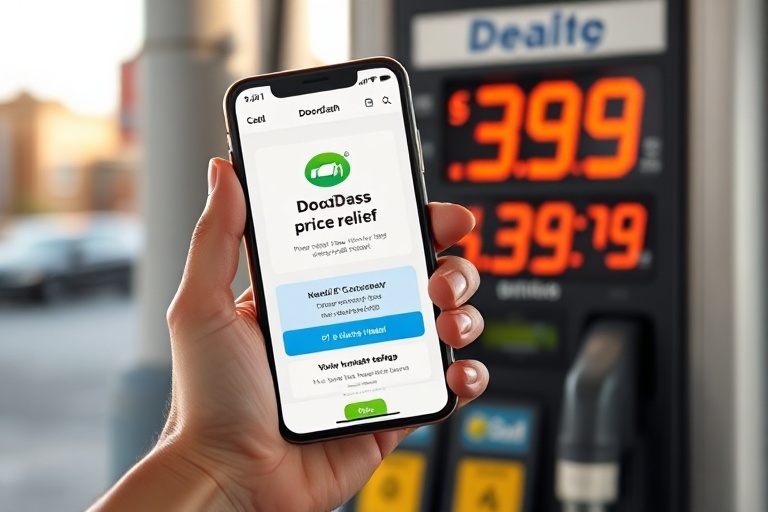
Doordash Steps Up with Gas Price Relief for Delivery Drivers
In an era where inflation has pushed everyday expenses higher, DoorDash has taken a targeted approach to support its most essential workforce: delivery drivers. The company recently announced a gas price relief program, designed to ease the financial burden on drivers who rely on their vehicles to make ends meet. This initiative isn’t just about keeping drivers on the road—it’s a recognition of the growing economic pressures that gig workers face globally.
The program, rolled out in phases across the United States, Canada, and Australia, offers financial incentives to drivers based on fluctuating gas prices. By tying bonuses to regional fuel costs, DoorDash aims to bridge the gap between rising expenses and stagnant earnings. This move reflects a broader trend in the gig economy, where companies are increasingly forced to adapt to inflationary pressures rather than relying solely on market-driven adjustments.
How the Gas Price Relief Program Works
DoorDash’s relief program operates on a straightforward but nuanced model. Drivers receive additional compensation when gas prices in their area exceed a predefined threshold. The structure varies slightly by region, but the core idea remains consistent: provide direct financial relief to offset fuel costs.
In the U.S., for example, DoorDash introduced a Fuel Rewards Program that adds a bonus to each delivery during high gas price periods. The bonus amount is calculated using real-time fuel price data from the U.S. Energy Information Administration. Here’s how it breaks down:
- Tier 1: $0.10 per delivery when gas prices are between $3.50 and $4.00 per gallon.
- Tier 2: $0.20 per delivery when gas prices exceed $4.00 per gallon.
- Tier 3: $0.30 per delivery in extreme cases where prices surge above $4.50 per gallon.
Canada and Australia have adopted similar models, though the thresholds and bonus amounts differ based on local fuel costs and currency values. DoorDash has emphasized that these adjustments are temporary but will remain in place as long as gas prices stay elevated. For drivers who rely on DoorDash as their primary income source, these bonuses can translate to hundreds of dollars in additional earnings each month.
The Global Gig Economy: A Wider Context
DoorDash’s gas price relief initiative is part of a larger conversation about the sustainability of gig work in an inflationary economy. Globally, gig economy platforms like Uber, Lyft, and Instacart have faced increasing scrutiny over how they compensate workers—especially as fuel costs, vehicle maintenance, and living expenses rise. In Europe, for instance, delivery drivers in cities like Berlin and Paris have staged protests over stagnant wages despite soaring inflation. Meanwhile, in Southeast Asia, where ride-hailing and delivery services dominate urban transportation, drivers have turned to alternative income sources to cope with rising costs.
DoorDash’s program stands out because it directly addresses a pain point that affects drivers’ daily lives. Unlike broad wage increases—which companies often resist due to profitability concerns—gas price relief offers targeted support without overhauling existing pay structures. This approach is particularly important in regions where gig work is a lifeline for millions. In the U.S. alone, over 2 million people rely on delivery platforms like DoorDash for their primary income.
The company’s decision also reflects a shift in corporate responsibility within the gig economy. As governments lag in providing adequate support for independent workers, corporations are under pressure to fill the gap. DoorDash’s program is a calculated move to retain drivers during a labor shortage while also improving its public image. However, critics argue that such initiatives are merely band-aid solutions unless paired with long-term improvements in wages and benefits.
Cultural and Economic Implications
The rise of gig work has reshaped labor markets worldwide, creating a class of independent contractors who lack traditional workplace protections. In the U.S., the classification of gig workers as independent contractors has sparked legal battles, with drivers arguing for benefits like healthcare and paid leave. DoorDash’s gas price relief program doesn’t address these systemic issues, but it does highlight the precarious nature of gig work in an unpredictable economy.
Culturally, the program also taps into a growing sense of solidarity among gig workers. Online forums and social media groups dedicated to DoorDash drivers frequently discuss strategies for maximizing earnings, navigating app glitches, and coping with financial stress. The gas price relief program has become a talking point in these communities, with some drivers calling it a step in the right direction while others demand more comprehensive changes.
Globally, the gig economy’s growth has mirrored urbanization trends. In countries like India and Brazil, delivery platforms have become essential to daily life, particularly in densely populated cities where car ownership is impractical. However, the economic pressures on drivers in these regions are even more acute. High inflation, volatile fuel prices, and lack of labor protections create a perfect storm for financial instability. DoorDash’s program, while limited in scope, could serve as a model for other companies operating in similar markets.
What’s Next for DoorDash Drivers?
For now, DoorDash’s gas price relief program remains a temporary fix in an otherwise volatile economic landscape. The company has not indicated whether the program will become a permanent fixture, but drivers are cautiously optimistic. Some have reported a noticeable improvement in their take-home pay, particularly in regions where gas prices have surged over the past year.
Looking ahead, the sustainability of gig work will depend on a combination of corporate policies, government regulations, and economic conditions. DoorDash’s initiative is a reminder that companies can take proactive steps to support their workforce—but it also underscores the need for systemic change. For drivers, every dollar counts, and programs like this provide a lifeline in uncertain times.
As inflation continues to strain household budgets, initiatives like DoorDash’s gas price relief program may become more common. Whether they evolve into broader labor reforms remains to be seen. For now, drivers can focus on what matters most: keeping their engines running and their deliveries on time.
For those interested in the broader gig economy, platforms like Technology and Business often cover these shifts in labor and corporate strategies. Staying informed about industry trends can help workers navigate an ever-changing economic landscape.