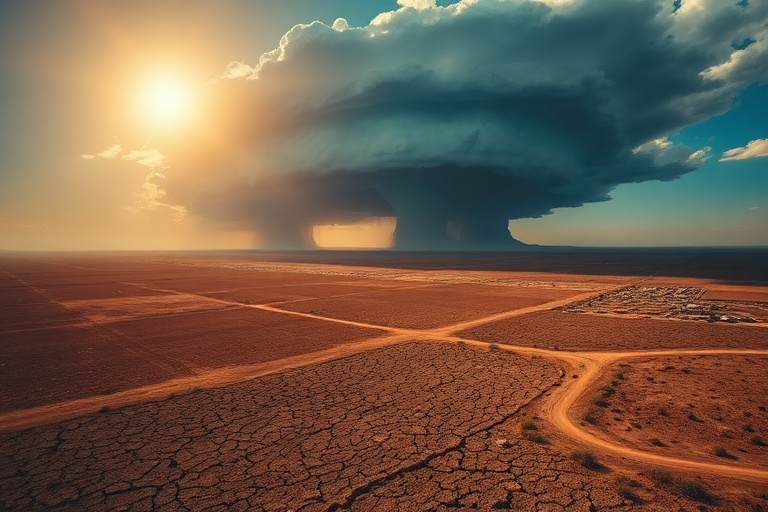
El Niño Explained: Causes, Effects, and Global Impact
“`html
Understanding El Niño: Patterns, Impacts, and Global Connections
El Niño represents one of Earth’s most influential climate phenomena, reshaping weather patterns across the planet with remarkable consistency. While often discussed in terms of its immediate effects on coastal communities, its reach extends far beyond, influencing agricultural markets, energy consumption, and even global trade routes. Scientists track its development through sophisticated oceanic and atmospheric measurements, yet its mechanisms remain only partially understood.
The term itself originates from Spanish, meaning “the little boy,” a reference to the Christ child, as Peruvian fishermen historically noticed its appearance around Christmas. Today, modern meteorology defines El Niño as a phase of the El Niño-Southern Oscillation (ENSO) cycle, characterized by unusually warm ocean temperatures in the Equatorial Pacific. This warming disrupts normal wind and rainfall patterns, creating a cascade of environmental and economic consequences worldwide.
The Science Behind El Niño: How It Develops
El Niño begins with a weakening of the trade winds that normally blow westward across the tropical Pacific. These winds typically push warm surface water toward Indonesia and Australia, allowing cooler water to rise near South America. When the trade winds falter, warm water sloshes back eastward, reducing upwelling and causing sea surface temperatures to climb. This temperature anomaly, typically exceeding 0.5°C above average for several months, marks the onset of El Niño conditions.
The atmospheric response is equally critical. As warm water shifts eastward, so does the zone of intense thunderstorms that fuel global weather systems. This relocation alters the jet stream’s path, particularly over North America, where it often splits and dips southward, bringing storms to the southern United States while leaving the northern tier unusually dry. The Southern Oscillation Index, which measures air pressure differences between Tahiti and Darwin, Australia, often turns negative during El Niño events, reinforcing this atmospheric feedback loop.
Not all El Niño events are identical. Meteorologists classify them by intensity—weak, moderate, strong, or very strong—based on sea surface temperature anomalies and their duration. The most extreme events, such as the 1997-98 and 2015-16 episodes, triggered widespread flooding in Peru, droughts in Indonesia, and disrupted fisheries along the Pacific coast. These variations highlight the challenge of predicting El Niño’s precise impacts, as even subtle differences in ocean temperature gradients can lead to vastly different global outcomes.
Global Consequences: From Floods to Famine
The ripple effects of El Niño unfold across continents, often in seemingly unrelated sectors. In Southeast Asia, the suppression of monsoon rains during strong El Niño years has historically reduced rice yields, contributing to food shortages and price spikes. Indonesia, a major producer, has experienced severe droughts during past events, forcing the government to import millions of tons of rice to stabilize supplies. Similarly, Australia’s wheat belt frequently suffers from reduced rainfall, lowering export volumes and affecting global grain markets.
The Americas experience contrasting conditions. Along the western coast of South America, heavy rainfall transforms arid regions into temporary wetlands, while in the southern United States, increased storm activity raises concerns about flooding and infrastructure damage. The 2015-16 El Niño, for instance, caused an estimated $3.3 billion in damages across California alone, as relentless storms eroded coastlines and overwhelmed drainage systems. Meanwhile, the Pacific Northwest often faces milder winters, reducing heating demands but also increasing wildfire risks during the subsequent dry season.
Fisheries are among the most directly impacted industries. The warming of surface waters disrupts the upwelling of nutrient-rich cold water, which supports the food chain for anchovies and sardines off Peru and Ecuador. During the 1972-73 El Niño, Peru’s anchovy catch plummeted by 80%, devastating local economies and reshaping global fishmeal markets. Even distant regions, such as the Pacific Northwest, saw salmon populations decline due to altered ocean currents and temperatures.
The economic toll extends beyond primary industries. Insurance companies brace for increased claims from weather-related disasters, while commodity traders adjust prices based on anticipated supply shortages. Governments in vulnerable regions often preemptively allocate resources to disaster relief, straining public budgets. The interconnectedness of these impacts underscores El Niño’s role as a silent yet powerful driver of global economic fluctuations.
Predicting El Niño: Tools and Challenges
Modern forecasting relies on a combination of satellite data, ocean buoys, and sophisticated computer models. The National Oceanic and Atmospheric Administration (NOAA) operates a network of buoys in the tropical Pacific, collectively known as the Tropical Atmosphere Ocean (TAO) array, which provides real-time measurements of temperature, currents, and wind. These data feed into global climate models, such as NOAA’s Climate Forecast System, which simulates future oceanic and atmospheric conditions.
Despite these advancements, predicting El Niño remains an imperfect science. Forecasters must contend with the chaotic nature of climate systems, where small errors in initial observations can lead to vastly different outcomes. The “spring predictability barrier,” a period from March to May when forecast skill is lowest, complicates early-season predictions. Additionally, El Niño’s interaction with other climate phenomena, such as the Indian Ocean Dipole or the Madden-Julian Oscillation, adds layers of uncertainty.
Researchers are exploring new approaches to improve accuracy. Machine learning algorithms, trained on decades of historical data, are being tested to identify subtle patterns that traditional models might miss. Projects like NOAA’s Subseasonal to Seasonal (S2S) Prediction Initiative aim to extend forecast lead times, giving governments and businesses more time to prepare. Yet, even with these innovations, the inherent unpredictability of El Niño ensures that surprises remain inevitable.
Preparing for the Next El Niño
As climate change alters baseline ocean temperatures, some scientists speculate that El Niño events may become more frequent or intense. Warmer oceans could amplify the temperature anomalies that drive El Niño, though this remains a topic of ongoing debate. Regardless of these long-term trends, the immediate need for preparedness is clear. Communities, industries, and governments must prioritize adaptive strategies to mitigate El Niño’s most damaging effects.
For vulnerable regions, this means investing in resilient infrastructure. Coastal cities can upgrade drainage systems and reinforce flood defenses, while agricultural sectors may diversify crops or adopt drought-resistant varieties. Early warning systems, such as those developed by the International Research Institute for Climate and Society, provide actionable insights to farmers and policymakers, allowing them to adjust planting schedules or water management practices in advance.
International cooperation plays a crucial role in managing El Niño’s global impacts. Organizations like the World Meteorological Organization (WMO) coordinate data-sharing and forecasting efforts across borders, ensuring that even developing nations have access to critical information. During the 2015-16 El Niño, the WMO’s Global Framework for Climate Services helped disseminate early warnings to African nations facing drought, reducing the risk of famine in vulnerable communities.
Individuals can also take steps to prepare for El Niño-related disruptions. Homeowners in storm-prone areas may reinforce roofs and windows, while businesses reliant on global supply chains should diversify sourcing to avoid shortages. Even small actions, such as conserving water during dry spells or stocking emergency supplies, can make a difference when extreme weather strikes.
El Niño’s complexity demands a multifaceted response. While science continues to unravel its mysteries, the practical steps taken today will determine how well societies weather its next appearance. By combining advanced forecasting with proactive planning, the world can transform a natural phenomenon from a source of chaos into an opportunity for resilience.
For those interested in exploring climate-related topics further, Dave’s Locker Science offers in-depth analysis on environmental trends and their broader implications. Additionally, Dave’s Locker Technology covers innovations in climate modeling and data science that are shaping our understanding of phenomena like El Niño.