Nestled in the heart of West Yorkshire, Kirklees College has quietly established itself as a cornerstone of vocational education in the UK. Since its formation in 2008 through the merger of Dewsbury College and Huddersfield Technical College, the institution has grown into one of the largest further education providers in the region, serving over 20,000 students annually. Its campuses in Huddersfield, Dewsbury, and Springfield have become hubs of learning, innovation, and community engagement.
The college’s commitment to accessibility is evident in its diverse course offerings, which range from traditional academic subjects to cutting-edge technical training. With a student body representing more than 40 different nationalities, Kirklees College reflects the multicultural fabric of modern Britain. This diversity fosters an environment where ideas are exchanged freely, preparing students not just for careers, but for a globally connected world.
The Evolution of Vocational Education in the UK
Vocational education has undergone a significant transformation in the UK over the past two decades. Once viewed as a secondary option to traditional academic routes, further education colleges like Kirklees have played a pivotal role in redefining its perception. The UK government’s push for technical and digital skills has aligned perfectly with the college’s mission to equip students with industry-relevant expertise.
Kirklees College has been at the forefront of this shift, collaborating closely with local businesses and multinational corporations to design curricula that meet real-world demands. Partnerships with companies such as employers in the advanced manufacturing sector and healthcare providers ensure that students gain hands-on experience through apprenticeships, work placements, and live project briefs. This approach bridges the gap between education and employment, a critical factor in a job market increasingly driven by technical proficiency.
Globally, vocational education systems vary widely. In countries like Germany and Switzerland, dual education systems combine classroom learning with apprenticeships, resulting in some of the lowest youth unemployment rates in Europe. While the UK’s system differs in structure, institutions like Kirklees College are adopting elements of this model. The college’s focus on employer engagement mirrors international best practices, demonstrating how vocational education can be both practical and academically rigorous.
A Global Classroom: Diversity and Inclusion on Campus
Walk through the corridors of Kirklees College’s Huddersfield campus, and you’ll hear conversations in Urdu, Polish, Mandarin, and Arabic alongside English. This linguistic tapestry is a testament to the college’s inclusive ethos, which attracts students from across the globe. International students account for nearly 10% of the college’s enrolment, hailing from countries as diverse as India, Nigeria, and Vietnam.
The college’s international office plays a crucial role in supporting these students, offering pre-departure guidance, visa assistance, and cultural integration programs. For many, studying at Kirklees College is their first taste of British education, and the college ensures this transition is as smooth as possible. This global perspective enriches the learning environment, exposing domestic students to different cultures, business practices, and worldviews.
In an era where cross-cultural competence is a prized skill, institutions like Kirklees College are nurturing the next generation of global professionals. The college’s international partnerships, including exchanges with colleges in China and Spain, further expand these opportunities. Such initiatives prepare students for careers in multinational corporations or for entrepreneurial ventures that transcend borders.
Supporting International Students: A Case Study
Take the story of Aisha, a student from Dubai who enrolled in the college’s Business Management program. Initially daunted by the prospect of studying abroad, Aisha found solace in the college’s dedicated international support team. From airport pickups to orientation workshops, she received guidance tailored to her needs. Today, Aisha credits Kirklees College for not only enhancing her academic knowledge but also for broadening her cultural horizons. Her experience underscores the college’s role as a gateway to global opportunities.
Innovation and Technology: Preparing for the Future of Work
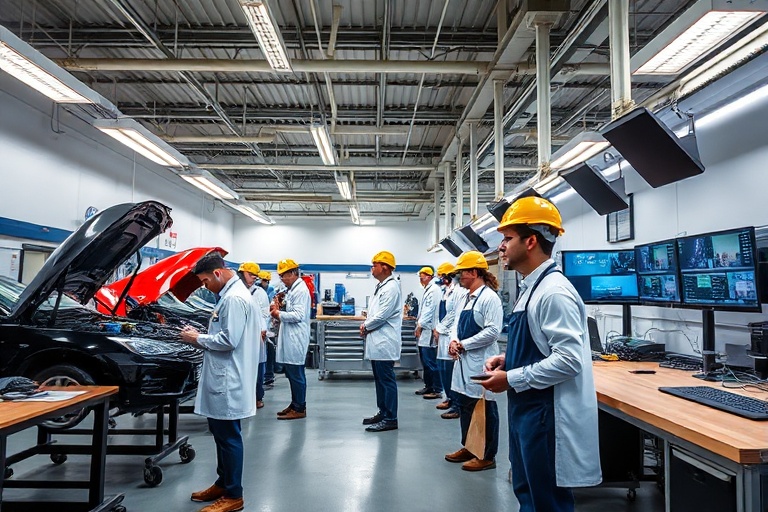
The fourth industrial revolution is reshaping industries at an unprecedented pace, and Kirklees College is ensuring its students are not left behind. The college’s investment in technology and innovation is evident across its campuses. The Springfield campus, for example, houses state-of-the-art facilities for engineering, digital technologies, and creative arts, including a 3D printing lab and a virtual reality suite.
These resources are not merely for show. They are integral to the college’s teaching methodology, which emphasizes experiential learning. Students in the Digital Technologies program don’t just learn about coding—they develop apps, design websites, and troubleshoot real-world IT issues. Similarly, engineering students work on projects that mimic industry challenges, from prototyping renewable energy solutions to designing components for local manufacturers.
Industry 4.0: Aligning Education with Automation and AI
The college’s curriculum is meticulously aligned with the demands of Industry 4.0, where automation, artificial intelligence, and data analytics are revolutionizing traditional job roles. Programs in Advanced Manufacturing and Engineering now include modules on robotics, cybersecurity, and smart factory technologies. Such forward-thinking approaches ensure graduates are not only employable but also adaptable in an ever-changing job market.
Kirklees College’s commitment to innovation extends beyond its classrooms. The college actively collaborates with tech startups and research institutions, providing students with opportunities to engage in cutting-edge projects. For instance, partnerships with local higher education providers allow students to contribute to research initiatives that address real-world problems, such as sustainable energy solutions or digital inclusion strategies.
Community Impact: Beyond the Classroom
Education at Kirklees College is not confined to academic achievement. The college places a strong emphasis on community engagement, recognizing that education has a broader role to play in societal development. Through outreach programs, partnerships with local charities, and initiatives aimed at improving social mobility, the college is making a tangible difference in the region.
One such initiative is the college’s Skills for Life program, which offers free courses in literacy, numeracy, and digital skills to adults in the community. These courses are designed to empower individuals who may have missed out on formal education, providing them with the tools to improve their career prospects or simply enhance their daily lives. The program has reached thousands of residents, many of whom have gone on to secure employment or further education opportunities as a result.
Tackling Social Inequality Through Education
The college’s efforts to reduce inequality are particularly notable in a region where economic disparities are pronounced. Kirklees has areas of significant deprivation, and the college’s outreach programs target these communities directly. By offering flexible learning options, including evening and weekend classes, the college ensures that education is accessible to all, regardless of their personal circumstances.
Moreover, Kirklees College’s commitment to sustainability reflects its broader ethos of responsible citizenship. The college has implemented green initiatives across its campuses, from energy-efficient buildings to recycling programs. Students are encouraged to participate in sustainability projects, such as community gardening or environmental awareness campaigns, fostering a sense of environmental stewardship.
Conclusion: A Model for the Future
Kirklees College stands as a testament to the power of vocational education in shaping not just individual futures, but entire communities. Its blend of academic rigor, technological innovation, and social responsibility creates an environment where students thrive academically while developing the skills and values needed to succeed in a globalized world. As the college continues to evolve, it remains a model for other institutions seeking to bridge the gap between education and employment, while fostering inclusivity and innovation.
The challenges of the 21st century—technological disruption, economic inequality, and climate change—require education systems that are agile, inclusive, and forward-thinking. Kirklees College’s approach demonstrates how further education can rise to these challenges, providing students with the tools they need to navigate an uncertain world. Whether through its international student community, its cutting-edge facilities, or its commitment to social mobility, the college is not just preparing students for careers; it is preparing them for life.
As vocational education continues to gain recognition as a viable and valuable pathway, institutions like Kirklees College will play an increasingly vital role. Their success hinges not just on academic excellence, but on their ability to adapt, innovate, and remain rooted in the needs of their communities. In this regard, Kirklees College is leading the way.