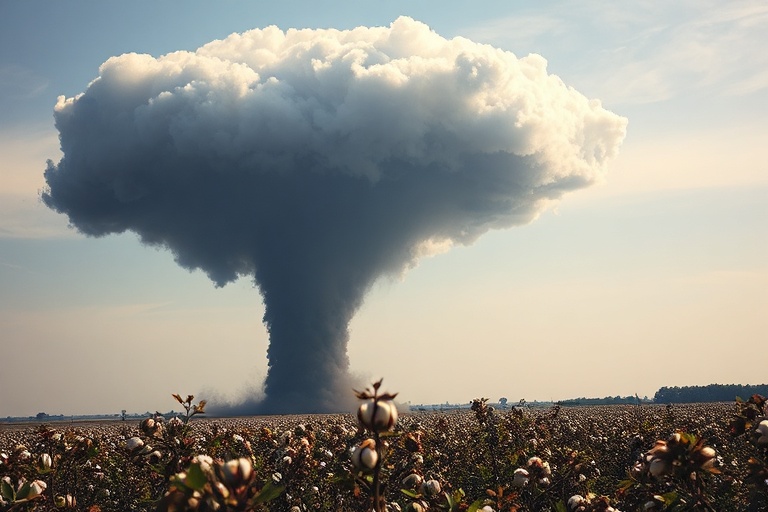
Mississippi Tornadoes: Rising Storms and Global Climate Impact
“`html
Mississippi Tornadoes: A Climate Pattern Under Global Scrutiny
The Mississippi River Valley has long been a corridor for severe weather, but recent years have seen a marked increase in tornado frequency and intensity across the state. While tornadoes are not uncommon in the region—historically peaking during spring and early summer—their behavior has shifted. Scientists attribute this partly to rising global temperatures, which fuel the kind of atmospheric instability that spawns violent twisters.
The National Oceanic and Atmospheric Administration (NOAA) reports that the average number of tornadoes in Mississippi has risen by nearly 20% over the past decade. This trend is part of a broader pattern observed across the southeastern United States, where tornado outbreaks are becoming more erratic, harder to predict, and more destructive. The state’s geographic position, nestled between warm, moist air from the Gulf of Mexico and cooler, drier air from the north, makes it particularly vulnerable to these atmospheric clashes.
The Science Behind the Storms
Tornadoes in Mississippi are driven by a combination of meteorological factors, including wind shear, instability, and moisture. When these elements align, they create the perfect conditions for supercell thunderstorms—long-lived, rotating storms that often produce the most violent tornadoes. Recent studies published in the Journal of Climate suggest that climate change is intensifying these ingredients, particularly by warming the Gulf of Mexico and increasing atmospheric moisture.
One notable example is the 2020 Easter tornado outbreak, which spawned 141 tornadoes across 10 states, including Mississippi. The event set records for the number of tornadoes in a single outbreak and highlighted the challenge of forecasting such widespread and rapid-forming storms. Meteorologists have observed that the “tornado season” is now extending later into the year, with fall and even winter tornadoes becoming more frequent.
Researchers are also investigating the role of urbanization and land-use changes in altering storm behavior. As cities like Jackson and Tupelo expand, the “urban heat island” effect may be contributing to localized changes in wind patterns, though this remains a topic of ongoing study.
Cultural and Historical Context
Mississippi’s relationship with tornadoes is deeply embedded in its cultural identity. The state has endured some of the deadliest tornadoes in U.S. history, including the 1936 Tupelo tornado, which killed 216 people, and the 2011 Smithville tornado, which was one of the strongest ever recorded in the state with winds exceeding 200 mph. These events have shaped local resilience and emergency preparedness strategies.
In rural communities, tornadoes are often seen not just as natural disasters but as moments that test the fabric of small-town life. The annual Sports seasons in high schools across the state often pause for tornado warnings, reflecting how deeply weather influences local rhythms. Meanwhile, in cities, tornado drills are as routine as fire drills, a reflection of the state’s proactive approach to disaster mitigation.
Culturally, tornadoes have seeped into Mississippi’s storytelling, music, and folklore. Blues musicians like Robert Johnson and contemporary artists have referenced tornadoes as metaphors for chaos and upheaval. Even in literature, tornadoes serve as symbols of the unpredictable forces that shape human lives in the region.
Global Connections and Lessons
Mississippi’s tornado patterns are not isolated; they are part of a global conversation about extreme weather and climate adaptation. The United Nations’ Intergovernmental Panel on Climate Change (IPCC) has emphasized that regions like the southeastern U.S. are particularly susceptible to increased tornado activity as global temperatures rise. Countries such as Bangladesh and parts of Brazil, which also experience frequent tornadoes, are watching Mississippi’s response closely.
One critical global lesson from Mississippi is the importance of early warning systems. The state has invested in advanced radar technology, community outreach programs, and mobile alert systems to improve response times. These efforts have reduced fatalities in recent years, even as the storms have grown more intense. For example, the Mississippi Emergency Management Agency (MEMA) has partnered with local schools to conduct tornado drills, ensuring that even the youngest residents know how to react.
Internationally, countries with similar tornado risks are looking to Mississippi for best practices. In South America, where tornadoes are relatively rare but increasingly frequent, researchers are studying how Mississippi’s emergency response protocols could be adapted to local contexts. Similarly, in Europe, where tornadoes are less common but still deadly, scientists are examining how climate change might alter storm patterns.
Preparing for the Future
As Mississippi braces for what may become a new normal of more frequent and intense tornadoes, preparedness is key. Homeowners are encouraged to reinforce structures, especially older homes that may not withstand high winds. Community tornado shelters are being expanded, and local governments are investing in more robust infrastructure to withstand extreme weather.
The state’s agricultural sector, a backbone of Mississippi’s economy, is also adapting. Farmers are adopting new technologies, such as weather monitoring apps and soil sensors, to better anticipate storms and protect crops. Meanwhile, insurance companies are reevaluating policies to account for the rising risks, though this has sparked debates about affordability and accessibility.
Education plays a crucial role in preparedness. Schools across the state now incorporate severe weather education into their curricula, teaching students about the science behind tornadoes and how to stay safe. Organizations like the American Red Cross offer workshops on disaster preparedness, emphasizing the importance of having a plan and an emergency kit.
Looking ahead, Mississippi’s experience offers a glimpse into the challenges and opportunities of living in an era of climate instability. While the state cannot control the weather, it can control how it responds. Through innovation, community engagement, and global collaboration, Mississippi is positioning itself as a leader in tornado preparedness and resilience.
Key Takeaways
- Mississippi is experiencing a rise in tornado frequency and intensity, partly due to climate change.
- The state’s geographic position makes it particularly vulnerable to severe weather.
- Cultural and historical factors shape how communities respond to tornadoes.
- Global lessons from Mississippi’s preparedness efforts are being shared worldwide.
- Education, infrastructure, and innovation are critical to future resilience.