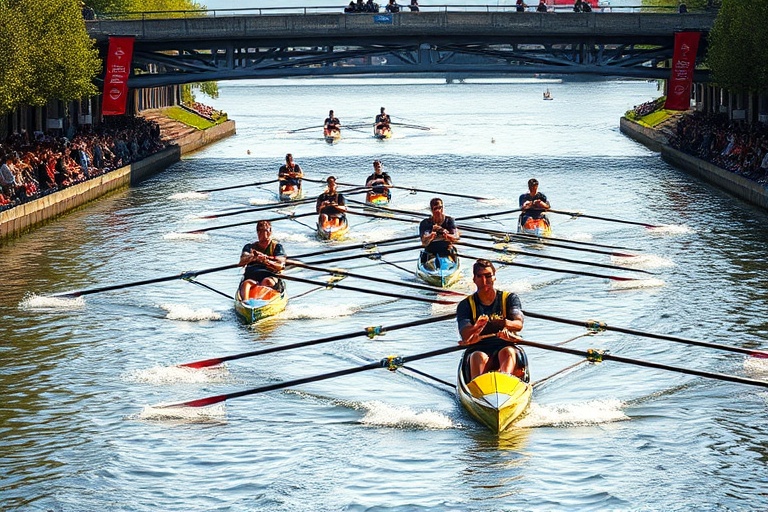
National Schools Regatta 2026: Rising Stars and New Challenges
“`html
National Schools Regatta 2026: What to Expect from Rowing’s Premier Event
The National Schools Regatta has long stood as the definitive showcase for junior rowers in the UK, blending elite competition with grassroots development. As the 2026 edition approaches, anticipation builds not just around the races themselves, but around the evolving landscape of school-level rowing. With more clubs investing in youth programs and international competitors beginning to emerge, this year’s regatta could mark a turning point in how the sport is perceived at the scholastic level.
Why the National Schools Regatta Matters
The regatta isn’t just another competition—it’s a proving ground for future Olympians. Many of Britain’s top rowers trace their careers back to performances at this event. The 2024 regatta saw over 2,500 competitors from more than 200 schools across the UK and beyond, a testament to its growing influence. What sets it apart is its focus on accessibility. Unlike elite senior regattas, the National Schools Regatta maintains a balance between high performance and inclusivity, allowing young athletes to test themselves in a competitive yet supportive environment.
This year, organizers have introduced new qualifying standards to ensure a higher level of competition. While this may narrow the field slightly, it reflects a broader trend in junior rowing: the push toward greater professionalism. Schools are no longer just participating for the experience—they’re treating it as a stepping stone to national and international recognition. The regatta’s role in identifying talent has never been more critical, especially as other countries ramp up their junior programs in response to Britain’s dominance.
A Look at the Competition Structure
The regatta operates across multiple divisions, each tailored to different age groups and skill levels. The elite categories remain the headline acts, featuring the fastest junior crews in the country. But the real story often lies in the lower divisions, where first-time rowers get their first taste of competitive racing. The event’s format ensures that every participant, regardless of experience, walks away with measurable progress.
Key races to watch in 2026 include:
- Junior 18 Eights (Boys & Girls): The premier showcase for the most talented under-18 crews, often featuring future national team prospects.
- Intermediate 16 Quads: A hotbed for tactical racing, where younger athletes begin to refine their competitive instincts.
- Beginner Single Sculls: The entry point for many rowers, where technique and endurance are tested in equal measure.
- Adaptive Rowing Events: A growing category reflecting the sport’s increasing inclusivity, with adapted boats for athletes with disabilities.
Broader Implications for the Sport
The National Schools Regatta doesn’t exist in a vacuum. Its outcomes ripple through the rowing community, influencing club policies, school investments, and even national selection pathways. One notable trend is the rise of “rowing academies” within independent schools, where students train year-round with former elite rowers as coaches. While this has elevated the standard of competition, it has also sparked debates about equity. State schools, often lacking the same resources, are finding it harder to keep pace—a challenge the regatta’s organizers are actively working to address.
Another factor is the regatta’s growing international draw. In recent years, crews from Ireland, Germany, and even the United States have entered the competition, lured by its reputation. This cross-pollination of talent could reshape the global junior rowing scene, particularly as more nations invest in youth development. The 2026 regatta may well be the first where international competitors claim podium spots, a development that would further cement its status as rowing’s most prestigious junior event.
The Role of Technology and Innovation
Technology is playing an increasingly visible role in the regatta, from data-driven training programs to real-time race analytics. Coaches now use GPS-enabled boats and power meters to fine-tune their crews’ performances, while live streaming allows fans to follow races from anywhere in the world. The event’s organizers have also partnered with sports scientists to monitor athlete health, a response to growing concerns about overtraining in junior athletes.
One innovation set to debut in 2026 is a pilot program for AI-assisted race officiating. While still in its early stages, the system could help reduce human error in determining finishes, particularly in tight races. Skeptics argue that technology risks overshadowing the human element of the sport, but proponents see it as a necessary evolution to maintain fairness in an era of increasingly marginal gains.
What’s Next for Junior Rowing?
The National Schools Regatta 2026 arrives at a crossroads. On one hand, it stands as a celebration of junior rowing’s growth, with more participants, more resources, and more global interest than ever before. On the other, it faces challenges that threaten its traditional ethos: the commercialization of youth sport, the widening gap between wealthy and underfunded schools, and the pressure to produce Olympians rather than well-rounded athletes.
For now, the regatta remains a beacon of opportunity. It’s where careers begin, friendships form, and the next generation of rowers takes its first strokes toward greatness. As the 2026 edition approaches, all eyes will be on the Thames, where the future of the sport will be rowed into view.
For those looking to dive deeper into the world of competitive rowing, Trending on Dave’s Locker offers the latest updates on regattas, athlete profiles, and behind-the-scenes stories from the rowing community. If you’re interested in the technical side of the sport, our Technology section explores how innovation is reshaping training and competition.