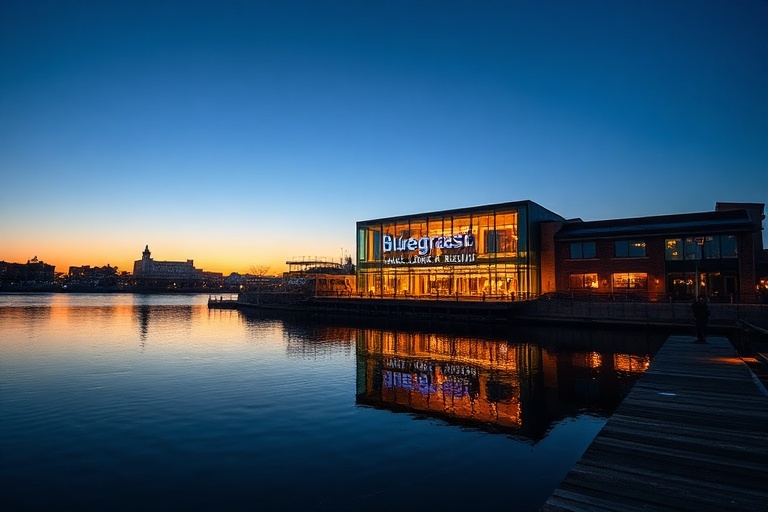
On the banks of the Ohio River in northwestern Kentucky, Owensboro thrives as a city where industrial grit meets Southern hospitality. Founded in 1797 and named after an early settler, Colonel Abraham Owen, this riverfront community has evolved from a frontier trading post into a regional hub of manufacturing, healthcare, and culture. With a population of just over 60,000, Owensboro punches above its weight in economic output and cultural influence, especially in food, music, and healthcare.
From River Trade to Industrial Anchor
Owensboro’s identity has long been tied to the Ohio River. In the 19th century, it served as a vital port for steamboats transporting tobacco, grain, and whiskey. The river not only fueled commerce but also shaped the city’s social fabric, fostering a working-class culture rooted in river labor and riverfront life. Though steamboat traffic declined in the 20th century, the river remains central to the city’s spirit.
By the mid-1900s, Owensboro transformed into an industrial center. The arrival of major manufacturing firms, including General Electric and International Paper, anchored the local economy. Today, the city is home to over 200 manufacturing plants, producing everything from automotive parts to advanced materials. The industrial base has diversified, with healthcare—anchored by Owensboro Health Regional Hospital—now employing nearly one in five residents.
This economic evolution reflects a broader trend in the American Midwest, where cities once reliant on river trade have pivoted toward advanced manufacturing and healthcare. Owensboro’s ability to reinvent itself while preserving its cultural core offers a case study in resilient urban development.
A Culinary Capital in the Heart of Bourbon Country
Owensboro is not just a city of industry—it is a global destination for food lovers. The city is the proud custodian of the International Bar-B-Q Festival, an annual celebration that draws over 60,000 visitors. At its core is the iconic Owensboro-style barbecue, distinguished by its use of mutton rather than pork or beef. The slow-smoked mutton, basted in a thin, spicy vinegar sauce, is a culinary relic of 19th-century Scottish and Welsh immigrants who settled the region.
This barbecue tradition is more than a regional quirk; it is a cultural artifact. Unlike Texas brisket or Carolina pulled pork, Owensboro’s mutton BBQ reflects the unique demographics of the Ohio Valley. The city’s Welsh heritage, in particular, left a lasting imprint on its cuisine, and today, local pitmasters like Moonlite Bar-B-Q Inn and Olde Tyme Bar-B-Que preserve these traditions with modern precision.
Beyond barbecue, Owensboro is part of Kentucky’s bourbon belt. While Louisville and Bardstown often claim the spotlight, Owensboro’s distilleries and tasting rooms contribute to the state’s $9 billion spirits industry. Local brands like Owensboro Distilling Company and Silver Trail Distillery are reviving heritage recipes, blending local grains with modern techniques.
- Owensboro-style BBQ: Mutton, vinegar-based sauce, slow-smoked for 12+ hours
- Bourbon heritage: Small-batch distilleries using locally grown corn and rye
- Farm-to-table movement: Restaurants sourcing from regional farms and orchards
Music, Art, and the Bluegrass Legacy
Owensboro has quietly nurtured one of America’s most influential musical traditions: bluegrass. The city is the birthplace of the International Bluegrass Music Museum, which celebrates the genre’s roots and evolution. Founded in 1985, the museum houses rare instruments, original recordings, and a Hall of Fame that honors legends like Bill Monroe, the “Father of Bluegrass,” who was born just 60 miles away in Rosine, Kentucky.
Every September, Owensboro hosts ROMP (River Of Music Party), a three-day bluegrass festival that draws over 20,000 fans. The festival’s name is a playful nod to the city’s riverfront location, and its lineup features both revered veterans and rising stars. ROMP has grown into one of the genre’s most respected events, drawing international audiences and fostering cross-cultural exchange.
Beyond bluegrass, Owensboro supports a vibrant arts scene. The Owensboro Museum of Fine Art showcases regional and national artists, while the RiverPark Center hosts Broadway tours, symphonies, and world-class performances. The city’s public art initiatives, including murals along the riverfront, reflect a commitment to making art accessible to all.
A City of Resilience and Reinvention
Like many American cities, Owensboro has faced challenges—deindustrialization, population shifts, and economic inequality. Yet it has responded with innovation. One notable initiative is the Owensboro Cancer Research Program, a partnership between Owensboro Health and the University of Louisville that conducts clinical trials and cancer research. The program has positioned the city as a leader in oncology, attracting researchers and funding from across the country.
Urban renewal projects have transformed the downtown, with new housing, retail, and green spaces breathing life into the riverfront. The recently completed 12-block Riverfront Master Plan includes walking trails, kayak launches, and an amphitheater, reconnecting the city with its aquatic heritage. These efforts mirror similar revitalization projects in cities like Pittsburgh and Cincinnati, where post-industrial waterfronts have become engines of tourism and community pride.
Owensboro also plays a role in global conversations about rural resilience. As manufacturing jobs decline in traditional industrial hubs, cities like Owensboro demonstrate how smaller metros can pivot toward healthcare, education, and cultural tourism. The city’s success is not just economic—it’s social. Owensboro consistently ranks high in quality-of-life metrics for the region, thanks to its affordable housing, low crime rates, and tight-knit neighborhoods.
The Owensboro Effect: Lessons for Global Cities
Owensboro’s story is a microcosm of broader global trends. It highlights how cities can preserve cultural identity while embracing economic change. It shows how food, music, and riverfront spaces can become catalysts for tourism and community building. And it underscores the importance of investing in education and healthcare as anchors for sustainable growth.
In an era when megacities often dominate headlines, Owensboro reminds us that smaller, intentional cities can lead with authenticity. Whether through a plate of smoked mutton or a bluegrass riff on the Ohio River, the city’s cultural DNA is as rich as its industrial output.
As Owensboro continues to grow, it does so without losing sight of its past. That balance—between progress and tradition, industry and art, river and road—is what makes it a compelling story in America’s urban landscape.