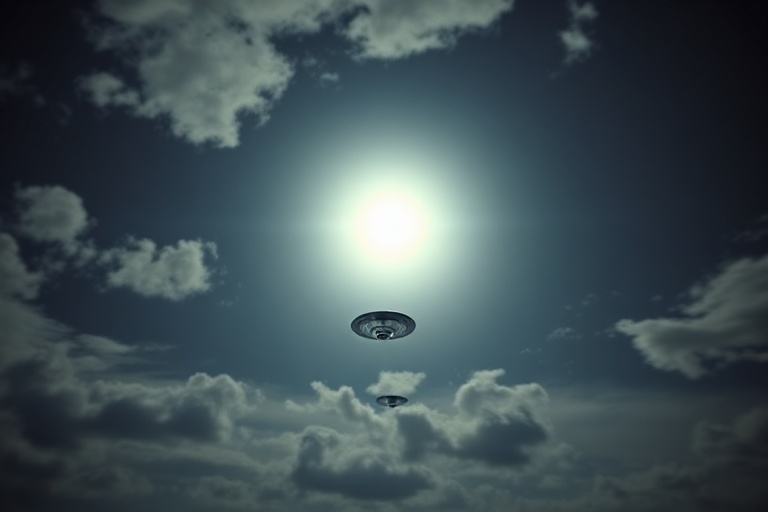
Pentagon UFO Videos: How Governments Worldwide Are Reacting
“`html
The Pentagon UFO Videos: A Global Examination of Declassified Evidence
The release of Pentagon UFO videos in 2020 marked a turning point in how governments and the public perceive unidentified aerial phenomena (UAPs). These three declassified videos—FLIR1, GIMBAL, and GOFAST—first surfaced through private organizations like the To The Stars Academy of Arts & Science before being confirmed as authentic by the U.S. Department of Defense. Their emergence ignited debates across continents, challenging scientific skepticism while fueling cultural fascination with the possibility of extraterrestrial life.
What makes these videos significant isn’t just their content but the institutional shift they represent. For decades, UAP sightings were dismissed as fringe conspiracy theories. The Pentagon’s acknowledgment that these objects were real—and in some cases, exhibited flight characteristics beyond known human technology—reshaped the conversation. Governments worldwide began re-evaluating their own records, while scientists and citizens alike demanded greater transparency.
The Global Response: From Skepticism to Systematic Investigation
Countries outside the U.S. have responded to the Pentagon’s disclosures with varying degrees of urgency. France’s GEIPAN, the world’s oldest official UAP investigation agency, has operated since 1977, yet only recently saw a surge in public interest. Similarly, Brazil’s AEB (Brazilian Space Agency) launched a formal UAP research program in 2022 after years of informal documentation. Even in China, where state media traditionally dismisses such claims, state-run outlets have begun cautiously exploring the topic, reflecting a broader global trend toward institutional openness.
Not all nations have followed suit. Russia and North Korea maintain strict control over UFO-related information, dismissing most sightings as atmospheric phenomena or misidentified drones. Meanwhile, Mexico’s recent congressional hearings on UAPs—featuring testimony from former military officials—highlight how Latin America is becoming a surprising hub for UAP discourse. The contrast underscores a fascinating geopolitical divide: democracies with free press freedoms are more likely to engage with the topic, while authoritarian regimes suppress it.
Scientific and Cultural Reactions: Between Rigor and Speculation
The scientific community remains divided. Some researchers, like Harvard’s Galileo Project, advocate for serious study using advanced telescopes and AI-driven analysis. Others, including prominent figures in physics, argue that extraordinary claims require extraordinary evidence—and so far, none of the Pentagon videos provide definitive proof of extraterrestrial origin. The debate has spilled into public forums, with documentaries like The Phenomenon (2020) and Netflix’s Unidentified: Inside America’s UFO Investigation amplifying discussions among non-experts.
Culturally, the Pentagon videos have seeped into mainstream entertainment. Japanese anime series like UFO Senshi Dai Apolon and Western films such as Nope (2022) reflect a renewed global interest in the unknown. Even fashion has not escaped the trend, with brands like Balenciaga and Rick Owens incorporating extraterrestrial aesthetics into their collections. This cultural osmosis suggests that UAPs are no longer confined to niche communities but have become a shared point of fascination.
What’s Next? The Future of UAP Research and Government Transparency
The Pentagon’s All-domain Anomaly Resolution Office (AARO), established in 2022, now leads U.S. efforts to investigate UAPs. Its reports suggest that most sightings have mundane explanations—drones, weather balloons, sensor glitches—but also acknowledge that a small percentage remain unexplained. Meanwhile, the European Union’s recent call for a “European approach” to UAPs indicates that the issue is gaining diplomatic traction. Could this lead to international collaboration, or will nations continue to pursue independent research?
One thing is clear: the Pentagon UFO videos were only the beginning. As more governments declassify files and private entities like the Scientific Coalition for UAP Studies push for data-sharing, the conversation is evolving from “Do UFOs exist?” to “What are they, and how do they work?” The answers may redefine our understanding of physics—or at least force us to confront the limits of human knowledge.
The journey is far from over. If history is any indication, the truth about UAPs will emerge not through sensationalism, but through relentless inquiry. Whether that truth comes from scientists, governments, or something entirely unexpected remains one of the most compelling questions of our time.