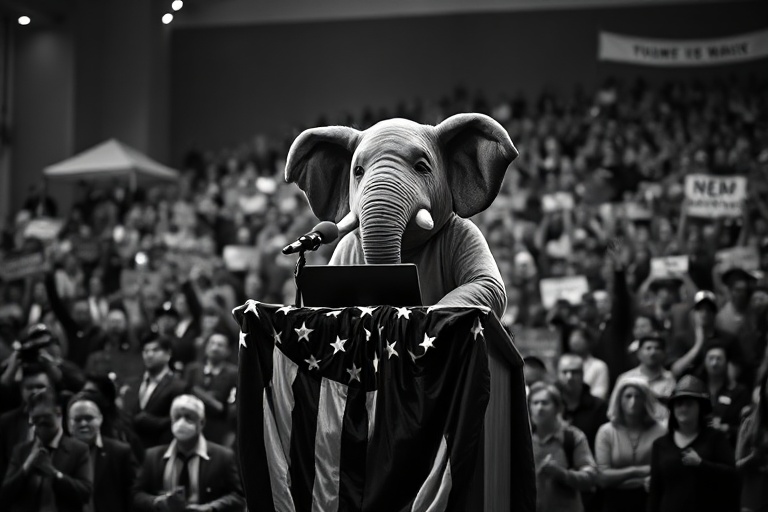
Republican Party History: Origins, Evolution and Modern GOP
“`html
The Republican Party: Origins, Evolution, and Modern Influence
The Republican Party, often abbreviated as GOP (Grand Old Party), stands as one of the two major political forces in the United States. Founded in 1854, it emerged from the anti-slavery movement and has since evolved into a complex institution shaping American politics. Its history reflects the nation’s struggles with civil rights, economic policy, and cultural identity. Today, the party remains a dominant force, though its direction continues to spark debate among voters and analysts alike.
The Founding and Early Years: A Party Born from Division
The Republican Party was established in Ripon, Wisconsin, in 1854 by a coalition of abolitionists, former Whigs, and Free Soil Party members. Their primary goal was to oppose the expansion of slavery into new territories, a stance that directly challenged the Democratic Party’s dominance at the time. Within six years, the party achieved a historic victory when Abraham Lincoln became the first Republican president in 1860. Lincoln’s election triggered the secession of Southern states and the Civil War, cementing the GOP’s role as the party of Union and emancipation.
During Reconstruction, Republicans played a pivotal role in advancing civil rights for formerly enslaved people. The 13th, 14th, and 15th Amendments—abolishing slavery, granting citizenship, and protecting voting rights—were all products of Republican-led initiatives. However, the party’s commitment to racial equality waned by the late 19th century as it shifted focus toward industrialization and economic growth, often at the expense of progressive reforms.
20th Century Shifts: From Lincoln to Reagan
The 20th century marked a period of significant transformation for the Republican Party. The early 1900s saw the rise of progressive Republicans like Theodore Roosevelt, who championed trust-busting and conservation. However, by the mid-century, the party began aligning more closely with conservative values, particularly in response to the New Deal and the civil rights movement. Barry Goldwater’s 1964 presidential campaign, though unsuccessful, laid the groundwork for a conservative realignment that would culminate in Ronald Reagan’s 1980 victory.
Reagan’s presidency (1981–1989) became a defining era for modern conservatism. His policies emphasized tax cuts, deregulation, and a strong national defense, principles that continue to influence Republican ideology. The party also solidified its base among white evangelical Christians, a demographic that remains a key voting bloc today. Meanwhile, the GOP’s stance on social issues—such as abortion and LGBTQ+ rights—became increasingly prominent, reflecting broader cultural shifts in America.
Key Policy Pillars of the Modern GOP
The Republican Party today is defined by a set of core principles that guide its legislative and electoral strategies. These include:
- Limited Government: Republicans generally advocate for reducing federal oversight in favor of state and local control, particularly in areas like healthcare and education.
- Free-Market Economics: The party supports deregulation, lower taxes, and reduced government spending to stimulate economic growth.
- Strong National Defense: A robust military and proactive foreign policy remain central to the GOP’s platform, often prioritizing military spending and alliances like NATO.
- Cultural Conservatism: On social issues, many Republicans align with traditional values, opposing policies like same-sex marriage and supporting religious exemptions in public life.
- Border Security: Immigration reform remains a contentious issue, with many Republicans advocating for stricter enforcement and border wall construction.
Internal Divisions and the Trump Era
The election of Donald Trump in 2016 exposed deep fissures within the Republican Party. Trump’s populist, anti-establishment rhetoric challenged traditional conservatives, who had long prioritized free trade and fiscal restraint. His presidency highlighted a shift toward nationalist policies, including tariffs, immigration restrictions, and skepticism of global institutions. While Trump’s base remained fiercely loyal, critics within the party argued that his leadership undermined long-standing Republican principles.
Post-Trump, the GOP continues to grapple with its identity. Some factions, like the Freedom Caucus, push for hardline conservative policies, while others seek to reclaim the party’s pre-Trump agenda. The 2020 election and subsequent events, such as the January 6 Capitol riot, further exposed these divisions. Analysts note that the party’s future may hinge on whether it embraces Trump’s legacy or pivots toward a more traditional conservative path.
The Republican Party’s Future: Challenges and Opportunities
As the 2024 election approaches, the Republican Party faces both challenges and opportunities. Demographically, the GOP struggles to attract younger voters and minority communities, who increasingly lean Democratic. However, the party’s strongholds in rural America and among white evangelicals remain formidable. Issues like inflation, crime, and cultural backlash against progressive policies could bolster Republican prospects in key races.
Internationally, the GOP’s stance on foreign policy is also evolving. While traditional Republicans emphasize global leadership, Trump’s “America First” approach continues to resonate with a significant portion of the base. This divide raises questions about the party’s long-term stance on issues like NATO, Ukraine, and China.
The Republican Party’s ability to adapt will determine its relevance in an increasingly diverse and polarized America. Whether it can broaden its appeal without alienating its core base remains an open question. One thing is certain: the GOP’s next chapter will be written by a generation of leaders grappling with the legacies of Lincoln, Reagan, and Trump.
For those interested in exploring the intersection of politics and culture, Dave’s Locker News provides ongoing coverage of how these dynamics play out across the country. Meanwhile, Dave’s Locker Analysis offers deeper insights into the forces shaping American politics today.
The Republican Party’s journey—from abolition to populism—reflects the ever-changing landscape of American democracy. Its future will be shaped not just by policies, but by the values it chooses to uphold in an era of rapid transformation.