Strait of Hormuz: The World’s Most Critical Energy Chokepoint
“`html
The Strait of Hormuz: A Critical Chokepoint in Global Energy Flows
Updated October 2023
The Geopolitical Significance of the Strait
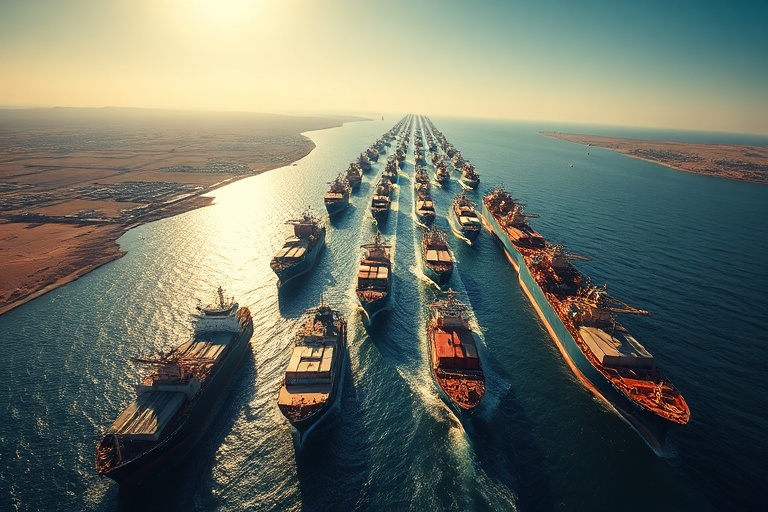
The Strait of Hormuz is a narrow waterway connecting the Persian Gulf to the Gulf of Oman and, ultimately, the Arabian Sea. At its narrowest point, it spans just 21 miles, with a shipping channel only two miles wide in each direction. This chokepoint is not merely a geographical feature—it is a flashpoint for global energy security and geopolitical tension.
More than 20% of the world’s oil supply passes through the Strait of Hormuz, according to data from the U.S. Energy Information Administration. This makes it the world’s most important maritime oil transit chokepoint. Any disruption here could send shockwaves through global energy markets, driving up oil prices and destabilizing economies. The strait is bordered by Iran on one side and Oman and the United Arab Emirates on the other, creating a delicate balance of power in an already volatile region.
Key Players and Their Interests
- Iran: Views the strait as a strategic asset and has repeatedly threatened to close it in response to sanctions or perceived threats. Iran’s Revolutionary Guard has conducted military exercises in the area, demonstrating its ability to disrupt shipping.
- United States: Maintains a significant military presence in the region, including naval bases in Bahrain and Qatar. The U.S. Fifth Fleet is tasked with ensuring the free flow of commerce through the strait.
- Gulf States: Countries like Saudi Arabia, the UAE, and Kuwait rely on the strait for their oil exports. Any disruption could cripple their economies, making them vulnerable to external pressure.
- China and India: Major importers of Middle Eastern oil, these countries have a vested interest in maintaining stability in the strait. China, in particular, has invested heavily in regional infrastructure to secure its energy supply.
Historical Context: Tensions and Flashpoints
The Strait of Hormuz has been a source of tension for decades. The 1980s Iran-Iraq War saw frequent attacks on oil tankers transiting the strait, a tactic known as “tanker war” that disrupted global oil supplies. More recently, tensions have flared due to Iran’s nuclear program, U.S. sanctions, and regional proxy conflicts.
In 2019, attacks on oil tankers near the strait—attributed to Iran by the U.S. and its allies—escalated tensions. Iran denied involvement but seized foreign tankers in response to the detention of its own vessels abroad. These incidents highlighted the strait’s vulnerability to asymmetric warfare, where small, agile forces can disrupt major shipping lanes.
Diplomatic efforts to ease tensions have yielded mixed results. The 2015 nuclear deal (JCPOA) temporarily reduced hostilities, but its collapse under the Trump administration in 2018 reignited conflicts. The Biden administration’s attempts to revive the deal have so far stalled, leaving the strait in a precarious state.
Economic Implications of a Strait Closure
A prolonged closure of the Strait of Hormuz would have catastrophic economic consequences. The International Energy Agency estimates that even a temporary disruption could remove up to 4.5 million barrels of oil per day from global markets. This would trigger price spikes, straining economies already grappling with inflation and supply chain issues.
Oil prices are notoriously sensitive to geopolitical risks. In 2022, when Russia’s invasion of Ukraine disrupted global oil supplies, Brent crude prices surged to over $120 per barrel. A similar scenario in the Strait of Hormuz could push prices even higher, disproportionately affecting developing nations that rely on oil imports.
Beyond oil, the strait is a critical route for liquefied natural gas (LNG) shipments. Qatar, the world’s largest LNG exporter, sends nearly all its LNG through the strait. A closure would disrupt global gas markets, exacerbating energy shortages in Europe and Asia.
Alternative Routes and Their Limitations
While some oil could be rerouted through pipelines, the options are limited:
- Saudi Arabia East-West Pipeline: Can carry up to 5 million barrels per day, bypassing the strait. However, it relies on stable conditions in Saudi Arabia and has limited capacity.
- United Arab Emirates’ Fujairah Pipeline: Connects Abu Dhabi’s oil fields to the Gulf of Oman, bypassing the strait. But its capacity is only 1.5 million barrels per day.
- Iraq-Turkey Pipeline: Exports Iraqi oil through Turkey, but it has been frequently disrupted by conflicts and sanctions.
These alternatives are insufficient to replace the 17 million barrels per day that transit the strait. Even partial disruptions would force importers to compete for limited supplies, driving up prices.
Military Presence and Deterrence Strategies
The U.S. maintains a robust military presence in the region to deter aggression and ensure the free flow of commerce. The Fifth Fleet, headquartered in Bahrain, patrols the strait and conducts joint exercises with Gulf allies. The U.S. has also deployed minesweepers and drones to counter Iran’s asymmetric tactics, such as the use of speedboats and anti-ship missiles.
However, military deterrence is not foolproof. Iran’s strategy relies on deniability and escalation dominance—it can inflict damage without triggering a full-scale war. This creates a paradox where both sides avoid direct conflict but engage in a constant game of brinkmanship.
Other nations have also stepped up their presence. The UK, France, and Australia have all deployed naval assets to the region, either independently or as part of international coalitions. China, meanwhile, has expanded its maritime security cooperation with Iran, signaling its growing influence in the region.
Diplomatic Efforts and Their Challenges
Diplomacy remains the most viable path to de-escalation, but progress has been elusive. The 2023 talks in Doha between U.S. and Iranian officials stalled over Iran’s demand for sanctions relief and the U.S.’s insistence on curbing Iran’s nuclear and missile programs. Regional players like Saudi Arabia and the UAE have also sought to mediate, but their influence is limited by their own rivalries with Iran.
One potential breakthrough is the China-brokered agreement between Saudi Arabia and Iran in March 2023, which restored diplomatic ties after a seven-year rupture. While this deal does not directly address the Strait of Hormuz, it could pave the way for broader regional stability. However, trust remains fragile, and any miscalculation could reignite hostilities.
What’s Next for the Strait of Hormuz?
The future of the Strait of Hormuz hinges on three key factors: Iran’s nuclear ambitions, the U.S.’s regional strategy, and the willingness of Gulf states to engage in dialogue. A worst-case scenario—such as a full closure of the strait—would force the world to adapt quickly, but the economic and geopolitical fallout would be severe.
For now, the strait remains open, but the risks are ever-present. Shipping companies are increasingly turning to private security firms to protect their vessels, while insurers are raising premiums for ships transiting the region. These measures add to the cost of global trade, further straining economies still recovering from the COVID-19 pandemic.
For policymakers, the Strait of Hormuz is a reminder of the fragility of global supply chains. It underscores the need for diversified energy sources, robust diplomatic channels, and a balanced approach to deterrence. The stakes could not be higher—a single misstep could plunge the world into another energy crisis.