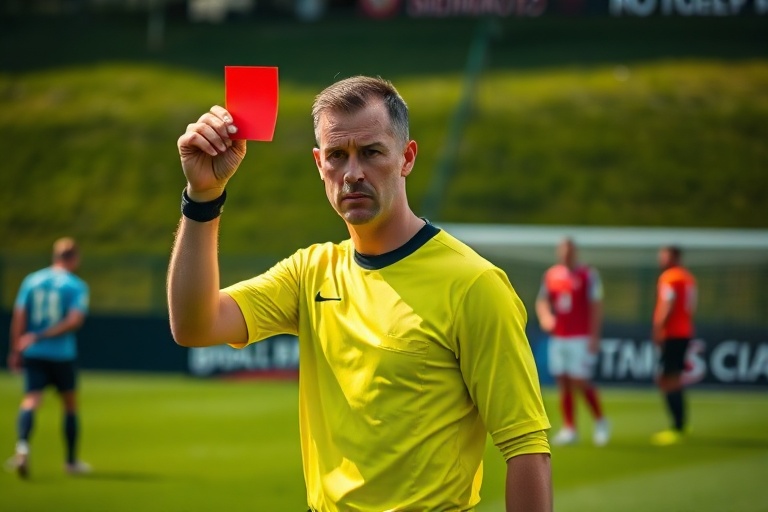
Sports officiating exists in a delicate balance between precision and perception. Referees, often overlooked despite their critical function, enforce the rules that make competitive play possible. Their decisions shape outcomes, influence careers, and sometimes spark intense debate, yet their work rarely receives the same spotlight as the athletes they oversee.
The role of a referee extends far beyond whistle-blowing and penalty calls. It requires split-second judgment, deep knowledge of the game, and an ability to remain impartial under immense pressure. Whether in soccer’s World Cup final or a local high school basketball game, referees serve as the guardians of fairness, ensuring that competition adheres to the spirit and letter of the rules.
The Evolution of Officiating: From Tradition to Technology
Refereeing has transformed dramatically over the decades. In the early days of organized sports, officials often relied solely on their own judgment, with little to no technological support. Today, video assistant referees (VAR), instant replay, and real-time data analytics have reshaped how decisions are made and reviewed.
This evolution reflects broader trends in sports governance, where transparency and accuracy have become non-negotiable. Yet, even as technology advances, the human element remains central. Referees must still interpret the nuances of play, often in split seconds, where technology cannot always provide clarity. The integration of VAR in soccer, for example, has reduced clear errors but also introduced new layers of complexity, such as determining what constitutes a “clear and obvious” mistake.
The debate over technology’s role in officiating continues to intensify. While tools like Hawk-Eye in tennis or the NFL’s instant replay system aim to eliminate human error, they also raise questions about the pace of the game and the authority of officials. The challenge lies in finding a balance where technology enhances fairness without overshadowing the game’s flow.
What It Takes to Be a Referee: More Than Just a Whistle
Becoming a referee is not merely about knowing the rules—it demands physical stamina, mental resilience, and emotional control. Officials often work in high-pressure environments where a single call can alter the course of a match and the lives of those involved. The scrutiny they face is relentless, from fans in the stands to players on the field and pundits in the media.
Training programs for referees have evolved to meet these demands. Most governing bodies require certification through rigorous courses that cover rules, positioning, and decision-making. For instance, soccer referees must complete courses from FIFA-affiliated organizations, while basketball officials in the U.S. often train through programs like the NBA’s Referee Development Program. These programs emphasize consistency, communication, and adaptability—skills essential for managing everything from youth leagues to professional competitions.
The personal toll of officiating is another aspect often overlooked. Referees frequently deal with abuse from players, coaches, and spectators, leading to high turnover rates in some sports. Organizations like the National Association of Sports Officials (NASO) have highlighted the need for better protection and support for officials, including mental health resources and legal safeguards against harassment.
The Controversies and Challenges Facing Modern Refereeing
Refereeing is inherently controversial because it is subjective. Even with advanced technology, disputes over calls are inevitable. The 2022 World Cup controversy surrounding VAR’s handling of offside calls in the final between Argentina and France underscored how officiating can become a focal point of global scrutiny. Fans and analysts dissected every decision, dissecting angles and debating interpretations for weeks.
Beyond individual calls, systemic issues plague officiating in many sports. Bias, whether conscious or unconscious, can influence decisions, particularly in high-stakes games. Studies have shown that referees may subconsciously favor teams with larger fan bases or players with higher profiles. This phenomenon is not limited to one sport; it has been documented in soccer, basketball, and even Olympic events.
Another challenge is the inconsistency in rule enforcement across different leagues and levels of play. A call deemed acceptable in a lower-tier match might be scrutinized in a professional league. This disparity raises questions about standardization and the need for unified officiating standards. For example, the NFL’s inconsistent application of roughing-the-passer penalties has led to repeated criticism from players, coaches, and fans alike.
Key Challenges in Modern Officiating
- Technology Integration: Balancing the use of VAR, instant replay, and other tools without disrupting the game’s natural flow.
- Bias and Perception: Addressing unconscious biases that may affect decision-making, particularly in high-pressure situations.
- Fan and Player Behavior: Managing abuse and harassment directed at officials, which contributes to high turnover rates.
- Standardization: Ensuring consistent rule enforcement across different leagues and levels of competition.
- Training and Development: Providing ongoing education and support to help officials adapt to evolving rules and technologies.
The Future of Refereeing: Innovation and Reform
The future of officiating will likely be shaped by innovation and reform. Artificial intelligence (AI) is already being tested in some sports to assist with decision-making, though its role remains controversial. AI could help reduce human error, but it also risks depersonalizing the officiating process, stripping away the human element that has defined sports for centuries.
Reform efforts are also focusing on improving the conditions for referees. Initiatives like the “Respect” campaign in soccer aim to reduce abuse toward officials by educating players, coaches, and fans. Meanwhile, organizations are exploring ways to professionalize officiating, offering better pay, benefits, and career pathways to attract and retain talent.
Another promising trend is the increasing diversity among referees. Historically, officiating has been dominated by certain demographics, but recent efforts to promote inclusivity are slowly changing the landscape. For example, the NBA has made strides in recruiting more women and people of color to its officiating ranks, reflecting a broader push for diversity in sports governance.
Ultimately, the goal of officiating reform should be to preserve the integrity of sports while adapting to the demands of modern competition. Referees will always be central to this mission, serving as the bridge between the rules and the reality of play. Their work may not always be celebrated, but it is indispensable.
Conclusion: Celebrating the Guardians of Fair Play
Referees operate in the shadows, yet their impact is felt in every game, every season, and every championship. They are the arbiters of fairness, the enforcers of rules, and the unsung heroes who allow the spectacle of sports to thrive. While technology and reform continue to reshape their roles, the core challenges remain the same: making the right call, under pressure, with integrity.
As fans, players, and organizations, we owe it to referees to recognize their contributions and support their efforts. Whether through advocacy for better working conditions, appreciation for their difficult decisions, or simply a moment of understanding when they get it wrong, we can all play a part in fostering a culture that values their role. After all, without referees, there would be no sports as we know them—only chaos.
For those interested in learning more about the intersection of technology and sports, explore our Sports category. To dive deeper into the stories behind the biggest moments in sports history, visit our Analysis section.