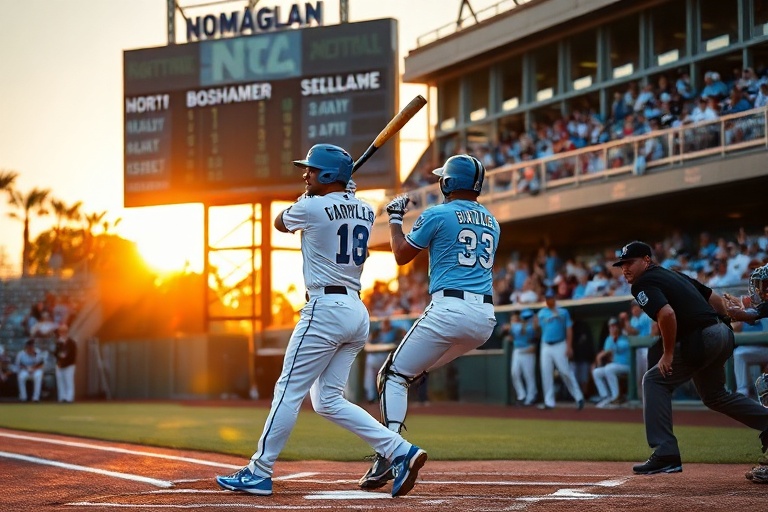
UNC Baseball: How the Tar Heels Are Reshaping College Baseball
“`html
UNC Baseball: A Tradition of Excellence and Rising Ambitions
The University of North Carolina at Chapel Hill has long been synonymous with academic prestige and athletic success. While basketball and football often steal the spotlight, UNC baseball has quietly carved out its own legacy. The Tar Heels’ baseball program, with its rich history and recent surge in competitiveness, offers a compelling narrative of tradition meeting modern ambition.
This season, the team has drawn attention not just for its record but for the way it has redefined expectations. Under the leadership of head coach Scott Forbes, who took over in 2022, UNC baseball has transitioned from a program with sporadic flashes of brilliance to one with sustained competitiveness. The Tar Heels have climbed the rankings, earned NCAA tournament bids, and even notched wins against perennial powerhouses. That progress didn’t happen overnight—it reflects years of investment in facilities, recruiting, and coaching development.
UNC Baseball’s Historical Roots and Milestones
Baseball at UNC dates back to the late 19th century, making it one of the oldest programs in college baseball history. The Tar Heels played their first recorded game in 1871 and have since built a tradition of resilience and occasional brilliance. The program’s most storied era came in the 1960s and 1970s under legendary coach Walter Rabb, who led the team to multiple Atlantic Coast Conference (ACC) titles and deep NCAA tournament runs.
Despite these early successes, UNC baseball has often operated in the shadow of its basketball and football counterparts. The program has seen periods of both promise and struggle, including stretches without NCAA tournament appearances. Yet, it has consistently produced major league talent, including players like B.J. Surhoff, who went on to a Hall of Fame-worthy career. Surhoff remains one of the most decorated alumni, and his legacy continues to inspire current players.
The program’s identity has been shaped by its home venue, Bryson Field at Bosham Field. Opened in 1972, the facility has undergone renovations in recent years, including expanded seating, improved lighting, and enhanced player amenities. These upgrades reflect a broader trend in college baseball: the increasing professionalization of facilities as programs vie for top recruits and competitive advantages.
Recent Success and the Forbes Effect
Scott Forbes, a former minor league pitcher and longtime assistant coach, was hired in 2022 to revitalize the program. His arrival coincided with a noticeable shift in culture and performance. In his first season, the Tar Heels finished 34-23 overall and earned a berth in the ACC Tournament, their first since 2019. The 2024 campaign has been even more impressive, with UNC entering the season ranked in the Top 25 and posting series wins against ranked opponents like Wake Forest and Virginia Tech.
Forbes’ approach emphasizes pitching depth, defensive stability, and aggressive base running—hallmarks of a program built to compete in the ultra-competitive ACC. The Tar Heels’ pitching staff, led by ace starting pitcher and draft prospect, has been particularly effective, combining velocity with command to limit opponents’ scoring opportunities.
Offensively, the team has relied on a balanced attack, with multiple players capable of delivering clutch hits. Freshman standout outfielder Jace Laviolette, a highly touted recruit from Florida, has quickly become a fan favorite, combining power and speed in the outfield. His development has been a key storyline, illustrating how modern recruiting strategies are reshaping the talent pipeline at UNC.
Key Factors Behind UNC Baseball’s Resurgence
- Facility upgrades: Bosham Field’s renovations have created a more professional environment, helping attract top recruits and improve player development.
- Pitching development: A renewed focus on pitching mechanics and velocity has transformed the staff into one of the ACC’s stingiest units.
- Recruiting strategy: Forbes and his staff have prioritized high-character athletes from baseball-rich states like Florida, Georgia, and North Carolina.
- Cultural shift: The program has fostered a mentality of accountability and team-first identity, reducing roster turnover and improving continuity.
The Broader Impact of UNC Baseball’s Rise
UNC baseball’s progress isn’t just about wins and losses. It reflects broader trends in college athletics, where mid-major programs are increasingly challenging traditional powerhouses. The ACC, historically dominated by Clemson, Florida State, and Miami, has seen a shift as programs like UNC, NC State, and Virginia Tech invest in their baseball operations.
This evolution has implications for how programs allocate resources. While football and basketball remain revenue drivers, baseball has become a strategic investment for schools seeking to enhance their athletic prestige and campus culture. For UNC, baseball success can strengthen donor engagement, boost season ticket sales, and elevate the school’s national athletic profile.
Moreover, the program’s emphasis on player development aligns with Major League Baseball’s growing reliance on college talent. With the MLB draft increasingly favoring polished college players over high school prospects, programs like UNC are well-positioned to supply future pros. In 2023, the Tar Heels had six players drafted, including three in the first 10 rounds—a record for the program in the modern era.
What’s Next for the Tar Heels?
The 2024 season represents a pivotal moment. With a strong roster and high expectations, the Tar Heels are aiming for their first ACC regular-season title since 1983. A deep run in the NCAA tournament would not only validate the program’s progress but also signal its arrival as a consistent contender in one of college baseball’s toughest conferences.
Looking ahead, the program’s ability to sustain success will depend on several factors. Recruiting will remain critical, particularly in a state like North Carolina, which produces elite high school talent but also competes with SEC schools for top prospects. Additionally, maintaining pitching depth will be crucial, as overuse or injuries could derail a promising season.
For fans, the excitement is palpable. Bosham Field is once again buzzing on game days, with attendance rising and alumni engagement growing. The program’s social media presence has also expanded, giving fans behind-the-scenes access and building a stronger community around the team.
As UNC baseball continues to rise, it offers a reminder that tradition and ambition can coexist. The Tar Heels are not just playing catch-up—they’re redefining what it means to be competitive in a sport where every detail matters. Whether they win a national title or not, their journey is reshaping perceptions and setting a new standard for what’s possible in college baseball.
For those interested in following the Tar Heels’ progress, Dave’s Locker’s Sports section offers regular updates, analysis, and game recaps. The site also features deeper dives into recruiting trends and player development, providing context for how programs like UNC are evolving in the modern era.