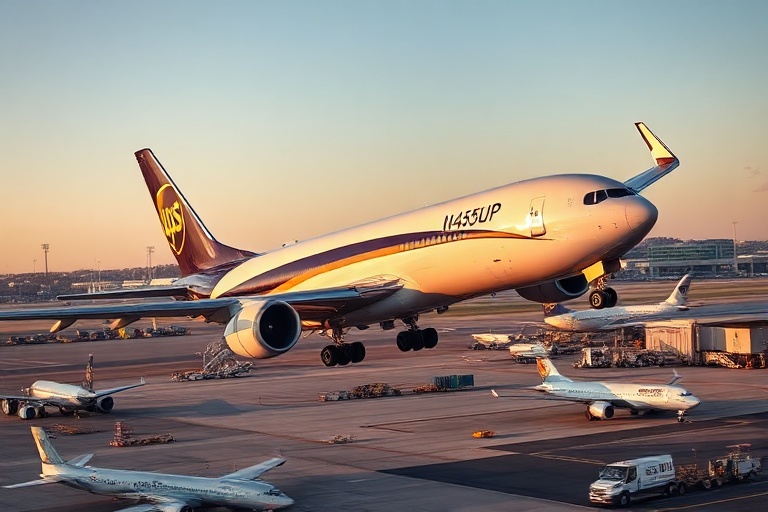
UPS Airlines: The Hidden Powerhouse Behind Global Shipping
“`html
UPS Airlines: The Invisible Giant of Global Shipping
When most people think of UPS, they picture brown trucks and package deliveries. But beneath that familiar branding lies one of the world’s most sophisticated air cargo operations. UPS Airlines isn’t just a delivery service—it’s a logistical marvel, quietly moving millions of packages across continents every day.
Founded in 1988 with just two aircraft, UPS Airlines has grown into a fleet of over 200 planes, making it the 11th largest airline in the world by fleet size. Unlike passenger airlines, its sole purpose is efficiency: transporting parcels, not people. This laser focus has allowed it to refine its operations to a science, blending speed, scale, and reliability in ways few other carriers can match.
The Backbone of Global Commerce
UPS Airlines operates as the aerial extension of UPS’s ground network, ensuring that packages reach destinations overnight or within tight delivery windows. Its hubs—particularly the Worldport facility in Louisville, Kentucky—are engineering marvels, designed to sort and redirect millions of packages per hour with near-perfect precision.
The airline’s reach extends far beyond the U.S. It maintains a strong international presence, with major hubs in Cologne, Germany, and Shanghai, China. These locations act as nerve centers for transatlantic and transpacific shipping, respectively. By positioning these hubs strategically, UPS minimizes transit times and maximizes delivery reliability, even for cross-continental shipments.
This infrastructure isn’t just about speed—it’s about resilience. UPS Airlines has weathered economic downturns, fuel price volatility, and global supply chain disruptions with remarkable consistency. During the COVID-19 pandemic, while passenger airlines struggled, UPS’s cargo operations thrived, proving the critical role of dedicated freight carriers in global trade.
Technology and Innovation at 30,000 Feet
What sets UPS Airlines apart is its relentless investment in technology. The company was an early adopter of automated sorting systems, AI-driven route optimization, and real-time tracking. Its ORION (On-Road Integrated Optimization and Navigation) system, for example, has saved millions of miles in ground deliveries by calculating the most efficient routes for drivers.
In the air, UPS employs advanced flight planning software to reduce fuel consumption and emissions. The airline has also pioneered the use of biofuels, testing sustainable aviation fuel (SAF) on select routes. These efforts aren’t just about corporate responsibility—they’re a strategic advantage, helping UPS cut costs and appeal to environmentally conscious customers.
Another innovation is the use of drones for last-mile deliveries in remote areas. While still in its infancy, this technology could revolutionize how UPS serves rural or hard-to-reach communities, further solidifying its dominance in the logistics space.
Key Features of UPS Airlines’ Operations
- Fleet Diversity: Operates a mix of Boeing 747, 767, and Airbus A300 aircraft, each chosen for specific cargo capacities and range requirements.
- Global Hub Network: Louisville (Worldport), Cologne (Europe), and Shanghai (Asia) serve as primary sorting centers, enabling 24/7 operations.
- Sustainability Initiatives: Committed to reducing carbon emissions by 12% by 2025, with ongoing investments in electric vehicles and SAF.
- 24/7 Operations: Unlike passenger airlines, UPS Airlines operates around the clock, ensuring packages move continuously.
- Customs Expertise: Specialized teams handle international shipments, navigating complex customs regulations to ensure smooth cross-border deliveries.
Challenges and the Road Ahead
Despite its strengths, UPS Airlines faces significant challenges. The rise of e-commerce has intensified competition, with companies like Amazon and FedEx expanding their air cargo capabilities. Amazon’s Prime Air, for instance, is gradually encroaching on UPS’s traditional territory by offering same-day and next-day delivery options.
Fuel costs remain a persistent concern. While UPS has made strides in fuel efficiency, surging oil prices can erode profitability quickly. The airline must balance cost-cutting measures with the need to maintain service quality—a delicate equilibrium.
Regulatory hurdles also pose risks. Stricter emissions standards and noise regulations could force UPS to retrofit its fleet or invest in newer, more compliant aircraft. These changes require substantial capital, and the timeline for return on investment isn’t always clear.
Yet, UPS Airlines is far from vulnerable. Its deep integration with UPS’s broader logistics network provides a competitive edge that standalone cargo carriers can’t easily replicate. The company’s ability to offer end-to-end solutions—from warehouse to doorstep—keeps it indispensable in the eyes of global businesses.
Why UPS Airlines Matters Beyond Shipping
The impact of UPS Airlines extends beyond its balance sheets. It plays a crucial role in supporting small businesses, enabling them to compete on a global scale. For a local artisan selling handmade goods online, UPS’s air network means their products can reach customers in Tokyo or Berlin as easily as in the next town over.
During crises—natural disasters, medical emergencies, or geopolitical conflicts—UPS Airlines often serves as a lifeline. Its ability to mobilize quickly and deliver critical supplies underscores the importance of robust cargo infrastructure in an unpredictable world.
Moreover, UPS Airlines is a bellwether for the future of logistics. As companies increasingly prioritize speed and reliability, the lessons learned from UPS’s operations—such as real-time tracking, automation, and sustainability—are being adopted across industries. The airline isn’t just moving packages; it’s shaping the future of global trade.
“UPS Airlines isn’t just a delivery service—it’s a logistical marvel, quietly moving millions of packages across continents every day.”
For those who’ve never boarded one of its planes, UPS Airlines may seem like a background player in the grand theater of aviation. But in reality, it’s one of the most efficient and resilient cargo operations on the planet. As e-commerce continues to grow and supply chains become more complex, the invisible giant of global shipping will only grow more vital.
Conclusion
UPS Airlines is a testament to the power of specialization. By focusing solely on cargo and refining its operations to near-perfection, it has carved out a niche that few can challenge. While the world obsesses over passenger airlines and their glamorous routes, UPS Airlines quietly ensures that the global economy keeps turning. In an era where speed and reliability are paramount, that’s no small feat.
For businesses and consumers alike, UPS Airlines remains an unsung hero—a reminder that sometimes, the most important players in the game are the ones you never see.
To learn more about how UPS integrates with broader logistics trends, explore our Trending and News sections for deeper analysis.