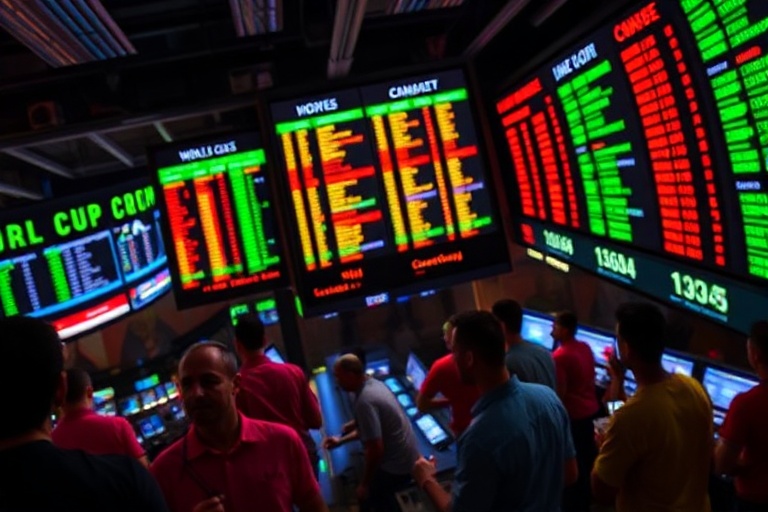
As the World Cup approaches, the global spotlight intensifies—not just on the teams, but on the intricate world of betting odds. These numbers do more than predict outcomes; they reflect shifting narratives, economic pressures, and even geopolitical undercurrents. Understanding how World Cup odds are calculated and interpreted offers a unique lens into the tournament’s broader significance.
The Mechanics Behind World Cup Odds
Oddsmakers rely on a blend of statistical models, historical performance, and real-time market adjustments to set World Cup odds. Unlike domestic leagues with extensive data, international tournaments present unique challenges. Factors such as player injuries, last-minute tactical shifts, and even travel logistics can sway odds overnight. Bookmakers use algorithms that weigh variables like FIFA rankings, recent friendly results, and squad depth to assign probabilities.
For instance, a team like Brazil might open as favorites at +500, while underdogs like Canada could sit at +10000. These odds aren’t arbitrary; they’re derived from implied probabilities. A +500 price implies roughly a 16.7% chance of winning, while +10000 suggests a 1% probability. The gap between favorites and longshots reflects both statistical likelihood and the public’s perception of a team’s strength.
Oddsmakers also monitor betting trends closely. Heavy wagering on a specific outcome can prompt adjustments to balance risk. If too much money flows to Argentina at -200, bookmakers might shorten the odds further to attract opposing bets and stabilize their liability. This dynamic ensures that World Cup odds remain fluid up until kickoff.
How Odds Reflect Team Narratives
World Cup odds often align with compelling storylines. Consider Morocco’s surge to +2000 in 2022 after years of underdog status. Their historic run to the semifinals wasn’t predicted by traditional metrics alone; it was fueled by momentum, tactical brilliance, and the emotional pull of African representation. Odds are as much about narrative as they are about numbers.
Meanwhile, traditional powerhouses like Germany or Italy may open as favorites but see their odds fluctuate due to internal turmoil. A managerial change or a string of poor performances can erode confidence quickly, as seen with Italy’s +1200 odds ahead of the 2022 tournament following their Euro 2020 struggles.
These narratives extend beyond the pitch. Host nations often benefit from inflated odds due to local sentiment. Qatar’s +5000 odds in 2022 reflected skepticism about their readiness, but home advantage can sometimes justify such longshots. Odds, in this sense, become a barometer for public belief, not just statistical projection.
The Role of Technology in Betting Markets
Technology has revolutionized how World Cup odds are set and consumed. Sophisticated models now incorporate machine learning to analyze thousands of data points, from player workloads to xG (expected goals) metrics. Companies like Opta and Betfair use real-time data feeds to adjust odds within seconds of critical events, such as a star player’s injury announcement.
Live betting has also transformed the landscape. During the 2018 World Cup, in-play odds for Germany’s early exit swung dramatically as their matches unfolded. Punters could bet on outcomes like “next goal scorer” or “total corners,” with prices updating dynamically. This shift has blurred the line between pre-match analysis and in-game strategy, making World Cup odds a 24/7 conversation.
Blockchain technology is the latest frontier, promising transparency in odds-setting and payouts. Decentralized betting platforms aim to reduce the risk of manipulation, a concern that has occasionally plagued traditional bookmakers. While still niche, these innovations could redefine how fans engage with World Cup odds in future tournaments.
Ethical Considerations and Responsible Betting
Amid the excitement, ethical questions loom over World Cup betting. Problem gambling surges during major tournaments, with studies showing a 30% increase in betting-related harm during World Cup years. Odds, with their mix of accessibility and urgency, can exacerbate this risk. Regulatory bodies like the UK Gambling Commission have tightened rules, mandating affordability checks and cooling-off periods for high-risk bettors.
Responsible gambling advocates emphasize education as the first line of defense. Campaigns like GamCare’s “Bet Regret” initiative encourage punters to set limits before engaging with odds. Oddsmakers themselves are under pressure to promote safer practices, such as offering self-exclusion tools or reality-check pop-ups on betting apps.
The human cost of unchecked betting is stark. Stories of financial ruin or family breakdowns often surface alongside tales of World Cup glory. Odds, in this context, are more than numbers—they’re part of a broader ecosystem that demands scrutiny.
Key Takeaways for Bettors and Fans
Understanding World Cup odds requires more than a glance at the latest odds board. Bettors should consider these essential factors:
- Form vs. Reputation: Recent performances often outweigh historical prestige. A team like Saudi Arabia beating Argentina in 2022 (+4000 odds) defied expectations, proving that momentum matters.
- Fixture Difficulty: Odds for knockout-stage teams hinge on bracket analysis. A “soft” path to the final can inflate a team’s chances, as seen with Croatia’s +800 odds in 2018 despite modest group-stage form.
- Market Sentiment: Public money isn’t always smart money. Sharp bettors often fade popular picks, exploiting inflated odds on overhyped teams.
- Value Hunting: The goal isn’t always to back favorites but to identify mispriced propositions. A +10000 shot on a dark horse like Morocco in 2022 paid dividends for those who saw value beyond the stats.
For fans, odds offer a way to engage with the tournament beyond pure fandom. A casual observer might pick a team based on jerseys or mascots, but odds encourage deeper analysis. They force conversations about tactics, squad composition, and even cultural narratives—like how Japan’s +2500 odds in 2022 reflected their rapid rise under a new generation of players.
Ultimately, World Cup odds are a mirror to the tournament itself: unpredictable, layered, and endlessly fascinating. They reward preparation, punish complacency, and occasionally deliver miracles. Whether you’re a seasoned bettor or a curious fan, understanding how odds work is the first step toward navigating the World Cup with confidence.
For more insights into sports analysis and betting strategies, explore our Analysis section or dive into our Sports archives. The World Cup is more than a competition—it’s a convergence of data, drama, and human ambition.
A Final Thought
As the next World Cup approaches, the interplay between odds and outcomes will once again captivate millions. The numbers on a screen tell only part of the story; the rest unfolds on the pitch, in the stands, and within the hearts of fans worldwide. Odds, at their best, are a bridge between anticipation and reality—a way to quantify the unquantifiable.