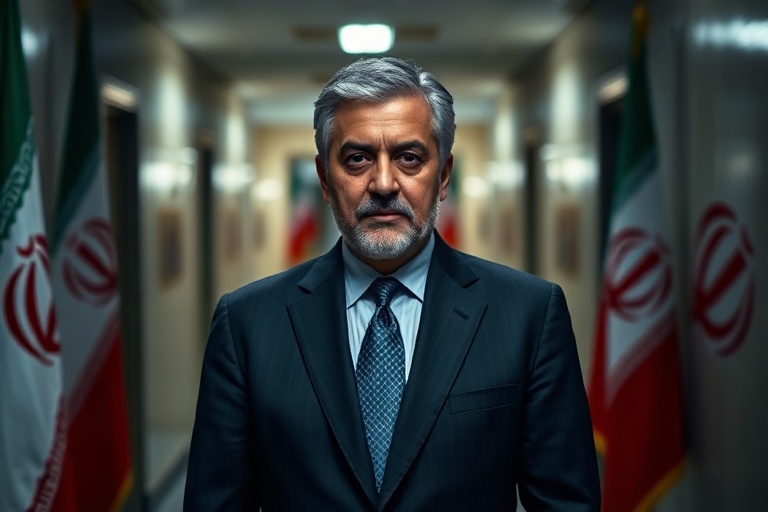
Ahmad Vahidi stands as one of Iran’s most polarizing yet enduring figures in its post-revolutionary political and military landscape. As the current Minister of Defense and Armed Forces Logistics, his career reflects the intersection of Iran’s revolutionary ideals, its defense strategies, and its complicated relationships with the international community. Vahidi’s journey from a young revolutionary to a key architect of Iran’s defense policies offers a window into the country’s evolving priorities and its resistance to external pressures.
His appointment in August 2021 by President Ebrahim Raisi solidified his role at the heart of Iran’s military establishment, a position he had long cultivated. But Vahidi’s influence extends beyond domestic policy. He is widely recognized as a founding member of the Islamic Revolutionary Guard Corps (IRGC) and a former commander in the Quds Force, the elite unit responsible for extraterritorial operations. These roles have placed him at the center of debates about Iran’s regional influence, its nuclear program, and its stance in global conflicts.
The Rise of Ahmad Vahidi: From Revolutionary to Defense Architect
Ahmad Vahidi was born in 1958 in the city of Yazd, in central Iran. His early life unfolded during a period of intense political upheaval, culminating in the 1979 Islamic Revolution that overthrew the Pahlavi monarchy. Like many young Iranians, Vahidi was drawn to the revolutionary cause, joining the movement that promised social justice and national sovereignty. After the revolution, he became involved in the newly formed IRGC, a paramilitary force created to protect the Islamic Republic from internal and external threats.
Vahidi’s rise within the IRGC was rapid. He played a key role in the Iran-Iraq War (1980–1988), rising to command the IRGC’s ground forces in several major battles. His leadership during the war earned him respect within military circles and established his reputation as a disciplined and strategic thinker. After the war, he transitioned into roles focused on military strategy and defense policy, eventually becoming a senior advisor on national security.
His academic credentials further strengthened his profile. Vahidi holds a Ph.D. in defense management from Iran’s Imam Hossein University, a prominent military institution. This blend of practical military experience and formal education positioned him as both a practitioner and a theorist in Iran’s defense establishment.
Vahidi and the Quds Force: A Career Shaped by Regional Influence
One of the most consequential chapters in Vahidi’s career was his time in the Quds Force, the IRGC’s elite unit responsible for extraterritorial operations. Serving as a senior commander, he contributed to shaping Iran’s strategy in Lebanon, Syria, Iraq, and beyond. The Quds Force operates under the principle of “forward defense,” projecting Iranian influence to counter perceived threats and expand strategic depth.
Vahidi’s work in Lebanon is particularly notable. He is widely believed to have played a role in the formation and support of Hezbollah, the Shiite militant group and political party that emerged in the 1980s. The group became a cornerstone of Iran’s regional strategy, serving as both a military deterrent and a political ally. Hezbollah’s rise coincided with Vahidi’s ascent, and his involvement in its early development reflects his long-term commitment to Iran’s regional ambitions.
Under Vahidi’s influence, the Quds Force expanded its operations across the Middle East. Iran’s support for the Assad regime in Syria, the Houthi movement in Yemen, and various Shiite militias in Iraq became central to its foreign policy. These engagements were not merely military but ideological, reinforcing Iran’s narrative of resistance against Western and Israeli influence in the region.
These actions have drawn international criticism. The United States, European Union, and several other governments have sanctioned Vahidi for his alleged role in supporting terrorism and destabilizing regional governments. In 2010, he was placed on the European Union’s sanctions list for his involvement in the 1994 AMIA bombing in Argentina, a charge he has consistently denied.
Controversies and Sanctions: The Shadow of the AMIA Case
The most enduring controversy surrounding Vahidi involves his alleged involvement in the 1994 bombing of the AMIA Jewish community center in Buenos Aires, which killed 85 people. Argentine prosecutors accused Vahidi of playing a key role in planning the attack, which they linked to Hezbollah and Iranian officials. In 2007, an Argentine judge issued an international arrest warrant for Vahidi, and in 2010, the European Union added him to its sanctions list.
Vahidi has vehemently denied the allegations, calling them politically motivated and baseless. He has argued that the accusations are part of a broader campaign to demonize Iranian officials and undermine the country’s sovereignty. Iran’s government has consistently rejected the allegations, asserting that the AMIA case is a fabrication designed to justify sanctions and diplomatic isolation.
Despite the international controversy, Vahidi’s domestic standing has remained strong. Within Iran, he is often portrayed as a defender of the revolution and a steadfast opponent of foreign interference. His inclusion in the government of President Raisi sent a clear signal that Iran’s defense policies would continue to prioritize self-reliance and regional influence, even in the face of external pressure.
Defense Minister: Policy, Strategy, and Iran’s Military Modernization
Since assuming the role of Defense Minister in 2021, Vahidi has overseen a period of accelerated military modernization and strategic expansion. Under his leadership, Iran has emphasized indigenous defense capabilities, reducing reliance on foreign imports and developing advanced missile systems, drones, and cyber warfare tools. The country’s ballistic missile program, in particular, has become a focal point of national pride and strategic deterrence.
One of Vahidi’s key initiatives has been the expansion of Iran’s drone program. Drones have become central to Iran’s military strategy, offering a cost-effective and deniable means of projecting power. The Shahed series of drones, for example, have been deployed in conflicts in Ukraine and Yemen, drawing global attention to Iran’s role as an arms exporter. Vahidi has defended these exports, arguing that they serve as a legitimate means of self-defense and deterrence.
Vahidi has also emphasized the importance of cyber warfare and electronic defense. Iran has invested heavily in cyber capabilities, both for defensive purposes and for offensive operations against perceived adversaries. The integration of cyber tools into Iran’s military doctrine reflects a broader shift toward hybrid warfare, blending conventional and asymmetric tactics to counter superior conventional forces.
His tenure has also coincided with a period of heightened tensions with Israel and the United States. Vahidi has repeatedly vowed to respond to any military aggression against Iran, framing the country’s defense posture as a matter of national survival. This rhetoric has been matched by actions, including the launch of ballistic missiles at targets in Syria and the reported use of drones in regional conflicts.
Global Perceptions and the Future of Vahidi’s Legacy
Ahmad Vahidi occupies a unique space in global geopolitics. To his supporters, he is a symbol of resistance against imperialism and a guardian of the Islamic Revolution’s ideals. To his detractors, he is a hardline ideologue complicit in terrorism and regional destabilization. This duality makes him a figure of fascination and frustration in equal measure.
His influence is likely to endure as long as Iran’s revolutionary government remains in power. The IRGC, of which Vahidi is a senior figure, continues to wield immense power in Iranian politics, often overshadowing civilian institutions. This institutional strength suggests that Vahidi’s policies will shape Iran’s defense strategy for years to come, regardless of changes in government or international pressure.
Looking ahead, several key factors will determine the trajectory of Vahidi’s legacy. The first is the outcome of Iran’s nuclear negotiations with the West. If sanctions are lifted, Iran may seek to reintegrate into the global economy, potentially leading to shifts in its defense policies. However, given Vahidi’s long-standing emphasis on self-reliance, such changes are unlikely to result in a fundamental reorientation of Iran’s military posture.
The second factor is the evolving balance of power in the Middle East. As Iran’s regional rivals, particularly Saudi Arabia and Israel, continue to modernize their militaries, Iran will likely double down on asymmetric capabilities such as drones, missiles, and cyber warfare. Vahidi’s expertise in these areas positions him well to guide Iran’s defense strategy in this new environment.
Finally, the question of succession looms large. Vahidi is in his mid-60s, and his eventual retirement or passing will raise questions about who will inherit his mantle. The IRGC’s senior leadership is a closely guarded network of insiders, and the transition is likely to be as much about personal loyalty as it is about policy continuity.
Regardless of how history judges him, Ahmad Vahidi represents a generation of Iranian leaders who have defined their country’s identity in opposition to external pressures and in pursuit of revolutionary ideals. His career is a testament to the enduring power of ideology in shaping national security strategies, even in an era of shifting global alliances and technological change.
As Iran navigates an increasingly complex international landscape, figures like Vahidi remind us that defense policy is never just about weapons and tactics. It is also about identity, sovereignty, and the enduring struggle for influence on the world stage.