<h2>Aliko Dangote: The Titan Reshaping Africa’s Economic Landscape</h2>

<p>Aliko Dangote stands as a towering figure in global business, his name synonymous with industrial progress across Africa. As the founder and chairman of the Dangote Group, he has built an empire that stretches from cement plants in Nigeria to sugar refineries in Ethiopia. His vision has not only transformed local economies but also positioned Africa as a growing force in global trade.</p>

<p>Dangote’s journey began in the 1970s when he borrowed $3,000 from his uncle to start a small trading firm. Decades later, his conglomerate spans multiple industries, including manufacturing, agriculture, and energy. What sets him apart is his commitment to self-sufficiency—a philosophy rooted in reducing Africa’s reliance on imported goods. This approach has earned him admiration and criticism, but few dispute his impact on the continent’s economic narrative.</p>

<h3>The Dangote Empire: A Multisectoral Powerhouse</h3>

<p>At the core of Dangote’s success is diversification. The Dangote Group operates in industries critical to Africa’s development, with a focus on commodities that are both essential and high-demand. These include:</p>

<ul>
  <li><strong>Cement Production:</strong> Through Dangote Cement, the company is the largest producer on the continent, with operations in Nigeria, Senegal, Zambia, and beyond.</li>
  <li><strong>Refined Sugar:</strong> Dangote Sugar Refinery supplies a significant portion of West Africa’s sugar, reducing dependence on imports.</li>
  <li><strong>Agriculture:</strong> The company invests in rice, tomato processing, and fertilizer production, aiming to boost food security.</li>
  <li><strong>Oil and Gas:</strong> Dangote Industries Limited is constructing the continent’s largest oil refinery in Lagos, set to transform Nigeria’s energy sector.</li>
</ul>

<p>This vertical integration reflects Dangote’s long-term strategy: to create a fully self-sustaining industrial ecosystem. By controlling multiple stages of the supply chain, from raw materials to finished products, the group minimizes vulnerability to global market fluctuations. This model has drawn comparisons to industrial dynasties of the past, such as the Rockefellers in America or the Tatas in India, where industrial might translated into broader societal influence.</p>

<h3>Africa’s Industrialization Champion</h3>

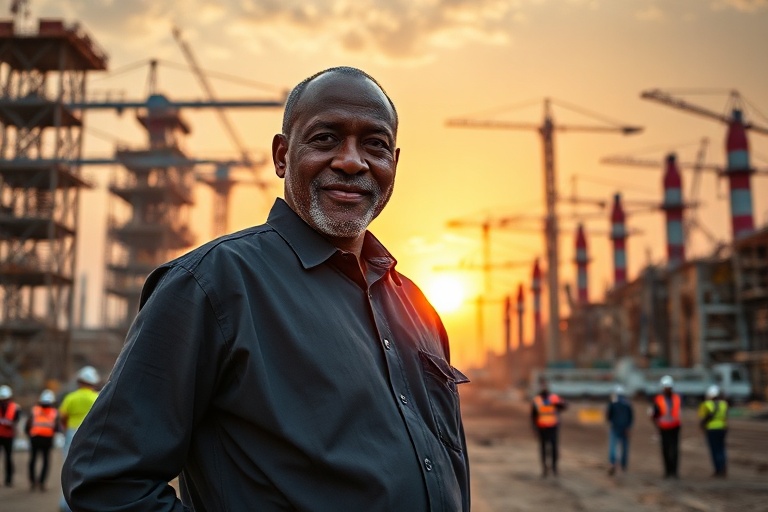
<p>Dangote’s most enduring contribution may be his role as a catalyst for Africa’s industrialization. For decades, the continent’s economy relied heavily on exporting raw materials—oil, minerals, and agricultural products—while importing finished goods. This imbalance left African nations vulnerable to price shocks and currency fluctuations. Dangote challenged this paradigm by investing in local manufacturing.</p>

<p>His impact is visible in Nigeria, where the Dangote Group accounts for a significant share of the country’s industrial output. The refinery project alone, once completed, will meet Nigeria’s entire fuel demand and allow for surplus exports. This aligns with the African Union’s Agenda 2063, which emphasizes local value addition and economic diversification. Dangote’s work demonstrates what is possible when private enterprise aligns with public policy goals.</p>

<p>Yet his influence extends beyond economics. Dangote has become a cultural symbol of African resilience. In an era where global narratives often frame Africa as a recipient of aid rather than a driver of innovation, he represents a counter-narrative: one of ambition, execution, and tangible results. His story resonates across the diaspora, where young entrepreneurs see him as proof that large-scale success is achievable from the continent.</p>

<h3>Challenges and Controversies</h3>

<p>No narrative of scale is without friction. Dangote’s rise has not been without controversy. Critics argue that his business practices sometimes stifle competition, particularly in sectors like cement, where Dangote Cement dominates regional markets. Regulators in countries like Kenya and South Africa have raised concerns about market concentration and pricing power.</p>

<p>Others point to the challenges of operating in environments with inconsistent infrastructure, regulatory hurdles, and political instability. Despite these obstacles, Dangote has maintained a reputation for operational discipline. He often emphasizes patience and persistence, once stating, “Success is not achieved overnight; it requires time, effort, and dedication.”</p>

<p>Environmental concerns have also surfaced, particularly around large-scale industrial projects. The cement and refinery operations, while economically transformative, generate significant carbon emissions. Dangote has responded by investing in cleaner technologies and sustainability initiatives, though critics argue more could be done. This tension between growth and environmental responsibility reflects a broader global challenge—how to industrialize without exacerbating climate change.</p>

<h3>The Global Perspective: Dangote in the World Economy</h3>

<p>Dangote’s ambitions are not confined to Africa. He has pursued strategic partnerships in Europe, Asia, and the Americas, seeking to position African businesses as global players. His investments in European ports and logistics aim to streamline trade routes between Africa and other continents. This outward focus challenges the stereotype of African business as purely domestic or regional.</p>

<p>He has also engaged with international financial institutions, securing funding from entities like the World Bank’s International Finance Corporation to support sustainable projects. These collaborations underscore his ability to bridge Africa’s development needs with global capital markets—a rare feat for a private entrepreneur.</p>

<p>In 2023, Dangote Cement became the first African company listed on the London Stock Exchange, a milestone that symbolized Africa’s growing financial integration. This listing not only provided capital for expansion but also signaled to global investors that African businesses could meet international standards of transparency and governance.</p>

<h3>A Legacy Still Being Written</h3>

<p>As Dangote approaches his seventh decade, his focus remains on legacy. He has pledged to donate a significant portion of his wealth to philanthropic causes through the Aliko Dangote Foundation, which supports health, education, and poverty alleviation. This commitment reflects a belief that true success includes uplifting communities.</p>

<p>His story is still unfolding. The Dangote Refinery, once operational, could redefine Nigeria’s role in the global oil market. His investments in agriculture could transform food security across the Sahel. And his leadership in industrial policy could inspire a new generation of African entrepreneurs to think beyond borders.</p>

<p>Dangote’s journey offers more than a business case study—it is a cultural artifact. In a continent often defined by challenges, he embodies the possibility of self-determination. His narrative challenges both Africans and the world to rethink what is possible when vision is paired with execution.</p>

<p>As Africa continues to rise on the global stage, figures like Dangote serve as both architects and symbols of that transformation. His work reminds us that economic progress is not merely a matter of policy or aid, but of persistent, principled entrepreneurship.</p>

<p>For those interested in exploring similar stories of global influence, visit our <a href="/category/business/">Business</a> section for more profiles of transformative leaders. To understand how industrial trends shape economies, explore our <a href="/category/analysis/">Analysis</a> archive.</p>

---

<!-- METADATA -->
{
  "title": "Aliko Dangote: How Africa’s Richest Man is Redefining Global Industry",
  "metaDescription": "Explore how Aliko Dangote built a billion-dollar empire reshaping Africa’s economy and challenging global trade norms.",
  "categories": ["Business", "Analysis"],
  "tags": ["Aliko Dangote", "Dangote Group", "African industrialization", "African billionaires", "Dangote Refinery"],
  "imageDescription": "A professional portrait of Aliko Dangote in a tailored suit, standing in front of a large industrial facility, with a modern city skyline in the background under a bright African sky."
}
<!-- END METADATA -->