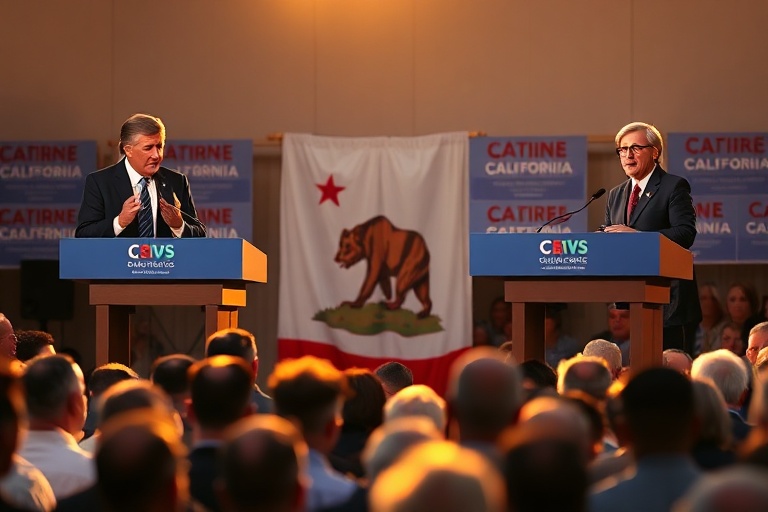
The race for California’s governorship in 2026 is heating up, with recent polls showing a tightly contested field. As the state’s political landscape evolves, voters are closely watching the shifting dynamics between candidates from both major parties. These early indicators provide a snapshot of where the race stands, though the long road ahead means anything could change.
California’s gubernatorial elections are always high-stakes, given the state’s outsized influence in national politics. With Governor Gavin Newsom term-limited out in 2026, the open-seat race has drawn a mix of established leaders and rising stars. Polling data from the past few months reveals key trends, voter priorities, and the strategies candidates are likely to employ in the coming months.
Key Polls and Trends in the 2026 Race
The latest surveys from reputable polling firms like the California Field Poll and UC Berkeley’s IGS Poll paint a picture of a competitive race. As of June 2024, the top-tier candidates include Lieutenant Governor Eleni Kounalakis, former Los Angeles Mayor Antonio Villaraigosa, and State Attorney General Rob Bonta. Polls show these leaders jockeying for position, with margins often within the statistical margin of error.
One notable trend is the fragmentation of the Republican field. While no single GOP candidate has yet consolidated support, figures like Assemblymember James Gallagher and former Congressman Kevin Faulconer are positioning themselves as alternatives to the Democratic frontrunners. Polls indicate that Republicans are struggling to gain traction statewide, though local races and voter sentiment in key regions like Orange County and the Central Valley could shift the narrative.
Independent and third-party candidates are also making their presence known. Businessman Rick Caruso, who narrowly lost the 2022 mayoral race in Los Angeles, has hinted at a potential gubernatorial run. Polls suggest he could draw support from disaffected Democrats and Republicans alike, though his viability remains untested in a statewide contest.
Democrats Hold the Advantage, But Cracks Are Showing
Historically, California’s governorship has leaned Democratic, and current polling reflects that trend. Democrats hold a significant voter registration advantage, and their candidates are better funded, at least in the early stages. However, internal party dynamics and policy debates are creating fissures that could impact the race’s outcome.
For instance, progressive factions within the party are pushing for candidates who align with their priorities, such as housing reform and climate policy. Meanwhile, moderates are courting voters concerned about economic issues and public safety. Polls show that while Democratic voters are largely united in opposition to Republican policies, they are divided on which candidate best represents their values.
One factor complicating the Democrats’ path to victory is voter fatigue. After years of high-profile races—from the recall election of 2021 to the 2022 midterms—some Californians are expressing apathy toward another contentious campaign. Polls indicate that turnout could be a wildcard, with younger voters and independents remaining unpredictable.
Republican Strategies and the Path to Victory
Despite the odds, Republicans are not conceding California’s governorship without a fight. Their strategy hinges on two key pillars: energizing the base and exploiting divisions within the Democratic Party. Polls show that GOP candidates are focusing on issues like inflation, crime, and education, which resonate with voters in suburban and rural areas.
One emerging strategy is the push to frame the race as a referendum on Governor Newsom’s policies. Republicans are highlighting concerns over homelessness, high taxes, and the state’s regulatory environment. Polls suggest this messaging is gaining traction in regions where voters feel disconnected from Sacramento’s priorities.
However, the Republican field’s lack of unity remains a hurdle. Polls reveal that intra-party squabbles and fundraising challenges are hampering their ability to mount a cohesive challenge. Until a single candidate emerges as the clear alternative, Democrats are likely to retain their polling lead.
What the Polls Say About Voter Priorities
Beyond candidate matchups, recent polls have shed light on the issues most important to California voters. Housing affordability tops the list, followed closely by healthcare, education, and public safety. These priorities are shaping the platforms of both Democratic and Republican candidates, though their proposed solutions diverge sharply.
Polling data also reveals generational divides. Older voters, for example, are more concerned about crime and taxes, while younger voters prioritize climate change and social justice. This split presents a challenge for candidates trying to appeal to a broad coalition.
Key Issues Shaping the Race
The following issues have emerged as central themes in the 2026 governor’s race, according to recent polls:
- Housing Affordability: Over 70% of voters in a recent Field Poll cited housing as their top concern, reflecting frustration with skyrocketing rents and home prices.
- Homelessness: Nearly 60% of voters believe the state is not doing enough to address homelessness, a critical issue in urban areas like Los Angeles and San Francisco.
- Public Safety: Crime and law enforcement remain top concerns, particularly in communities grappling with rising property crime and retail theft.
- Climate Change: While younger voters prioritize climate action, older voters are more skeptical of aggressive policies like bans on gas-powered vehicles.
- Economic Competitiveness: Many voters are concerned about California’s business climate, with polls showing support for policies that attract and retain companies.
The Road Ahead: What to Watch in 2025
With nearly two years until Election Day, the 2026 governor’s race is still in its early innings. However, several factors could dramatically reshape the polling landscape in the coming months. Candidates will ramp up their fundraising efforts, and debates over key issues will intensify. Meanwhile, national political trends—such as the performance of the Biden administration or unexpected crises—could influence California’s race.
One critical factor to watch is the role of outside spending. Super PACs and advocacy groups are already positioning themselves to influence the race, particularly on issues like housing and climate. Polls suggest that negative advertising could sway undecided voters, making fundraising and message discipline essential for candidates.
Another wildcard is the potential for a major political shakeup. A sudden resignation, scandal, or unexpected candidacy could upend the current polling hierarchy. For example, if a high-profile Democrat or Republican enters the race late, it could shift the dynamics entirely.
Lessons from Past California Races
California’s electoral history offers clues about what to expect in 2026. In 2018, Gavin Newsom’s victory was built on a coalition of progressive voters and moderates concerned about the Trump administration. Four years later, Newsom’s landslide win in the recall election demonstrated the power of Democratic unity. However, the 2021 recall also showed that voter dissatisfaction can mobilize unexpected outcomes.
Pollsters caution that early leads are not always predictive of final results. In 2010, Meg Whitman led Jerry Brown in polls for much of the cycle before Brown ultimately won. Similarly, in 2003, Arnold Schwarzenegger’s late surge propelled him to victory in the recall election. These examples underscore the unpredictability of California politics.
As the 2026 race unfolds, voters can expect a mix of policy debates, personality clashes, and high-stakes campaigning. Polls will continue to evolve, reflecting the changing mood of the electorate. For now, the numbers suggest a tight race with no clear frontrunner, setting the stage for a contentious and closely watched election.
Conclusion: The Race Is Far from Decided
The California governor’s race in 2026 is shaping up to be one of the most consequential in recent memory. With Governor Newsom term-limited out, the open-seat contest has drawn a crowded field and intense interest from voters across the political spectrum. While current polls show Democrats holding a slight edge, the race is far from decided.
Key issues like housing, homelessness, and economic competitiveness are driving voter priorities, and candidates are already staking out positions on these topics. Meanwhile, Republicans are working to narrow the gap, though internal divisions and fundraising challenges remain obstacles. As the race progresses, outside spending, national trends, and unexpected developments could reshape the polling landscape.
For voters, the next two years will offer ample opportunities to engage with the candidates and their platforms. With so much at stake, the 2026 governor’s race is one to watch closely. The polls may change, but one thing is certain: California’s political future will be shaped by the choices voters make at the ballot box.